

Every day, millions of individuals grapple with the challenges of muscle, joint, or back pain. From disrupting your daily routines to hindering your favorite activities, chronic pain can significantly impact your quality of life. Unfortunately, conventional treatments, medications, and surgeries have fallen short in addressing the widespread pain epidemic.
However, there's hope on the horizon with the emergence of a different approach: a posture therapy method that treats the alignment behind the pain rather than the pain alone. Offering a low-risk, straightforward methodology, Posture Therapy has shown promise in alleviating various pain conditions.
While Posture Therapy isn't exactly a newcomer on the scene—it has been around for over 40 years—it's gaining renewed attention. This resurgence is fueled by thousands of patient testimonials and a recent clinical study that underscore its efficacy. A randomized clinical trial published in the Journal of the American Medical Association from 2017 to 2020 concluded that Posture Therapy is "as good or better at treating spine pain than usual medical care." Additionally, numerous accounts in a book highlight the transformative impact of posture therapy on individuals who had previously found no relief elsewhere. What sets Posture Therapy apart is not only its superior pain relief but also its risk-free nature compared to prescription medications and invasive procedures.
From our own quiz data: of 1,441 people who told us which way their pain is trending, 44% said it's getting worse and 48% said it stays the same. Only 8% were improving — in a population where 83% have already been through painkillers, physical therapy or chiropractic. That's what treating the symptom instead of the pattern looks like at scale.
What exactly is the posture therapy method?
The posture therapy method revolves around correcting posture to alleviate muscle and joint pain. Each patient's posture is analyzed against the ideal human posture, and tailored exercises are prescribed to restore joint angles and muscle strength. It rests on a simple premise — that bad posture can cause back pain by loading some muscles while others switch off. Here's how Posture Therapy stands out from other pain relief approaches that may have left you disappointed:
Comprehensive Treatment Focus: Posture Therapy addresses imbalances from head to toe, irrespective of where your symptoms manifest. Pain in one area often stems from issues elsewhere in the body. By treating the whole pattern, the underlying cause of pain can be identified and addressed, which is often the missing piece for people who find their back pain keeps coming back after each round of treatment.
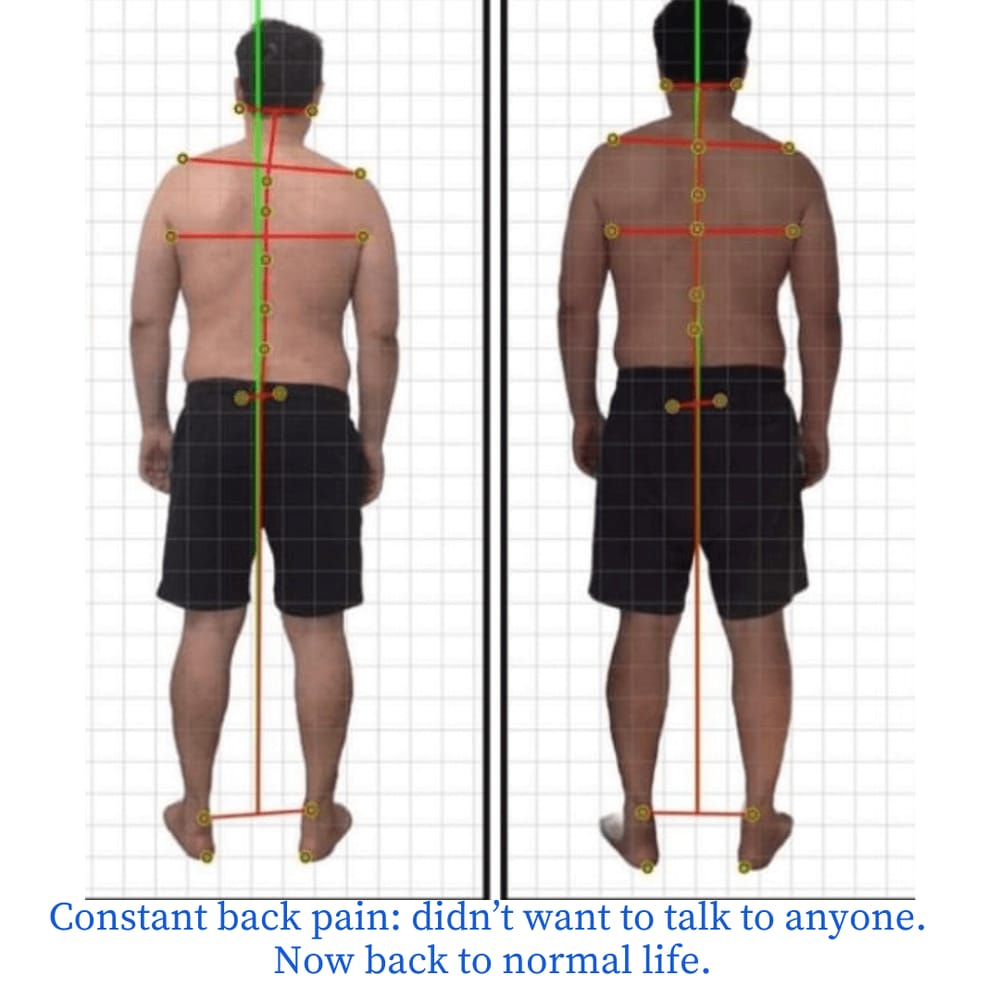
Personalized Therapy Plans: No two Posture Therapy routines are alike. Each session commences with a thorough evaluation of your pain history and a head-to-toe posture assessment. Utilizing photos and gait analysis, your current posture and movement limitations are scrutinized. Tailored exercises are then meticulously assigned to rectify any postural discrepancies. Your unique experiences, including past injuries, activities, and lifestyle, shape your body's current state, necessitating a therapy plan that's specific to you.
Simple, Accessible Exercises: Posture therapy exercises are specialized yet simple enough to be performed at home by anyone. Many exercises utilize body weight and are executed against a level surface for reference, such as a wall, chair, or floor. These exercises effectively align your joints without the need for special equipment. As muscles regain proper length and tension, pressure, stress, and pain stemming from uneven joints and pinched nerves are alleviated.
Emphasis on Posture Improvement: Every exercise in a Posture Therapy regimen aims to straighten load-bearing joints and restore function to the entire muscular system. While some exercises may resemble those found in yoga or pilates, subtle variations target deep posture muscles more effectively. A Posture Therapist's expertise lies in selecting exercises and sequences tailored to your body's needs, accelerating the journey to a pain-free, properly aligned posture.
Embark on Your Pain-Free Journey with Posture Therapy
Posture Therapy commences with a comprehensive, whole-body assessment involving photos, gait analysis, and functional tests. From this evaluation, your coach devises a series of gentle exercises and movements tailored to your body's unique needs. As muscles function more effectively in a balanced posture, your body regains its freedom of movement, free from pain. If you've ever wondered whether bad posture is permanent, the short answer is that in most non-traumatic cases the pattern is learned and can be retrained. Posture Therapy is low-risk, simple, and effective. Ready to try the posture therapy method for yourself? Begin online at postureletics.com.
What I see in practice
When someone shows me their assessment, the conversation is almost never about the spot that hurts. The lower back that aches through every workday is usually doing overtime for hips that stopped carrying their share years ago — and no amount of treating the back changes what the hips aren't doing. The moment people see their own four photos with the deviations marked, the years of failed one-spot fixes suddenly make sense. That's why I insist on assessment before exercise, every time: the same routine that rebuilds one body reinforces the imbalance in another.
Common questions
What is the posture therapy method?
It's an approach that treats chronic muscle and joint pain by correcting the body's alignment rather than chasing the symptom. Your posture is assessed head to toe, then a set of specific exercises is matched to your own deviations and repeated daily. The idea is that pain often comes from the body compensating around an imbalance, so restoring the alignment removes the strain causing it.
How is posture therapy different from regular physical therapy?
There's overlap, but the focus differs. A lot of physical therapy targets the painful area directly. The posture therapy method looks at how your whole body is loaded — because pain in one spot often traces back to an imbalance somewhere else — and works to level the joints from the ground up. The exercises are gentle and done at home, and the program is built around your specific pattern rather than a standard protocol.
How long does posture therapy take to work?
It varies with how long the pattern has been building and how consistently you do the work. Some people feel less tension within a couple of weeks, while a lasting change in resting posture usually takes longer. Daily repetition matters more than long, occasional sessions.
Is posture therapy safe, and when should I see a doctor first?
The exercises are generally low-load and use your own body weight, so they're suitable for most people. Still, see a clinician first — and before starting any routine — if your pain is severe or steadily worsening, followed an injury, or comes with numbness, tingling, or weakness spreading into a limb, fever, unexplained weight loss, or any loss of bladder or bowel control. Posture therapy is education and movement, not a replacement for medical care.