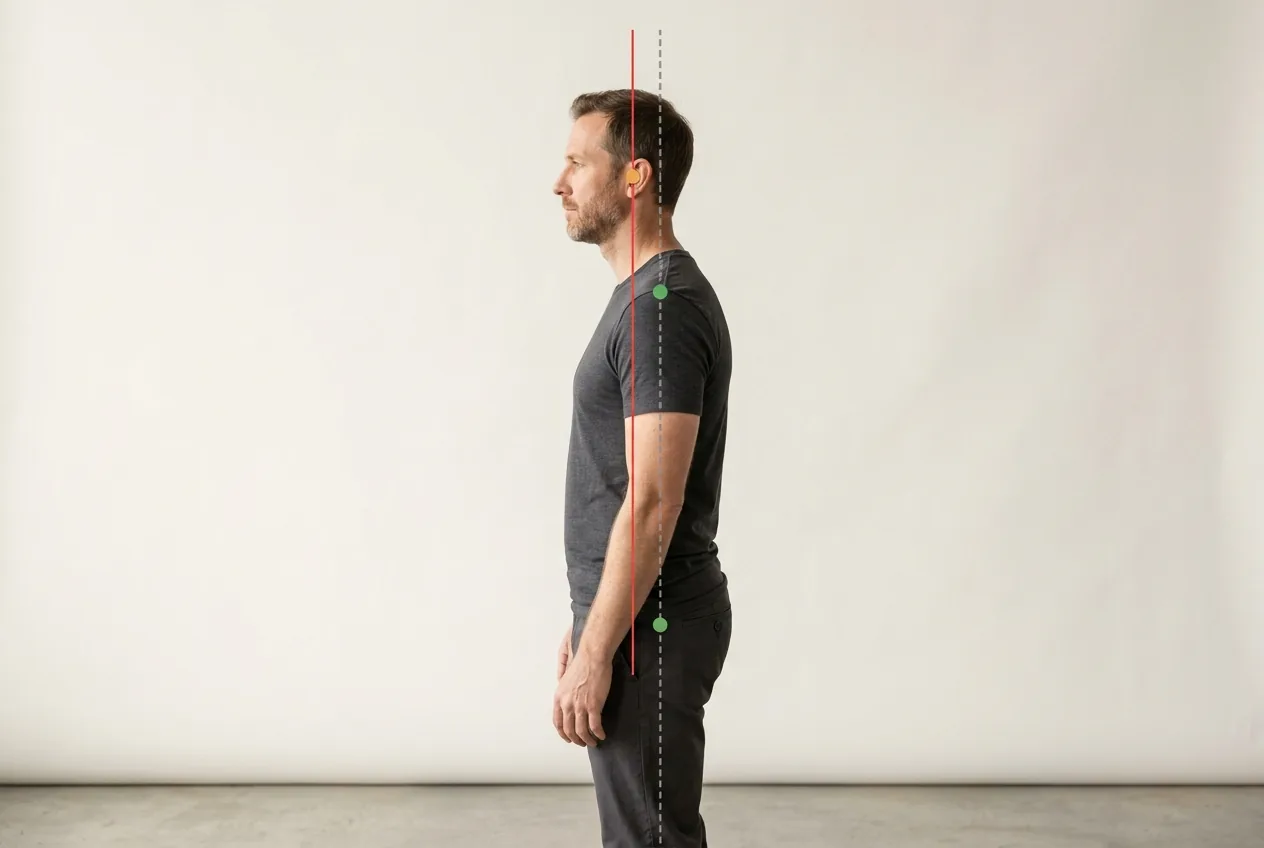
You've probably tried a few neck stretches off a video — tilt here, hold there, feel a bit looser for an hour. Then the tightness and the forward creep come back, and you wonder whether neck exercises actually do anything. If your neck aches by mid-afternoon and your head sits ahead of your shoulders in every photo, you don't need more stretching. You need cervical posture exercises that retrain the neck to hold itself.
There's a difference, and it's the whole point of this page. Stretching a tight muscle gives temporary relief. Retraining the neck changes the position it defaults to. One fades by lunch; the other sticks.
Why stretching alone doesn't hold
When your head drifts forward — the everyday result of screens and phones — the muscles at the front of your neck get long and switch off, while the ones at the back get short and overworked. Stretch the tight, overworked ones and you ease the symptom for a while. But you haven't switched the lazy front muscles back on, so nothing actually holds your head in its new position. Gravity and habit pull it forward again.
That's the lever effect behind forward head posture: the further forward the head, the harder the back of the neck works, and the more it aches. Effective cervical posture exercises do three things stretching alone can't — wake up the deep muscles that should hold your head, release the ones overworking, and rehearse the better alignment until it feels normal.
A stretch borrows relief for an hour. Retraining the neck builds a position that holds on its own.
The daily sequence
Do this most days. The whole thing takes under ten minutes, and frequency matters more than duration — short and regular beats long and occasional.
1. Chin tucks — the foundation
This switches the deep neck flexors back on and glides your head back over your shoulders. Almost everyone does it wrong by nodding the chin down; you're gliding straight back.
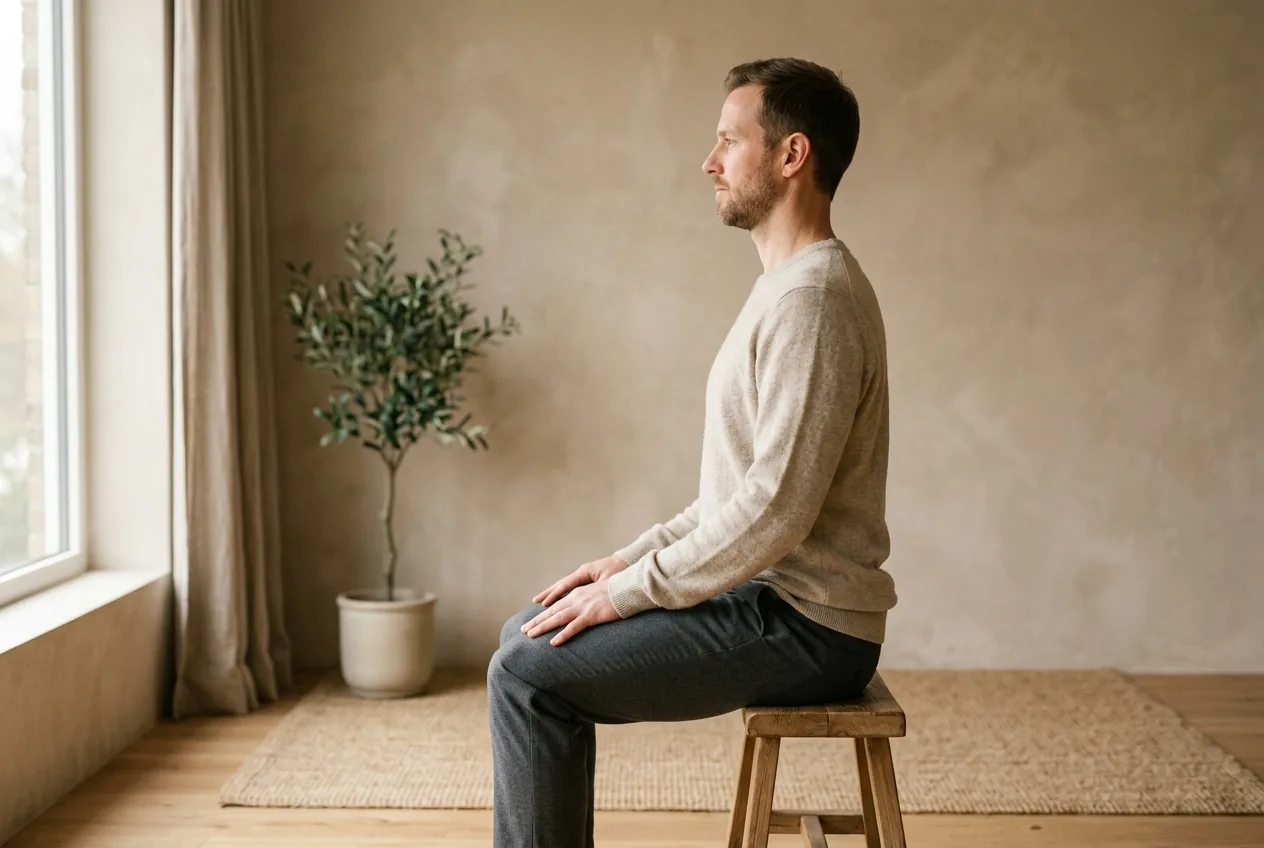
- Sit or stand tall, looking straight ahead.
- Without tilting your head down, draw it straight back, like making a gentle double chin. Feel the front of the neck working and a light stretch at the base of the skull.
- Hold five seconds, release. Do 8 to 10 reps.
The full technique and the common mistakes are in the chin tucks exercise guide. This is the single most useful move on the list.
2. Wall angels — for the upper back beneath
The neck doesn't work alone. A rounded, stiff upper back pushes the head forward, so you have to address it too. Stand with your back to a wall, heels a few inches out, lower back gently flattened. Bring your arms into a goalpost shape against the wall, then slide them up and down keeping the backs of your hands and elbows close to the wall. Ten slow reps.
3. Upper-trap and levator release
Gently tilt your ear toward your shoulder to lengthen the muscle running up the side of your neck. Hold 20 seconds each side. Then turn your head slightly down toward your armpit for a second angle, 20 seconds each side. This releases the muscles that overwork in a forward-head pattern.
4. Base-of-skull release
Lie on your back, rest the base of your skull on two fingers or a small rolled towel, tuck your chin a few millimetres, and relax for two minutes. This calms the small muscles that refer pain up into headaches.
5. Prone chin tucks to build endurance
Once the basic chin tuck feels easy, add a version that works against gravity. Lie face down, propped on your forearms, looking at the floor. Gently tuck your chin and lift the back of your head slightly toward the ceiling, lengthening the back of your neck without cranking it up. Hold five seconds, lower, repeat 8 to 10 times. This builds real endurance in the deep neck muscles, which is what lets your head hold its position through a long day rather than drifting forward by lunchtime. Skip it if it causes any sharp pain and stick with the seated version.
Order and frequency matter
Activate before you stretch, and move often rather than long. Doing chin tucks first wakes the muscles that should hold your head; stretching first just loosens things with nothing trained to take over. And a few short sessions sprinkled through the day beat one ten-minute block, because you're competing with eight hours of forward loading. Set a couple of reminders and do a round between tasks.
If your tightness shows up as base-of-skull aching specifically, the targeted approach in neck pain at the base of your skull pairs well with this routine.
What to stop doing
- Stop relying on stretching alone. Without activation, the position doesn't hold.
- Stop the marathon once-a-week session. Frequency is what changes a habit.
- Stop ignoring the upper back. The neck can't hold position over a collapsed mid-back.
- Stop returning to the same forward screen and phone angle between sets. Raise both.
When to see a doctor
Posture work is education, not medical care. These exercises suit a postural, non-traumatic neck. But see a clinician promptly before starting if neck pain followed a fall or accident, if you have numbness, tingling, or weakness running into an arm or hand, if you have dizziness or balance trouble, or if a severe headache or neck stiffness with fever appears suddenly. Pain that's severe or steadily worsening deserves a look first.
Tuning the routine to your neck
Chin tucks, wall angels, and these releases help most people, because the forward-head pattern is so common. But how far forward your head sits, how stiff your upper back is, and which muscles have switched off vary from person to person — and the order you should prioritize them in varies too. Generic sequences are a fine starting point; lasting relief comes from working your actual pattern.
A proper posture assessment measures your real deviations and builds the sequence around them. Train the neck to hold itself, and the afternoon ache stops being the default.
Common questions
How often should I do cervical posture exercises?
Most days, in short rounds rather than one long block. A few minutes sprinkled through the day beats a single ten-minute session, because you're competing with hours of forward loading, so a couple of reminders to do a round between tasks works well.
Are chin tucks supposed to be done by nodding the head down?
No — that's the most common mistake. You glide the head straight back over the shoulders, like making a gentle double chin, while keeping your eyes level. You should feel the front of the neck working and a light stretch at the base of the skull, not a downward nod.
Why doesn't stretching my neck keep the tightness away?
Stretching a tight, overworked muscle eases the symptom for an hour, but it doesn't switch the lazy front-of-neck muscles back on, so nothing holds your head in its new position. Without that activation, gravity and habit pull the head forward again by lunchtime.
Should I activate or stretch first in the routine?
Activate first. Chin tucks wake up the deep muscles that should hold your head, so the alignment has something to hold it. Stretching first just loosens things with nothing trained to take over.