A doctor or a scan report mentioned cervical stenosis, and the word landed heavily — "narrowing of the spinal canal" in your neck sounds like the kind of thing that only goes one direction. You've been turning it over since: how worried should I be, what does it actually mean for my day, and is there anything I can do that helps rather than just waiting for it to get worse?
Cervical stenosis means the space inside your neck's spinal canal — the bony tunnel your spinal cord runs through — has narrowed. That narrowing can crowd the cord or the nerves branching off it, which is what produces symptoms when it produces any at all. This is an educational overview, not medical advice, and stenosis is the one neck topic where what your own clinician finds on examination matters more than anything you read. Some symptoms here need prompt assessment, covered below. Read this to understand the picture, then take it to your doctor.
What cervical stenosis actually is
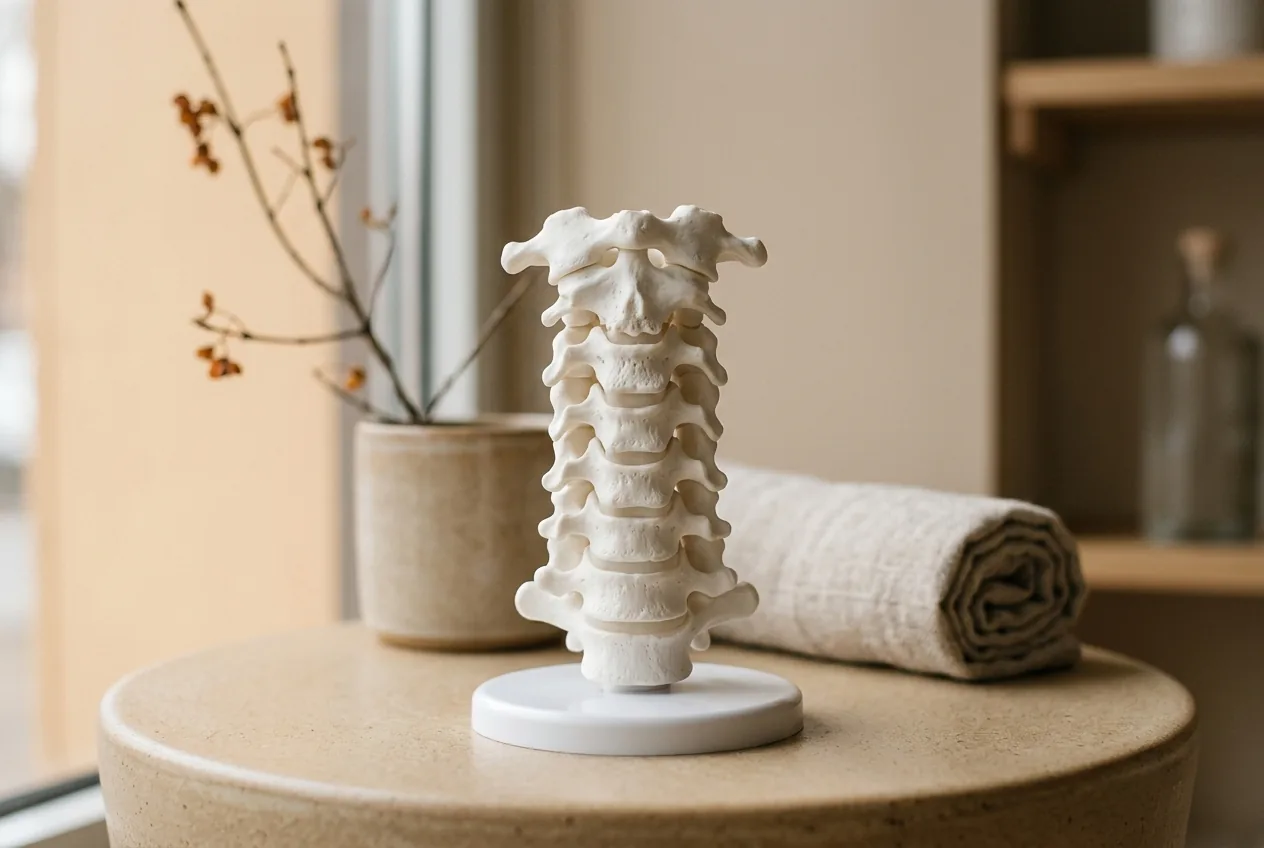
Your spinal cord runs down a protected channel formed by the stacked rings of your vertebrae. In the neck — the cervical spine — that channel is fairly snug to begin with. Cervical stenosis is when something reduces that space further.
Usually it's the slow result of ordinary aging changes: discs lose height, the small joints at the back of the spine thicken, and ligaments stiffen and bulge inward. None of that is dramatic on its own. Together, over years, they can narrow the canal enough to crowd the cord or the nerve roots leaving it. Some people are simply born with a narrower canal, so it takes less change to cause symptoms. The broader idea is the same one covered in the overview of what spinal stenosis is, applied to the neck specifically.
Two things worth holding onto. First, narrowing on a scan doesn't always cause symptoms — plenty of people have it and feel nothing. Second, the word "narrowing" describes a state, not a guaranteed decline; many people stay stable for years.
What it can cause
When cervical stenosis does produce symptoms, they come in two broad types depending on what's getting crowded.
If a nerve root is pinched where it exits, symptoms tend to follow that nerve down one arm: aching, tingling, a burning line, or a patch of numbness in the shoulder, arm, or hand. This part overlaps closely with a pinched nerve in the neck.
If the spinal cord itself is crowded — a condition doctors call myelopathy — the picture is different and matters more. It can show up as clumsy hands (trouble with buttons, dropping things), heaviness or unsteadiness in the legs, a change in walking or balance, or symptoms in more than one limb. These cord-related signs are the ones to take seriously and bring to a doctor without delay.
Red flags — when to see a doctor
Because the spinal cord is involved, cervical stenosis has a clearer set of "see someone now" signs than ordinary neck pain. Get assessed promptly, and treat the later ones as urgent, if you notice:
- Clumsy or weak hands — fumbling buttons, dropping cups, a grip that's lost its sureness.
- Unsteadiness when walking or a sense your legs aren't fully reliable.
- Numbness, tingling, or weakness in both arms or both legs.
- Any loss of bladder or bowel control — this is an emergency.
- A rapid worsening of any of the above.
These can signal that the cord, not just a nerve, is being affected, and that needs proper evaluation rather than home management. Simple neck ache without any of these is far less worrying, but if you're unsure, get it checked.
Stenosis is one of the few neck problems where the symptoms in your hands and legs tell a doctor more than the pain in your neck does.
What helps day to day
For stenosis that's mild and being monitored, the everyday aim is to keep the neck moving comfortably, avoid positions that crowd the canal further, and stay as strong and mobile as you can. Work with your own clinician — what follows is general.
- Mind the extreme positions. Holding the neck cranked far back (full extension) for long stretches tends to narrow the canal most. Long periods looking sharply up — or sharply down at a phone — are worth breaking up.
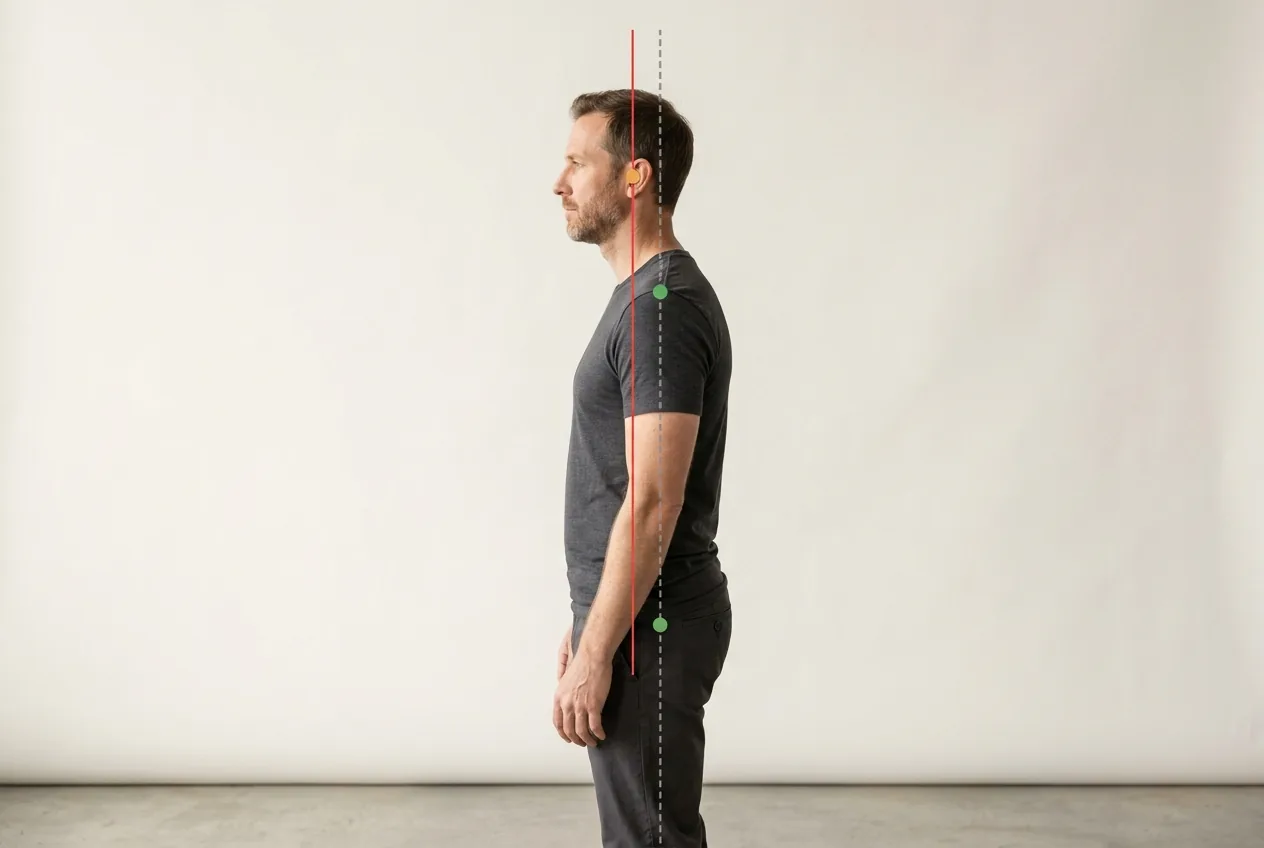
- Keep the head balanced over the shoulders. A neutral, tall neck position loads the canal more evenly than a forward-jutted or far-back one. Gentle chin tucks and frequent posture resets help maintain it.
- Stay moving. Gentle range-of-motion within comfort keeps the neck from stiffening. Walking and general activity help more than rest, which tends to stiffen everything.
- Set up your screen and sleep. A screen at eye level and a pillow that keeps the neck level reduce the hours spent in aggravating positions.
What to be cautious with: forceful neck manipulation or hard cracking, and aggressive end-range stretching. With a narrowed canal, gentle and controlled is the rule.
Why your own pattern matters
Cervical stenosis is partly a structural thing — but how much it bothers you day to day often tracks with how you hold your neck. A head that lives forward, or a habit of craning far back, loads the narrowed segment harder than a neck that sits balanced. Two people with similar scans can have very different days depending on posture and movement habits.
That's why generic advice only goes so far. The positions that unload your neck depend on your specific alignment — where your head sits, how your upper back is shaped, what's tight and what's weak. A posture assessment measures those deviations so the daily approach fits your neck rather than a textbook one. Alongside the care of your own clinician, it's worth understanding how a posture-based method works from your actual alignment to keep the neck loaded as kindly as possible.
Cervical stenosis is a description of space, not a verdict. Understanding what it can and can't cause — and knowing which symptoms mean "see someone now" — turns a frightening word into something you can manage with the right help.
Common questions
Is cervical stenosis serious?
It can be, but often it isn't. Mild narrowing frequently causes no symptoms and stays stable for years. It becomes serious when the spinal cord itself is crowded, producing clumsy hands, unsteady walking, or symptoms in multiple limbs. Those signs need prompt medical assessment; simple neck ache without them is far less concerning.
What are the symptoms of stenosis in the neck?
Symptoms range from none at all to arm pain, tingling, or numbness when a nerve root is pinched. When the spinal cord is affected, signs include clumsy or weak hands, trouble with fine tasks like buttons, unsteadiness when walking, and symptoms in both arms or legs. The cord-related signs are the ones to act on quickly.
Can you fix cervical stenosis without surgery?
Many people manage mild to moderate cervical stenosis without surgery using movement, posture changes, and avoiding positions that crowd the canal. Surgery is generally reserved for cord involvement or symptoms that progress despite conservative care. Your own clinician's findings guide the decision, not a scan alone.
What movements should I avoid with cervical stenosis?
Holding the neck cranked far back for long periods tends to narrow the canal most, so prolonged looking sharply up — and sharply down at a phone — is worth limiting. Forceful neck manipulation, hard cracking, and aggressive end-range stretching are also best avoided. Gentle, controlled movement within comfort is the safer approach.