
By the back nine your lower back is talking to you. The first few holes felt fine, but somewhere around hole twelve every swing leaves a dull ache on one side, and by the time you're walking off the eighteenth you're stiff and cranky. Golf lower back pain is almost a rite of passage among amateur golfers, and the cause is more consistent than you'd think: your hips aren't rotating, so your lower back rotates for them.
The golf swing is a rotation. Your body has to turn, coil, and unwind at speed. The question is which part of you does the turning. When the hips and mid-back rotate freely, the lower back is along for the ride. When they're stiff, the only place left to find the rotation is the lumbar spine — and that's the part least built to twist under load.
Why the lower back ends up doing the twisting
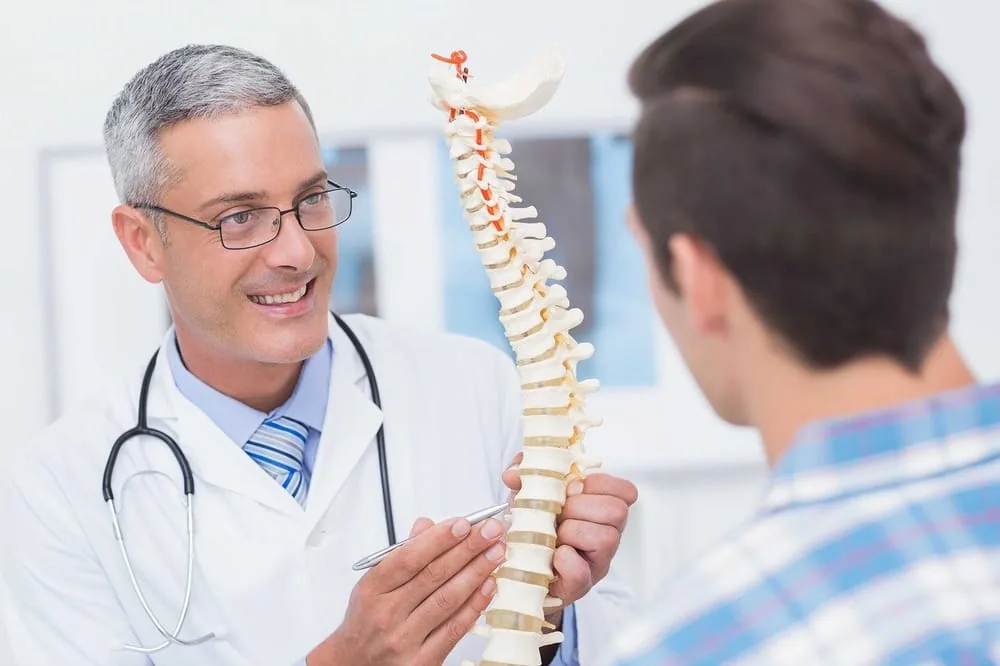
Your spine is built for rotation in the mid-back (the thoracic region) and for stability in the lower back (the lumbar region). The lumbar segments barely rotate by design — they're meant to hold steady while the hips and mid-back do the spinning.
So when your hips are tight and your mid-back is stiff, the swing still demands rotation, and your body takes it from the only place it can: the lower back. Each swing wrings a few extra degrees out of segments that aren't built for it. Do that a hundred times a round and the soft tissue around the lower spine gets irritated and inflamed. That's the ache on the back nine — it's cumulative.
There's often a second layer. Many golfers stand to the ball with an over-arched lower back and a forward-tipped pelvis, the anterior pelvic tilt pattern that desk life builds. Starting the swing from an over-arched position pre-loads the lower back before you even move.
The lower back isn't built to rotate. When your hips won't turn, it does the twisting it was designed to avoid.
The hip-rotation fix
The core fix is to give the rotation back to the hips and mid-back so the lower back can stay quiet. That's mobility plus a small change in how you sequence the swing.
Open up hip rotation
- 90/90 hip rotations. Sit on the floor with one leg bent in front and one to the side, both knees at right angles. Rotate your hips to switch which leg is front and which is side, slowly, feeling the rotation come from the hip sockets. Two minutes of this opens the exact motion the swing needs.
- Hip flexor stretch. Tight hip flexors lock the pelvis and feed the over-arched setup. A daily hip flexor stretch frees the pelvis to rotate instead of staying jammed forward.
- Seated or standing trunk rotations. Gently rotate your upper body left and right, keeping the hips relatively still, to wake up mid-back rotation.
Mobilize the mid-back
A stiff thoracic spine forces the lower back to compensate. Cat-cow and an open-book stretch (lying on your side, arms together, opening the top arm across to the other side while the hips stay put) restore the rotation up where it belongs. The mobility work in cat-cow is a good daily starting point.
Build rotational stability
Mobility lets you rotate; stability keeps the lower back quiet while you do. The deep core that braces against rotation is what protects the lumbar spine through impact. The moves in core exercises for lower back pain build that anti-rotation control. Strong glutes help too — they power the hip turn so the back doesn't have to muscle it.
On the course
- Warm up before the first tee. Cold, stiff hips guarantee the back does the work early. A few minutes of hip rotations and trunk turns changes the first three holes.
- Let the hips lead the downswing. Starting the downswing by turning the hips, not yanking with the arms and shoulders, keeps the sequence right and spares the lower back.
- Don't over-arch at address. Set up with a long, neutral spine rather than a deep arch. Brace your stomach lightly.
- Walk and carry sensibly. Lugging a heavy bag on one shoulder all round adds an asymmetric load — switch shoulders or use a trolley.
What to stop doing
- Stop trying to "swing harder" through a stiff body. More speed through unrotating hips just sends more force into the lower back.
- Stop skipping the warm-up. The back nine ache often starts as a cold first nine.
- Stop ignoring the off-course pattern. If you sit all week in an over-arched slump, you bring that posture to the tee.
When to see a doctor
Most golf back pain is mechanical and eases with mobility and better sequencing. See a clinician promptly if you have numbness, tingling, or weakness running into a leg, any loss of bladder or bowel control, pain that followed a fall, fever with back pain, unexplained weight loss, or pain that's severe or steadily worsening. Pain that shoots down the leg with rotation also deserves a proper look before you keep playing.
Why a generic fix only goes so far
Hip rotations and mid-back mobility help most golfers, because the stiff-hips-twisting-spine pattern is so common. But how your hips rotate, whether your pelvis tips at address, which side you load — that's specific to you, and golf is an asymmetric sport that often builds a one-sided pattern. Two golfers with the same back pain can need different work.
Lasting relief comes from knowing your own setup: where your body deviates, which side overworks, which muscles gave up the job. A posture-based approach to chronic back pain measures your real deviations first, then builds the routine around them — so you're freeing and strengthening what your swing actually needs. Give the rotation back to your hips, and the back nine stops being the part you brace for.
Common questions
Why does my lower back hurt after golf?
Usually because your hips and mid-back aren't rotating freely, so the lower back twists to make up the difference — and the lumbar spine isn't built to rotate under load. The strain adds up over a round, which is why the ache often shows up on the back nine. An over-arched setup at address can pre-load the back too.
How do I stop golf from hurting my back?
Give the rotation back to your hips and mid-back through mobility work like 90/90 hip rotations, hip flexor stretches, and open-book stretches, then build deep-core stability so the lower back stays quiet through impact. On the course, warm up first, let your hips lead the downswing, and avoid setting up with a deep arch.
Is golf bad for your lower back?
Not inherently. A swing powered by freely rotating hips and a mobile mid-back keeps the lower back stable and protected. Trouble comes when stiff hips force the spine to do the twisting it was designed to avoid. Improving hip rotation and core stability usually lets people keep playing comfortably.
Should I keep playing golf with back pain?
Mild stiffness that eases with a proper warm-up and mobility work is usually manageable. A sharp pain that builds through the round, or pain that shoots down a leg with rotation, is a signal to stop and address the cause rather than play through it. See a clinician for radiating or worsening pain.