
If your back hurts after work, you're not alone. Many people experience back pain from working at a desk, whether it's down to sitting for long hours, lifting heavy objects, or repetitive movements. Understanding how to manage and prevent this discomfort matters for maintaining a healthy spine and avoiding long-term issues.
Common Causes of Back Pain from Work
Back pain at work can stem from various factors, including:
- Prolonged Sitting: Sitting for long periods, especially with poor posture, puts significant strain on your lower back.
- Repetitive Movements: Repeating the same movements, like bending or twisting, can lead to muscle fatigue and injury.
- Heavy Lifting: Lifting objects without proper technique can easily cause strains or sprains in the back.
- Poor Ergonomics: A workstation that doesn't support good posture can contribute to ongoing back pain.
- Poor Posture: Slouching or sitting with improper alignment for extended periods can exacerbate back pain by straining muscles and compressing the spine.
Understanding these causes is the first step in addressing back pain after working and implementing preventive measures.
How to Prevent Back Pain from Working at a Desk
Here are some tips to help you prevent and manage back pain during and after your workday:
1. Adjust Your Workspace
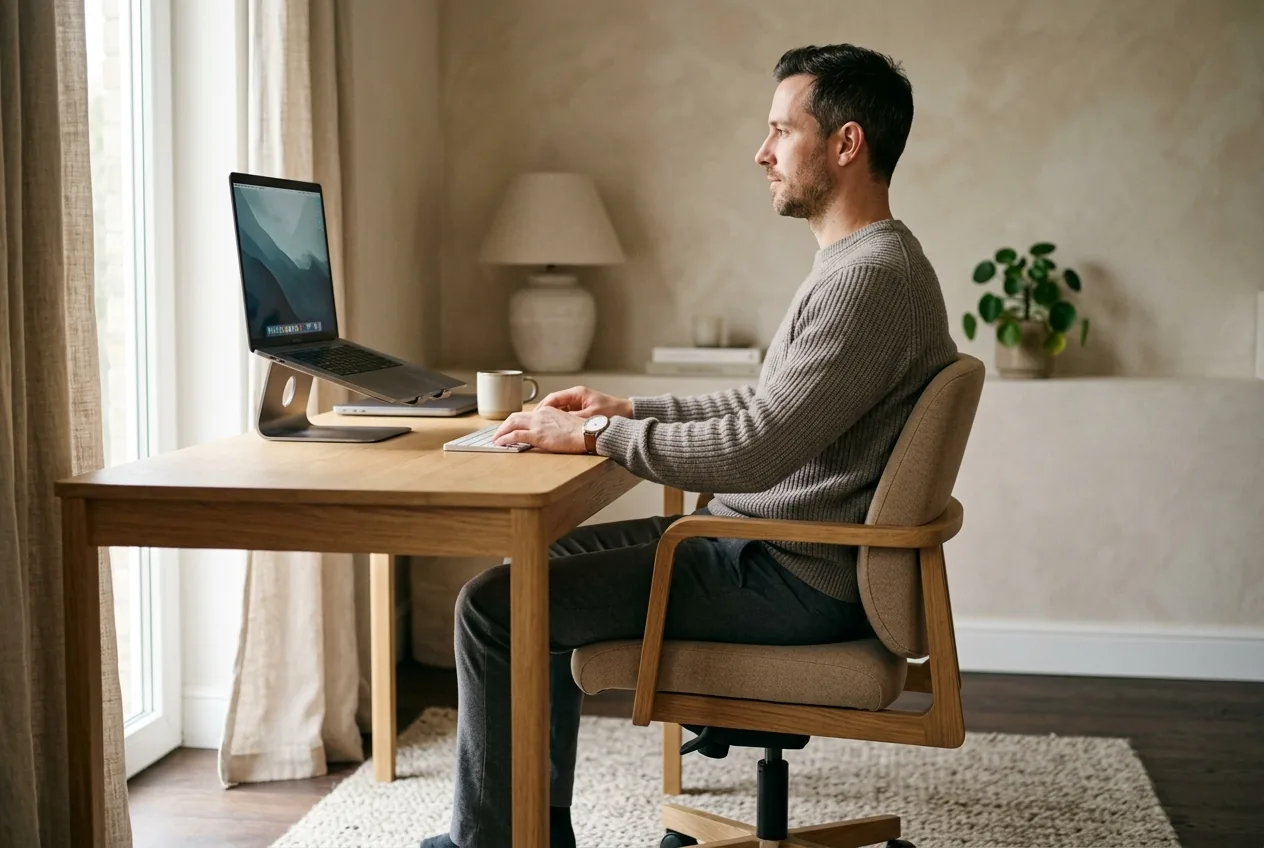
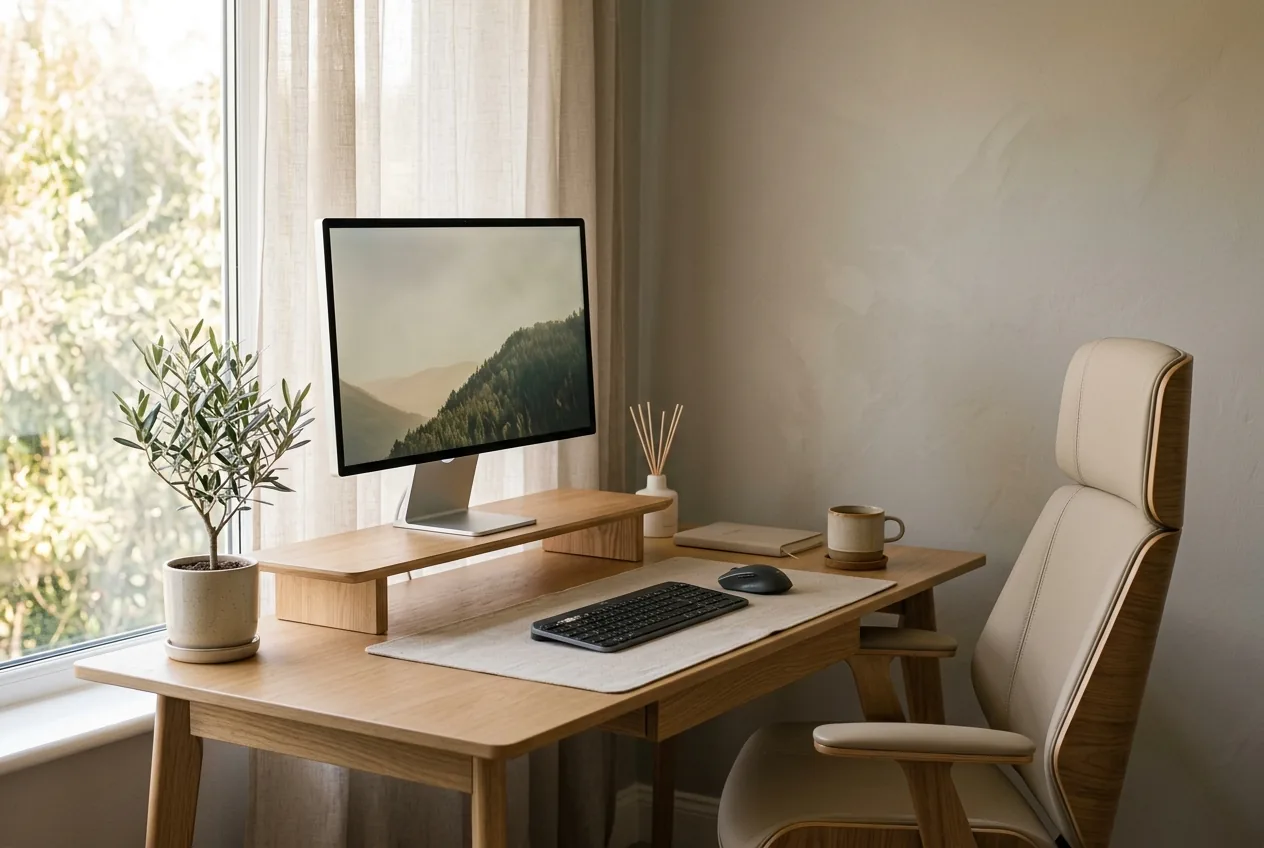
- Ensure your chair, desk, and computer screen are set up to support good posture. Your feet should be flat on the floor, your knees at a 90-degree angle, and your computer screen at eye level. Our guide to an ergonomic desk setup for back pain walks through the specifics, and if your lower back is the trouble spot, see how to sit with lower back pain.
2. Correct Your Posture with Personal Posture Therapy
- Invest in personalized posture therapy to identify and correct misalignments specific to your body. This will help you maintain proper alignment throughout the day and prevent strain on your back.
3. Take Regular Breaks
- Avoid sitting or standing in one position for too long. Aim to take a break every 20 to 40 minutes to stretch and move around. This helps relieve muscle tension and improves circulation.
4. Practice Good Lifting Techniques
- When lifting objects, bend at your knees, not your waist. Hold the object close to your body and avoid twisting your spine.
5. Incorporate Stretching into Your Routine
- Regularly stretch your back, shoulders, and legs throughout the day to reduce stiffness and improve flexibility. A few desk stretches at work you can do without leaving your chair make this easy to keep up.
6. Stay Active
- Engage in regular physical activity outside of work to strengthen your core and back muscles, which can help support your spine during the workday.
Managing Back Pain After Work
Even with preventive measures, you may still experience some back pain after work. Here's how to deal with it:
- Perform Your Custom Posture Therapy Routine: Spend 20 minutes performing your personalized posture therapy exercises to relieve tension, realign your spine, and support your back's recovery.
- Apply Heat or Ice: Use a heating pad or ice pack on your back to reduce pain and inflammation.
- Maintain Good Posture: Even after work, be mindful of your posture, whether sitting, standing, or lying down.
How to Get an Affordable Posture Therapist
Finding an affordable posture therapist who can provide personalized care is easier than you might think. With the Postureletics app, you have access to professional posture therapy right at your fingertips. Our app offers customized exercise routines tailored to your unique needs, helping you correct misalignments and maintain a healthy spine. Best of all, you can get started with a free posture assessment, making it an accessible and cost-effective solution for anyone looking to improve their posture and reduce back pain.
Conclusion
Back pain from working at a desk can be a significant challenge, but with the right strategies and posture therapy, you can manage and even prevent discomfort. Incorporate the tips above into your daily routine, and remember that a personalized posture therapy plan can help you maintain a pain-free lifestyle. Download the Postureletics app now to get started with a free posture assessment and your custom exercise routine.
Common questions
Why does my back hurt so much after a day at my desk?
Sitting for hours holds your spine in one position and lets the muscles that support it switch off, while tight hips and a forward-leaning posture quietly add load to your lower back. By late afternoon those small strains add up into a familiar ache. It's less about one bad moment and more about the hours of stillness.
What's the best sitting position to avoid back pain at work?
Aim for feet flat on the floor, knees roughly level with your hips, and your screen at eye level so you're not craning forward. Keep your lower back gently supported and your shoulders relaxed rather than hunched. Even a good position gets uncomfortable if you hold it too long, so the bigger win is moving regularly.
How often should I get up from my desk?
Every 20 to 40 minutes is a reasonable target. A short stand, a quick walk, or a stretch resets your posture and gets blood moving. Frequent small breaks tend to help more than one long break at lunch.
When should I see a doctor about back pain from work?
See a clinician promptly if the pain is severe, steadily worsening, or started after an injury, or if you have numbness, tingling, or weakness spreading into a leg, or any loss of bladder or bowel control. Desk adjustments and stretches are for everyday strain, not for those warning signs.