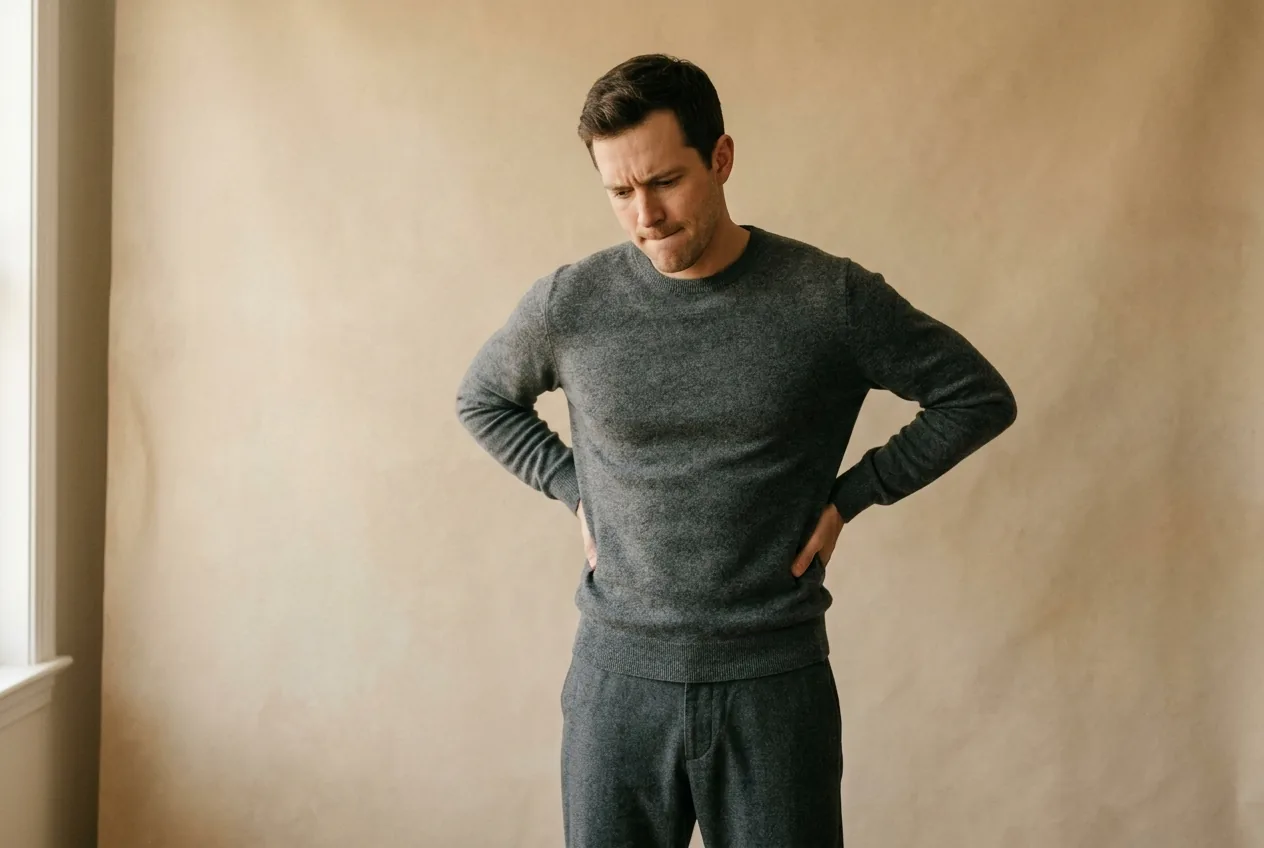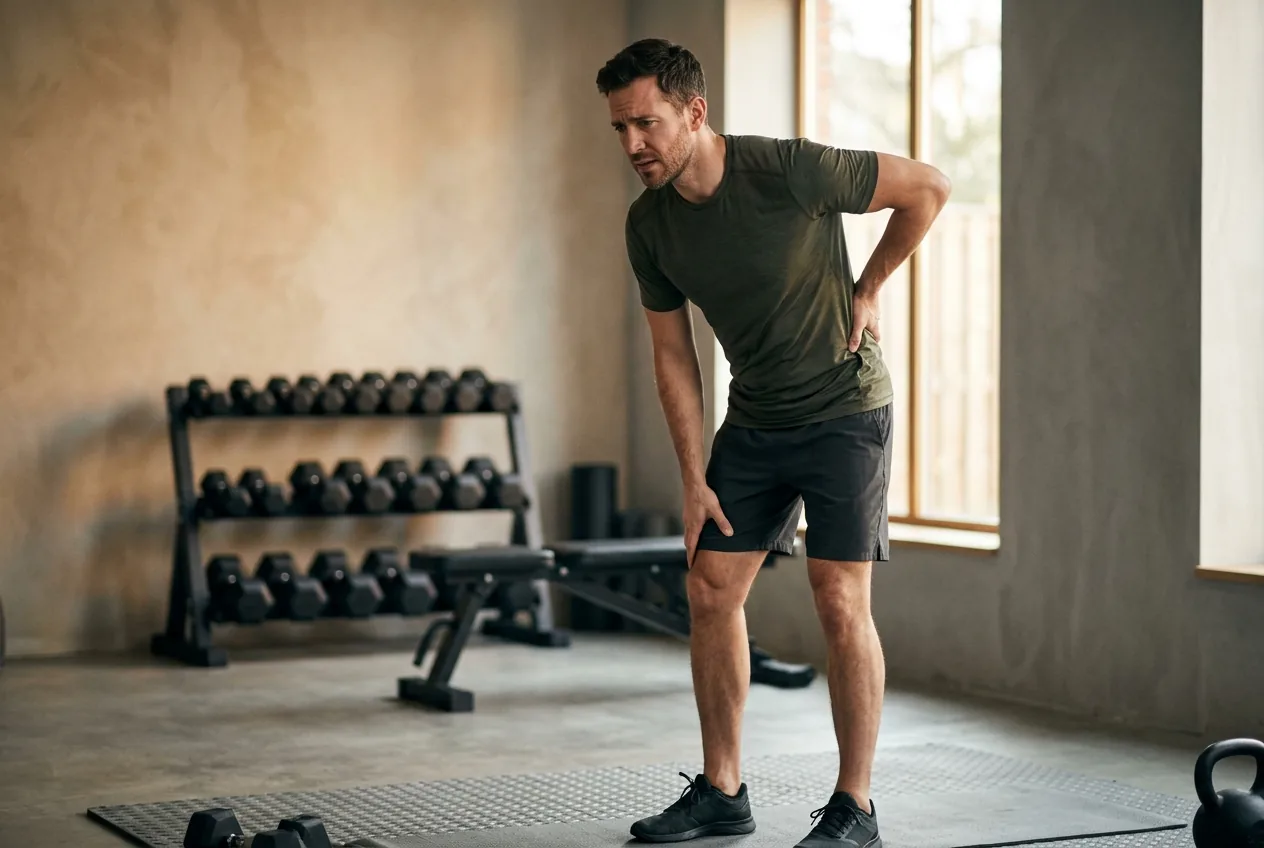
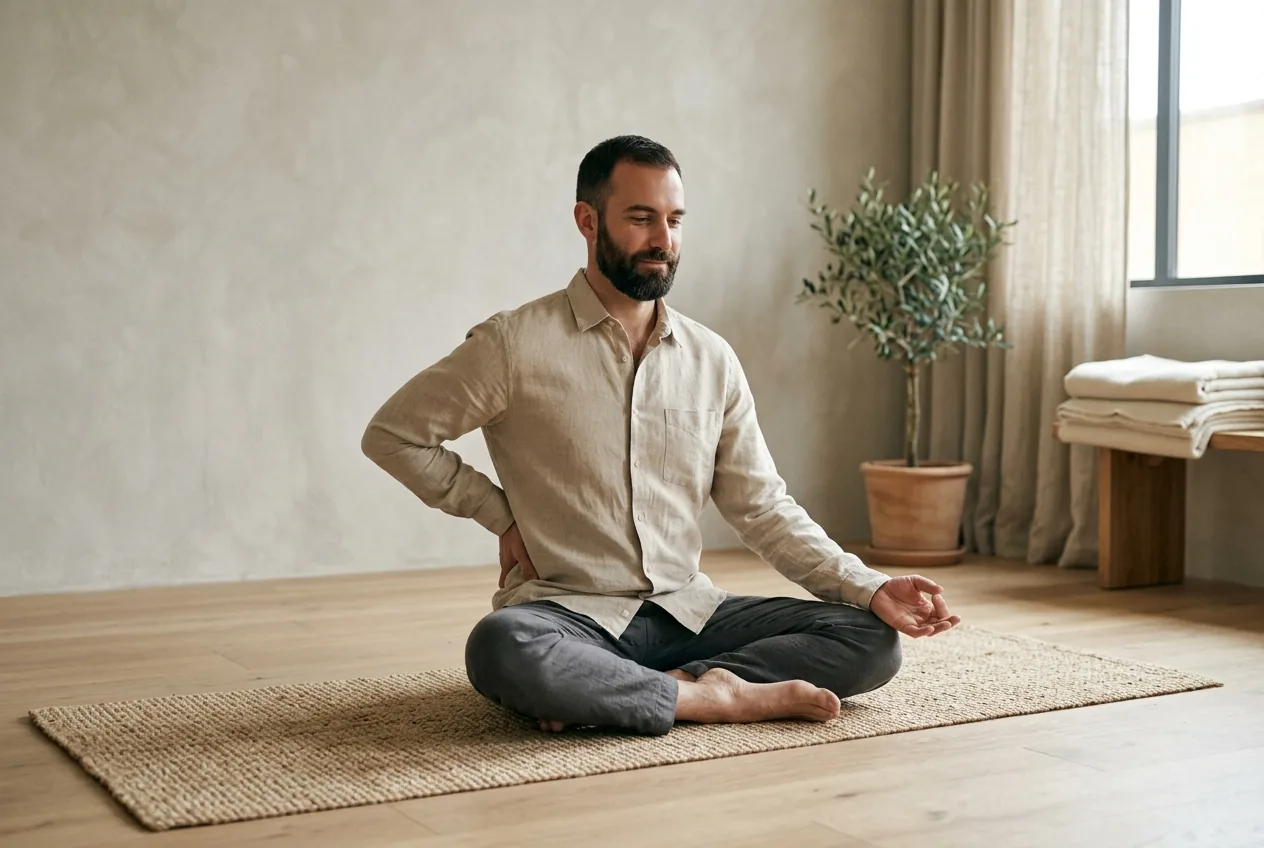
It seems like bad luck — your lower back has been nagging for months, and now one knee has started aching too, maybe on the stairs or after you've been on your feet. Two separate problems, you figure, in two separate places. So you treat them separately, and neither one really budges.
They're usually not separate. The lower back and the knees sit at opposite ends of a chain, and that chain shares the load of holding you upright and moving you around. When one link is off, the others compensate, and the strain shows up above and below. Lower back and knee pain arriving together is one of the clearest examples of how a posture problem in one place creates pain somewhere else entirely. Once you see the chain, treating both at once makes a lot more sense.
The body is a chain, not a stack of separate parts
Stand up and your weight runs down a connected line: spine, pelvis, hips, knees, ankles, feet. Each joint passes load to the next. The pelvis is the hub in the middle — your lower back sits on top of it, your legs hang below it. So how your pelvis is tilted sets the angle for everything above and below.
That's why a single misalignment rarely stays put. If your pelvis tilts forward (a common pattern from years of sitting), your lower back arches more and your thigh bones rotate in a way that changes how your knees track when you walk and bend. The knee, trying to stay under your body weight, compensates — and a knee that's compensating wears and aches. The pain ends up at both ends of the chain because the problem is in the middle. This is the heart of how the knee and posture connect, and it's why chasing the knee alone so often fails.
When two distant joints hurt at once, suspect the link between them, not two separate accidents.
How the chain reaction usually runs
A few common versions of the same story:
The pelvic tilt route. A forward-tilted pelvis arches the lower back (there's the back pain) and rotates the thighs inward, dragging the kneecaps slightly out of their groove (there's the knee pain). Both symptoms, one cause.
The weak-glute route. When the glutes switch off — extremely common after years of sitting — two things follow. The lower back overworks to do the hip's job of stabilising you, and the knee loses the steadying control the glutes provide, so it takes more strain when you walk, squat, or climb stairs. Weak glutes are a quiet driver of pain at both ends, which is why weak glutes and back pain is worth understanding.
The tight-hamstring route. Tight hamstrings pull on the pelvis from below, flattening or tugging the lower-back curve, and they also affect how the knee moves through its range. The result is stiffness and ache above and below.
In all three, the muscles that should stabilise the chain have stopped pulling their weight, and the joints at the ends pay for it.
What actually helps both at once
Because the problem is shared, the most efficient fixes work on the chain rather than chasing each symptom. These are gentle and worth building gradually.
- Wake up the glutes. Glute bridges are the workhorse here — they re-engage the muscles that stabilise both the lower back and the knee. Lie on your back, knees bent, feet flat, and lift your hips by squeezing your glutes, not arching your back. Lower slowly. This single move targets the most common cause at both ends.
- Loosen the hip flexors. Years of sitting shorten the muscles at the front of the hip, which tilts the pelvis forward. A gentle hip-flexor stretch eases that tilt, relieving the back arch and improving how the knees track. The full how-to is in the hip-flexor stretch for back pain.
- Strengthen the chain through the middle. Slow, controlled movements that load the hips and knees together — like a gentle sit-to-stand from a chair, focusing on pushing through your heels and squeezing your glutes — retrain the chain to share load properly.
- Walk with attention. Walking is good for both, provided your form isn't feeding the problem. Even weight through both feet, a tall spine, and a relaxed stride let the chain work as designed.
What to stop: don't push through deep squats or lunges while the chain is misaligned — you'll just grind the compensating knee harder. Build the glute and hip work first, then load the bigger movements.
When to see a doctor
Most linked back-and-knee pain is mechanical, but some signs warrant prompt attention. See a clinician promptly if you have numbness, tingling, or weakness spreading down a leg, a knee that locks, gives way, or is significantly swollen, any loss of bladder or bowel control, pain after a fall or injury, fever with back pain, or pain that's severe or steadily worsening. A knee that buckles or a back symptom that's escalating deserves a professional look rather than home management.
Treating the chain, not the symptoms
Glute bridges and hip-flexor stretches help most people with linked back-and-knee pain because the common drivers — pelvic tilt and switched-off glutes — are so widespread. But the exact way your chain is loaded, and which links have given way, is specific to you. A pattern that helps one person's chain can do little for another's.
That's the case for knowing your own pattern rather than guessing. A short posture assessment measures where your pelvis, spine, and lower body actually sit out of neutral and builds a daily routine to rebalance the whole chain — which is usually what relieves pain at both ends at once, instead of trading one ache for another. The broader picture of how one misalignment causes pain elsewhere is laid out in where bad posture causes pain.
Common questions
Can lower back problems cause knee pain?
Yes. The back, pelvis, hips, and knees form a connected chain, so a misalignment at the pelvis — often from a forward tilt or switched-off glutes — changes how the knees track and load. The knee compensates and aches, even though the original problem is higher up. That's why treating the knee alone often doesn't help.
Why do my lower back and knees hurt at the same time?
Usually because they share a cause in the middle of the chain — most often a forward-tilted pelvis or weak glutes. The pelvis sets the angle for the spine above and the legs below, so when it's off, strain shows up at both ends. Two symptoms, one underlying pattern.
What exercises help both back and knee pain?
Glute bridges and gentle hip-flexor stretches are the most efficient, because they address the shared causes — switched-off glutes and a forward pelvic tilt — that drive pain at both ends. Slow, controlled sit-to-stands also retrain the chain to share load. Build these gently before loading deeper squats or lunges.
Should I see a doctor for combined back and knee pain?
See a clinician promptly if a knee locks, gives way, or is markedly swollen, if you have spreading numbness or weakness in a leg, any loss of bladder or bowel control, pain after a fall, fever with back pain, or pain that's severe or steadily worsening. Otherwise, mechanical back-and-knee pain often responds well to working on the shared chain.