
You've been told your bones are thinner than they should be, and now you're caught between two fears: do too little and lose more bone, do the wrong thing and risk a fracture. Meanwhile your upper back is starting to round forward, and you can feel yourself folding a little more each year.
That tension is exactly why getting the approach right matters. Osteoporosis posture exercises, done well, can strengthen the muscles that hold your spine upright and slow the forward stoop — and a couple of common moves are best avoided because they load thin bone in the riskiest direction. This is a careful, in-control topic, so let's go through it plainly and safely.
Why posture changes with osteoporosis
Osteoporosis means bone has lost density and become more fragile. In the spine, the vertebrae can develop small compression fractures, sometimes without a dramatic injury — they can happen with a forward bend or a heavy lift. As the front edges of vertebrae compress, the upper back curves forward into a stoop, sometimes called a dowager's hump. Each bit of forward rounding shifts your weight further forward, which loads the front of the next vertebrae more, which encourages more rounding. It can feed on itself.
The muscles along the back of your spine — the ones that hold you upright — are your defense against that drift. When they're strong and working, they help keep you tall and share the load away from the fragile front edges of the vertebrae. When they're weak, gravity wins and the stoop deepens. This is why the right exercise isn't optional with thin bone; it's part of protecting the spine. The neck hump and dowager's hump article covers the upper-back rounding in more detail.
The principle that keeps it safe
The single most important rule with osteoporosis and the spine: avoid loaded forward bending and forced spinal flexion. Bending the spine forward under load presses on the front edges of the vertebrae — exactly where compression fractures happen. So deep forward bends, full sit-ups, toe-touches, and rounded-back lifting are the moves to steer away from.
The flip side: strengthening the muscles that extend the spine (gently), staying upright, and doing safe weight-bearing movement all help. The aim is a strong, tall back and good balance, built without ever rounding the spine forward under load.
With thin bone, the rule is simple: strengthen the back that holds you upright, and never load a forward-bent spine.
Exercises that tend to help
Move slowly, keep your spine long and neutral, and never push into pain. If you're new to this or unsure, do these with a clinician's guidance first.
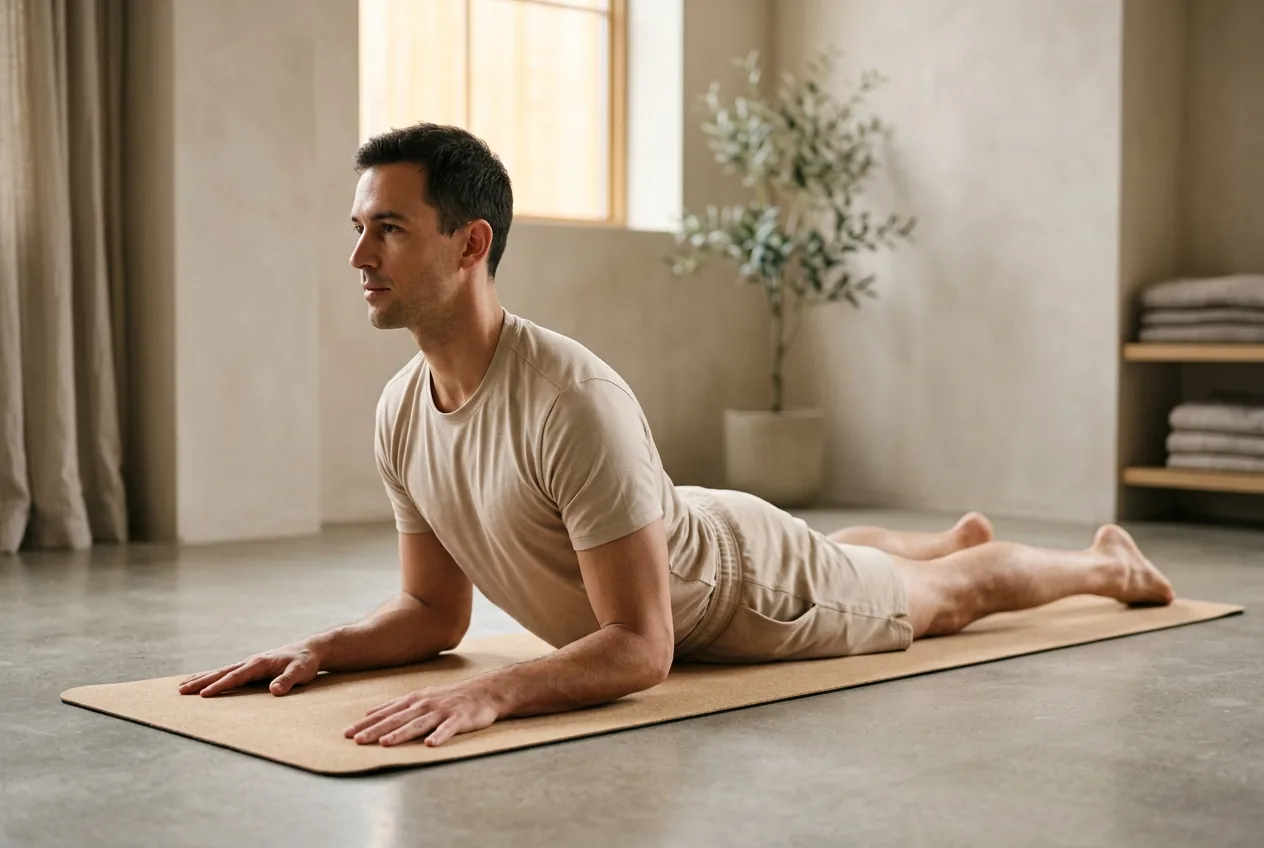
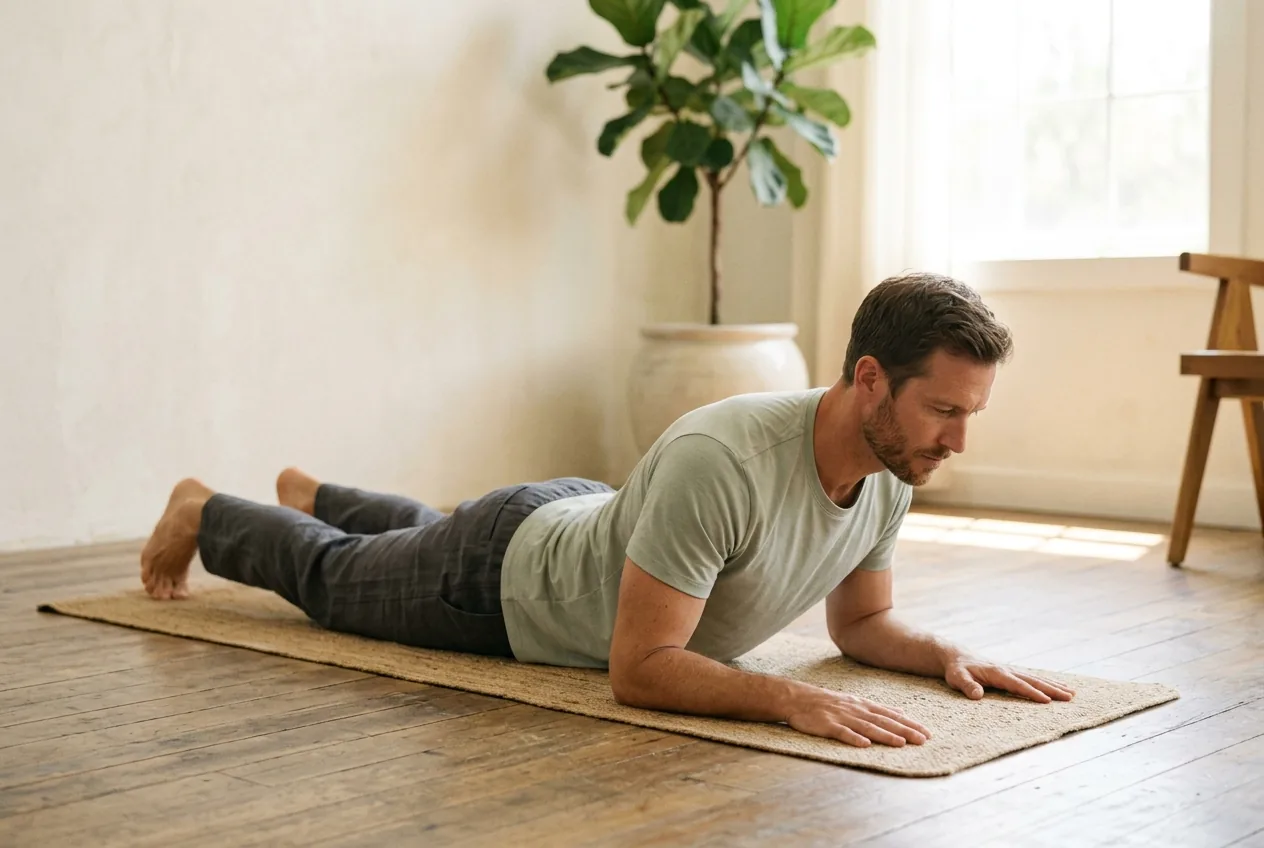
- Gentle back extension, lying face down. Resting on your stomach, lift your head and chest just slightly off the floor using the muscles along your spine, keeping it gentle — no cranking into a deep arch. This strengthens the upright muscles. The superman exercise for the back is a lighter version of this idea.
- Wall angels. Standing with your back against a wall, slide your arms up and down keeping contact. This opens the chest and trains the upper back to pull you tall. See wall angels.
- Chin tucks. Drawing the chin gently back stacks the head over the spine and counters the forward-head drift that comes with a stoop. The chin tucks exercise shows the form.
- Glute bridge. Strong glutes support the pelvis and help you stand tall. The glute bridge is a safe, spine-neutral choice.
- Weight-bearing walking and balance work. Walking is good for bone and easy on the spine. Adding simple balance practice reduces fall risk, which matters as much as strength when bone is fragile.
For older readers especially, the gentle back exercises for seniors routine pairs well with these.
Exercises to avoid
These load thin vertebrae in the risky direction:
- Full sit-ups and crunches — they bend the spine forward under load.
- Toe-touches and deep standing forward bends.
- Heavy rounded-back lifting — hinge from the hips and keep the spine long instead.
- Forced, deep spinal twists under load.
- High-impact or unstable moves that risk a fall, until your balance and strength are solid.
When to see a doctor
This is a condition where professional guidance genuinely matters. Talk to your doctor or a physical therapist before starting, so the program fits your bone density and history. Get seen promptly if you have sudden, sharp back pain — especially after a minor bend or lift — since that can signal a new compression fracture. Also see a clinician for a notable loss of height, a rapidly worsening stoop, or pain that's severe, persistent, or coming with numbness or weakness in the legs.
Any loss of bladder or bowel control needs same-day care. This article is education, not medical advice, and osteoporosis management is something to handle with your care team. It's worth understanding who treats back pain so you reach the right specialist.
Why your own pattern guides the work
Two people with osteoporosis can have very different posture — one stooped mostly in the upper back, another with weak hips that let the whole frame drift forward. The exercises that help most depend on where your alignment has shifted and which muscles have switched off. A generic list can't see that.
Knowing your own pattern is what makes a safe program effective. A posture assessment measures how your spine and pelvis are actually positioned, so the routine targets the muscles that have weakened and the alignment that's drifting — without ever loading the spine in the direction thin bone can't take. If you're working to stay tall and protect your spine, the posture therapy approach is built to match the work to your structure.
Strengthen the upright muscles, skip the forward-loaded moves, build your balance, and lean on your care team. That's how you protect a spine with thin bone.
Common questions
Is exercise safe with osteoporosis?
Yes, and it's important — the right exercise strengthens the muscles that hold your spine tall, supports bone, and improves balance to reduce fall risk. The key is avoiding loaded forward bending and getting your program cleared by a clinician first.
What exercises should I avoid with osteoporosis?
Full sit-ups and crunches, toe-touches and deep forward bends, heavy rounded-back lifting, and forced spinal twists — all of which load the fragile front edges of the vertebrae. High-fall-risk moves are also best avoided until your balance is solid.
Can exercise reverse the osteoporosis stoop?
It may not undo existing vertebral changes, but strengthening the back muscles and improving alignment can reduce further rounding, help you stand taller, and ease related discomfort. Consistency and safe form matter more than intensity.
Why does osteoporosis cause a forward hunch?
Thin vertebrae can develop small compression fractures, especially at the front edges, which tips the upper back forward. Weak upright muscles let gravity deepen the curve, and each bit of rounding loads the next vertebra more, so it can progress without strengthening work.