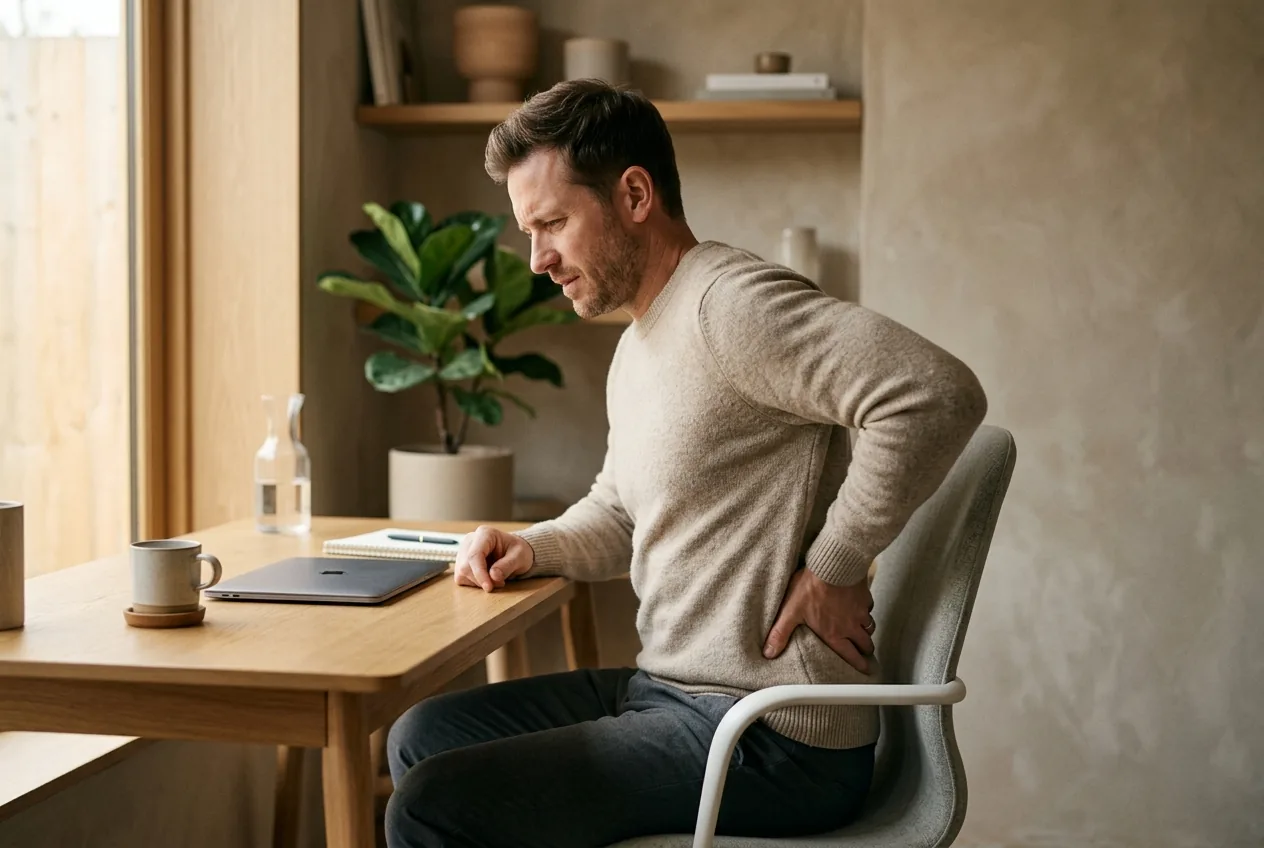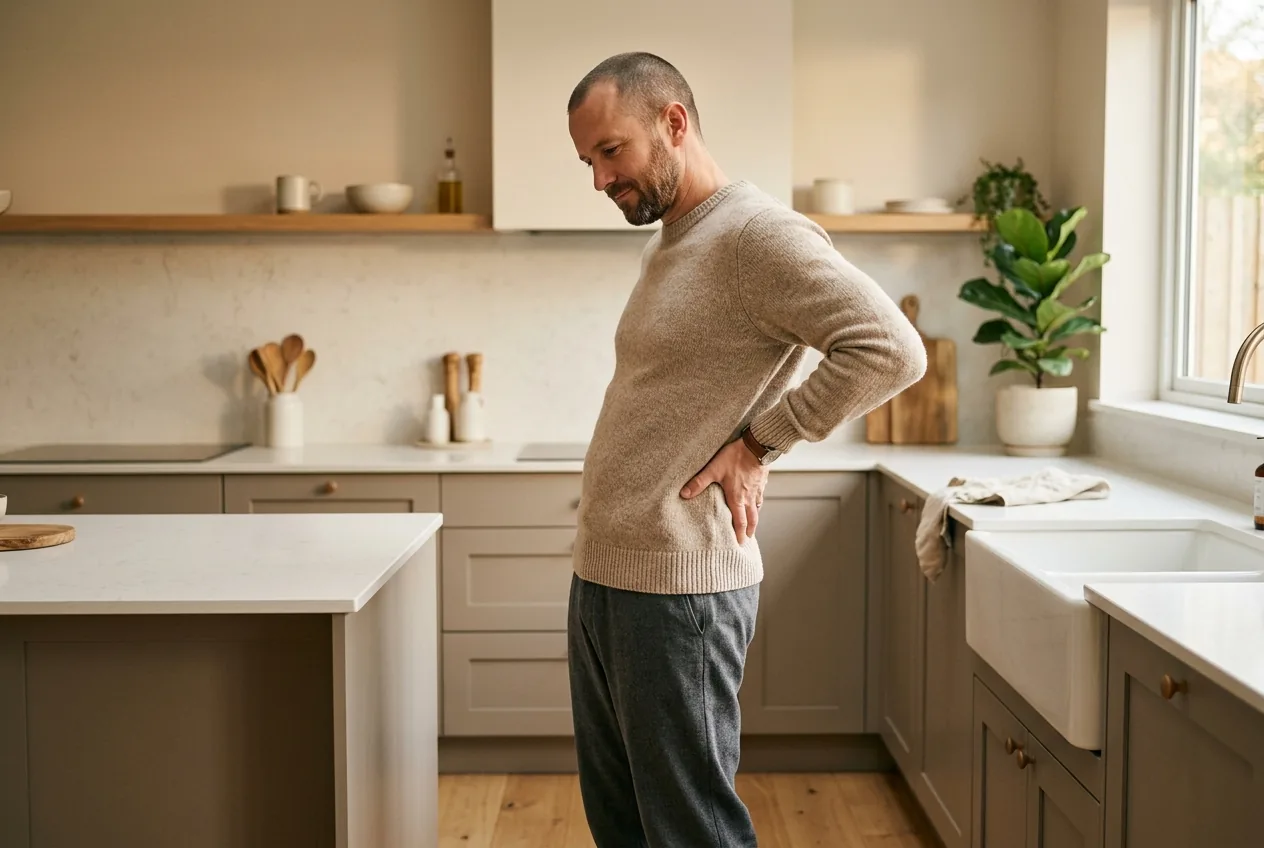
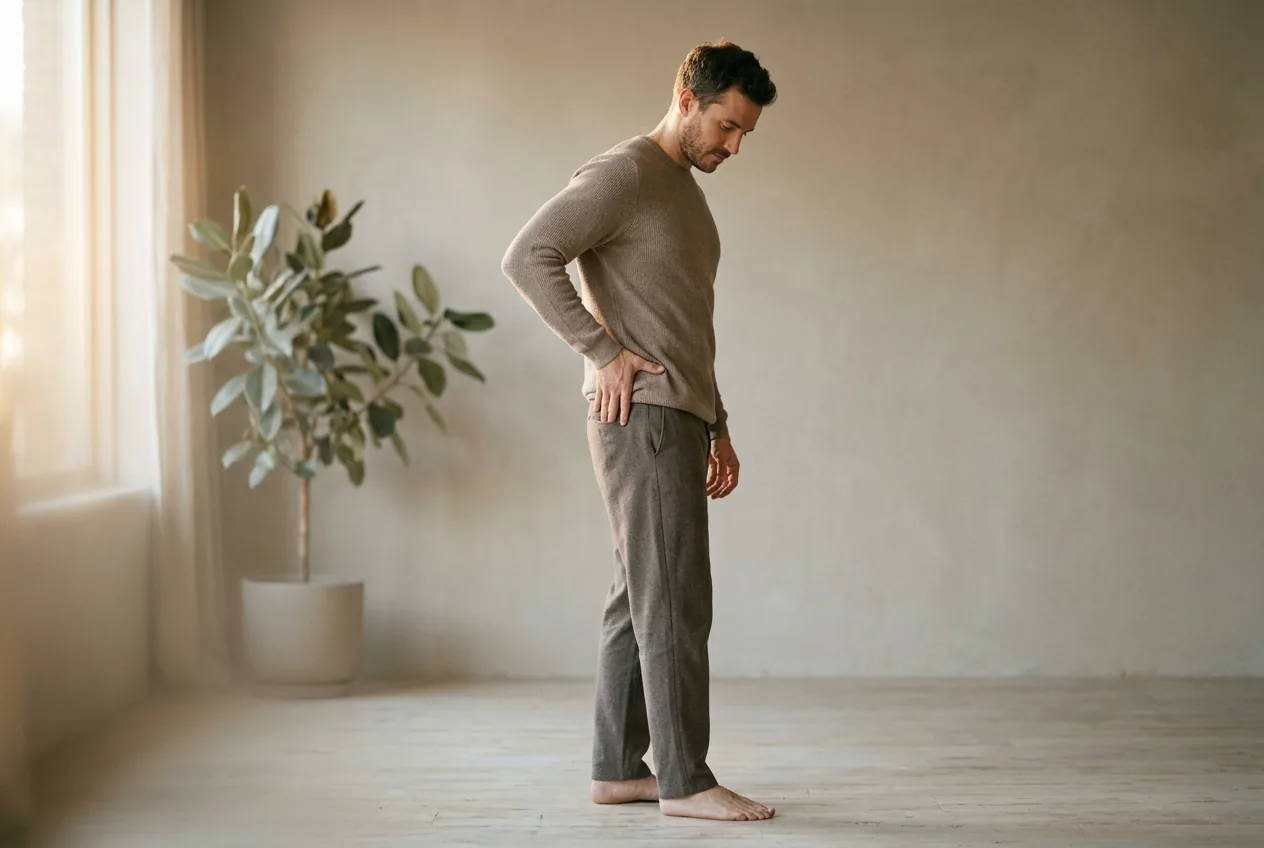
It's a sharp catch right above your hip bone, on one side only. You feel it when you twist to grab something from the back seat, when you've been standing with your weight parked on that leg, or when you get up after sitting too long. The other side is fine, which somehow makes the sore side more annoying.
Pain above the hip on one side is one of those aches that feels alarming because it's so localized and so sharp. Most of the time, though, it's a muscular and mechanical problem — the soft tissue over the top of your pelvis getting strained by an uneven load.
What sits above your hip
The area above your hip bone, at the side of your lower back, is packed with muscle and connective tissue. The muscles that run alongside your spine attach down here. The broad sheet of tissue over your lower back blends into the top of the pelvis. The deep muscles that keep your trunk upright when you stand on one leg work hard right in this zone.
When the load across your pelvis is uneven — one side higher, or one side carrying more — this band of tissue on the overloaded side gets pulled tight and irritated. That's the sharp ache you feel just above the hip.
It's a one-sided complaint because the loading is one-sided. The pain marks the side that's been doing more.
Why it lands on one side
- A tilted or rotated pelvis. If one side of your pelvis sits higher, the muscles above that hip stay stretched and strained all day.
- Standing on one leg. Parking your weight on the same hip while you stand — at the counter, in line, holding a kid — jams the muscles above that hip.
- Tight hip and glute muscles on one side, which pull on the pelvis and refer ache up over the hip. The same tightness often drives piriformis-related pain deeper in the buttock.
- A twist held for hours, like driving or working at a desk angled to one side, loading one side of the lower back.
- Weak side glutes, so the muscles above the hip overwork to keep the pelvis level when you walk.
If the ache also runs down into the buttock and back, the whole side may be involved — the connection between back and hip is covered in lower back and hip pain on one side.
Sharp pain above one hip is usually the body telling you that side has been carrying more than its share.
How to settle it
The plan is to release the strained tissue, even out the pelvis, and stop the habit that keeps loading one side.
Release the strained side
- Standing side bend. Stand tall, reach the arm on the sore side overhead, and lean gently away from that side until you feel a long stretch up the flank and over the hip. Hold 20–30 seconds. This lengthens the band of muscle that's been clenched.
- Figure-four stretch. Lying on your back, cross the sore-side ankle over the opposite knee and draw the legs toward you. This opens the deep hip muscles that twist the pelvis and refer pain up over the hip. Hold 20–30 seconds.
Even out the pelvis
- Glute bridges, 8–12 slow reps, pressing evenly through both heels. This rebuilds support so the pelvis stops tilting.
- Side-lying leg raises on the weaker side, lifting the top leg slowly 10–12 times, to strengthen the muscle that keeps your pelvis level when you stand on one leg.
Change the habit
- Stop parking your weight on one leg when you stand. Keep weight even on both feet, or shift it deliberately.
- Don't always carry bags and kids on the same hip.
- If you sit twisted toward a second monitor or to one side, square up your setup.
Keep the routine short and daily. The pelvis evens out through repetition.
Watch how you carry yourself
The stretches and strengthening only hold if you stop re-loading the same side through the day. A few things to catch yourself on:
- The hip-pop stance. Standing with one hip jutted out, weight dumped onto that leg, is comfortable and quietly punishing. Stack your weight evenly over both feet.
- Reaching and twisting repeatedly to one side. Grabbing the same item from the back seat, or working angled toward a second screen, loads one side over and over. Turn your whole body, or move the thing closer.
- Carrying a heavy bag on one shoulder. It hikes one hip up to balance the load. Switch shoulders, or use a backpack so the weight sits even.
- Sleeping always on the same side without support. A pillow between the knees keeps the top hip from dropping and twisting overnight.
These are small, but they're the daily inputs deciding whether the same side keeps getting overloaded. Fix the inputs and the soreness has room to settle.
When to see a doctor
Most pain above the hip on one side is muscular and eases with the work above. A few signs mean see a clinician first.
Get checked promptly if you have numbness or weakness spreading down the leg, any loss of bladder or bowel control, pain that followed a fall or accident, fever with back pain, or unexplained weight loss. One flag matters especially here, because the kidneys sit just above and behind the hips: one-sided pain near your flank, particularly with burning urination, blood in the urine, fever, or nausea, can be a kidney issue such as an infection or stone rather than a muscle strain. That combination is worth a prompt call to your doctor. Pain that's severe or steadily worsening also needs a professional look.
Why the same side keeps catching
If the same side keeps flaring, a fixed imbalance is feeding it — a pelvis that sits higher on one side, a glute that's gone quiet, a habit of standing on one leg you don't even notice. Borrowed stretches ease the symptom for a day, but the load keeps landing on the same side because the pattern underneath hasn't moved. And a stretch that suits one posture can aggravate another, which is why a generic routine often helps a little and then stalls.
What changes things is knowing your own pattern — which side is high, which is tight, which is weak — and matching the work to it, day after day. A posture assessment measures those real deviations instead of guessing. If you've been chasing this sharp catch above your hip without it sticking, see how a posture-based method addresses chronic back pain starting from your actual alignment.
Release the strained side, level the pelvis, drop the one-legged habit — and the catch above your hip usually lets go.
Common questions
What is the sharp pain right above my hip bone on one side?
It's usually muscular. The area above your hip bone is packed with the muscles and connective tissue that keep your trunk upright. When the load across your pelvis is uneven, that band of tissue on the overloaded side gets pulled tight and irritated.
Why does standing make it worse?
Parking your weight on the same leg while you stand — at the counter, in line, holding a kid — jams the muscles above that hip. Keeping your weight even on both feet, or shifting it deliberately, takes the strain off.
Could pain above my hip be my kidney rather than a muscle?
It can be. The kidneys sit just above and behind the hips, so one-sided pain near your flank with burning urination, blood in the urine, fever, or nausea can point to a kidney infection or stone. That combination is worth a prompt call to your doctor.
When else should I get pain above the hip checked?
See a clinician promptly for numbness or weakness spreading down the leg, loss of bladder or bowel control, pain after a fall, fever with back pain, or pain that's severe or steadily worsening.