
You take a deep breath and feel a catch — a sharp or pulling pain near or under one shoulder blade that spikes right at the top of the inhale. So you start taking shallower breaths to avoid it, which makes you feel tight and tense, which somehow makes it worse. Shoulder blade pain when breathing is alarming precisely because breathing is something you can't stop doing, so every breath reminds you it's there.
Most of the time the cause is mechanical and muscular — a rib joint or a muscle near the shoulder blade that's irritated and getting tugged each time your ribcage expands. But because the chest is involved, this is also an area where it's worth knowing the signs that mean stop reading and call someone.
Why breathing makes it hurt
Your shoulder blade sits over the back of your ribcage, and the ribs move every time you breathe. As you inhale, the ribs lift and rotate slightly to let the lungs expand. If a rib joint where the rib meets the spine is irritated, or if a muscle stretched across that area is strained, that movement tugs on the sore spot — so the pain peaks at the top of the breath and eases as you exhale.
A few mechanical things commonly sit behind it:
- An irritated rib joint. The small joints where ribs attach to the spine can get stiff or inflamed, often from posture or a sustained awkward position, and movement with each breath aggravates them.
- A strained muscle near the shoulder blade. The muscles that anchor the shoulder blade and run between the ribs can be overworked or strained, especially in a chronically rounded upper back.
- A trigger point or knot. A tense band in the muscle under or around the blade can refer a sharp catch that breathing sets off.
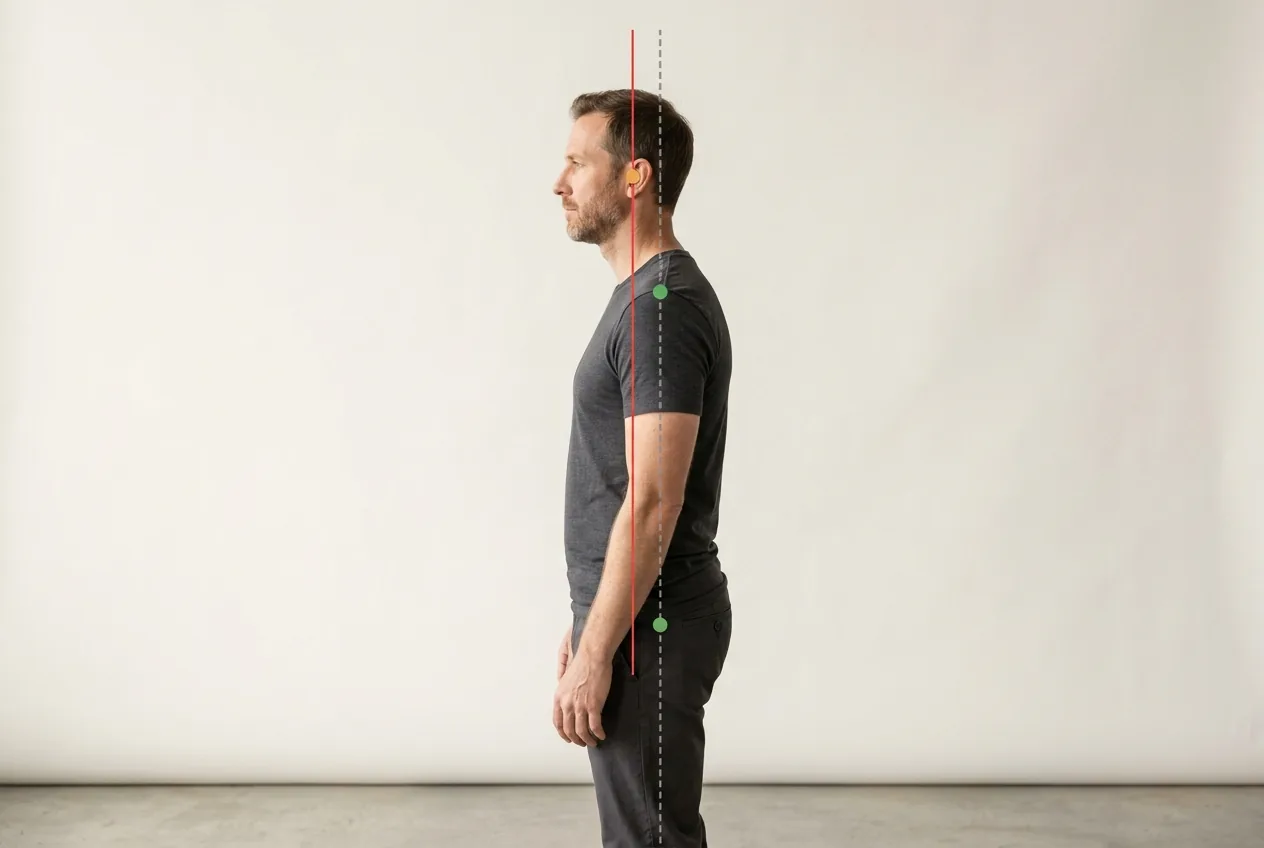
The common thread is a rounded, slumped upper back that loads those structures and limits how freely the ribcage moves. When the upper back is stuck in flexion, the ribs don't rotate as cleanly, and the strain concentrates around the shoulder blade. That rounding pattern is described in rounded shoulders, and the related muscular ache shows up in upper back pain around the shoulder blades.
Breathing tugs on the sore spot because your ribs move with every breath. Free up the ribcage and the catch usually settles.
What tends to help
Once anything serious has been ruled out, the relief comes from restoring movement to the upper back and ribs and easing the irritated tissue.
Restore upper-back and rib movement
- Thoracic extension. Sit on a chair, support your head, and gently arch your upper back over the chair's edge or a rolled towel placed across the mid-back. This mobilizes the stiff segments and lets the ribs move more freely. The thoracic extension exercises guide covers it.
- Thread the needle. On all fours, reach one arm under your body and rotate gently, then reach it up toward the ceiling. This rotates the upper back and ribcage and often eases a stuck rib joint. See the thread-the-needle stretch.
Open the chest and breathe fully
- Doorway chest stretch. Forearms on the frame, step gently through to open the chest. A rounded chest restricts the ribcage, so opening it helps. The doorway chest stretch guide has the setup.
- Slow, full breaths into the ribs. Once the sharpest catch eases, gently practice breathing wider into the sides of the ribcage rather than shallow into the upper chest. Shallow guarding breathing keeps everything tight.
Ease the local tissue
Gentle warmth over the sore area helps the muscle and joint relax. A heat pack for fifteen minutes before your mobility work makes the movements more comfortable.
What to stop doing
- Don't switch to permanent shallow breathing to dodge the pain. It keeps the ribcage stiff and the muscles guarded, which prolongs things.
- Don't force a deep breath into sharp pain repeatedly. Work just up to the edge.
- Don't stay slumped over the desk all day, which keeps the upper back rounded and the ribs restricted.
When to see a doctor — important here
Posture work is education, not medical advice. Pain near the shoulder blade when breathing is usually musculoskeletal, but the chest is involved, so be careful. Seek urgent or emergency care if the pain comes with any of these:
- Chest pain, pressure, or tightness, or pain spreading to the jaw, neck, or arm.
- Shortness of breath, breathlessness, or a feeling you can't get a full breath.
- A cough with blood, or a fever and feeling unwell.
- Sudden sharp pain with rapid breathing, calf swelling or pain, or recent long travel or surgery.
- Fainting, dizziness, or a racing heart.
Those can point to heart, lung, or blood-vessel problems that need immediate assessment. Also see a doctor, less urgently, if the pain followed a fall or injury, is severe or steadily worsening, comes with unexplained weight loss, or isn't improving. When breathing is involved, getting checked is the safe call.
The posture piece behind it
When the cause is mechanical, the deeper question is why your upper back and ribcage are stuck in the first place — and that comes down to how your upper back actually sits, which is specific to you. A generic stretch can free one pattern and miss another.
A proper posture assessment measures how your upper back and shoulders sit and builds a daily routine around it, restoring the rib movement that lets you breathe without the catch. Free the ribcage, and breathing goes back to being something you don't have to think about.
Common questions
Why does my shoulder blade hurt when I breathe in?
Usually because a rib joint or a muscle near the shoulder blade is irritated, and the movement of the ribs as you inhale tugs on the sore spot. That's why the pain peaks at the top of the breath. A rounded, stiff upper back that restricts rib movement is a common setup.
Is shoulder blade pain when breathing serious?
Most often it's muscular or a rib-joint irritation and not dangerous. But because the chest is involved, get urgent care if it comes with chest pressure, shortness of breath, coughing blood, fever, calf swelling, or pain spreading to the jaw or arm. When in doubt, get it checked.
How do I relieve a rib that hurts when I breathe?
Gentle thoracic extension and rotation moves like thread-the-needle often free a stuck rib joint, a doorway chest stretch opens a tight ribcage, and warmth helps the area relax. Avoid permanent shallow breathing, which keeps everything guarded, once any serious cause has been ruled out.
Can posture cause shoulder blade pain when breathing?
Yes, indirectly. A chronically rounded, slumped upper back stiffens the segments where ribs attach and restricts how freely the ribcage expands, which loads the muscles and joints around the shoulder blade. Improving how the upper back sits often removes the catch over time.