You've heard Pilates is good for your back, so you tried a class, and half of it felt fine while the other half left your lower back tighter than when you walked in. That mixed result is the most common experience people have, and it isn't because Pilates doesn't work. It's because some of the moves match your back and some fight it.
Pilates for lower back pain has a real track record, but only when it's doing the thing it's actually good at: teaching the deep core to hold your spine steady. Get that part right and a lot of nagging lower-back ache quietly eases.
What Pilates is actually doing for your back
Most chronic, non-traumatic lower-back pain isn't a damage problem. It's a control problem. The deep muscles that are supposed to brace your spine — the transverse abdominis that wraps around your middle, the pelvic floor, the small muscles along the spine — switch off or get lazy, often after years of sitting. When they're quiet, the bigger, more superficial muscles take over and overwork, and your lower back ends up doing stabilizing work it was never meant to do alone. That's the tightness and fatigue you feel by mid-afternoon.
Pilates, done well, wakes those deep stabilizers back up. The breathing, the slow controlled movement, the emphasis on a neutral spine — it's all training your core to brace before and during movement so your lower back stops bearing the load by itself. This is the same logic behind core exercises for lower back pain, and Pilates is one of the more structured ways to get there.
The catch is that classic Pilates also includes a lot of spinal flexion — rolling the spine up and down — and for some backs, especially disc-sensitive ones, repeated flexion under load is exactly the wrong thing.
The Pilates moves that help
These are the moves that build deep core control without bending your spine into trouble. Move slowly, breathe out as you exert, and stop any move that sends pain down a leg or sharply into the back.
Pelvic tilts
Lie on your back, knees bent, feet flat. Gently flatten your lower back toward the floor by tilting your pelvis, then release back to neutral. Small, controlled, no force. This teaches you to find and move your pelvis independently — the foundation for everything else.
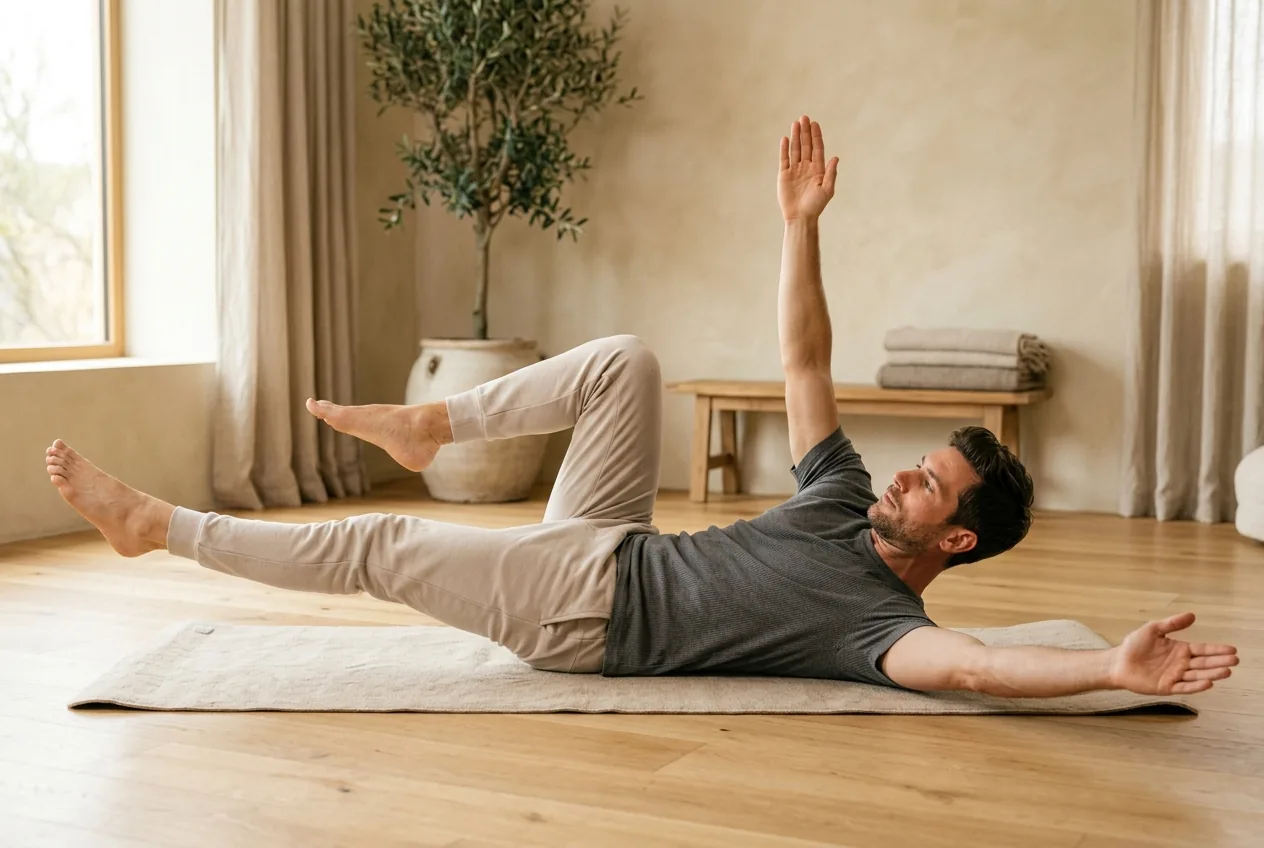
Dead bug
Lie on your back, arms reaching to the ceiling, knees bent up over your hips. Keeping your lower back gently pressed down, slowly lower one arm overhead and the opposite leg toward the floor, then return and switch. The whole point is to keep the spine still while the limbs move. If your back arches off the floor, you've gone too far — shorten the range.
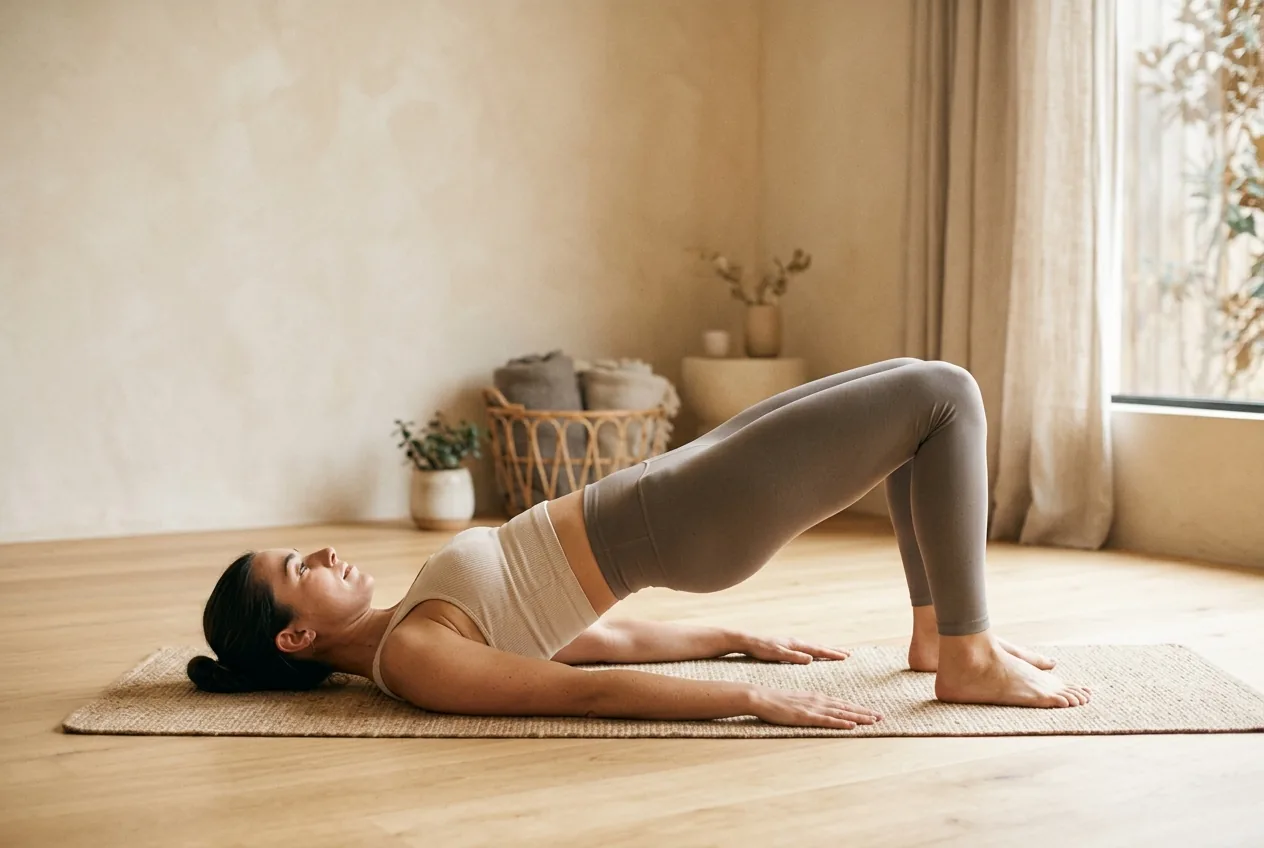
Bridging
Feet flat, knees bent, press through your heels and roll your hips up one vertebra at a time, then lower the same way. This builds glute and deep core strength together. If rolling the spine bothers you, lift as one solid unit instead. The standalone glute bridge for back pain covers the same movement if you want more detail.
Side-lying leg lifts
Lie on your side, body in a straight line, and lift the top leg with control, keeping your trunk steady. This trains the side hip muscles that stop your pelvis from dumping to one side when you walk and stand.
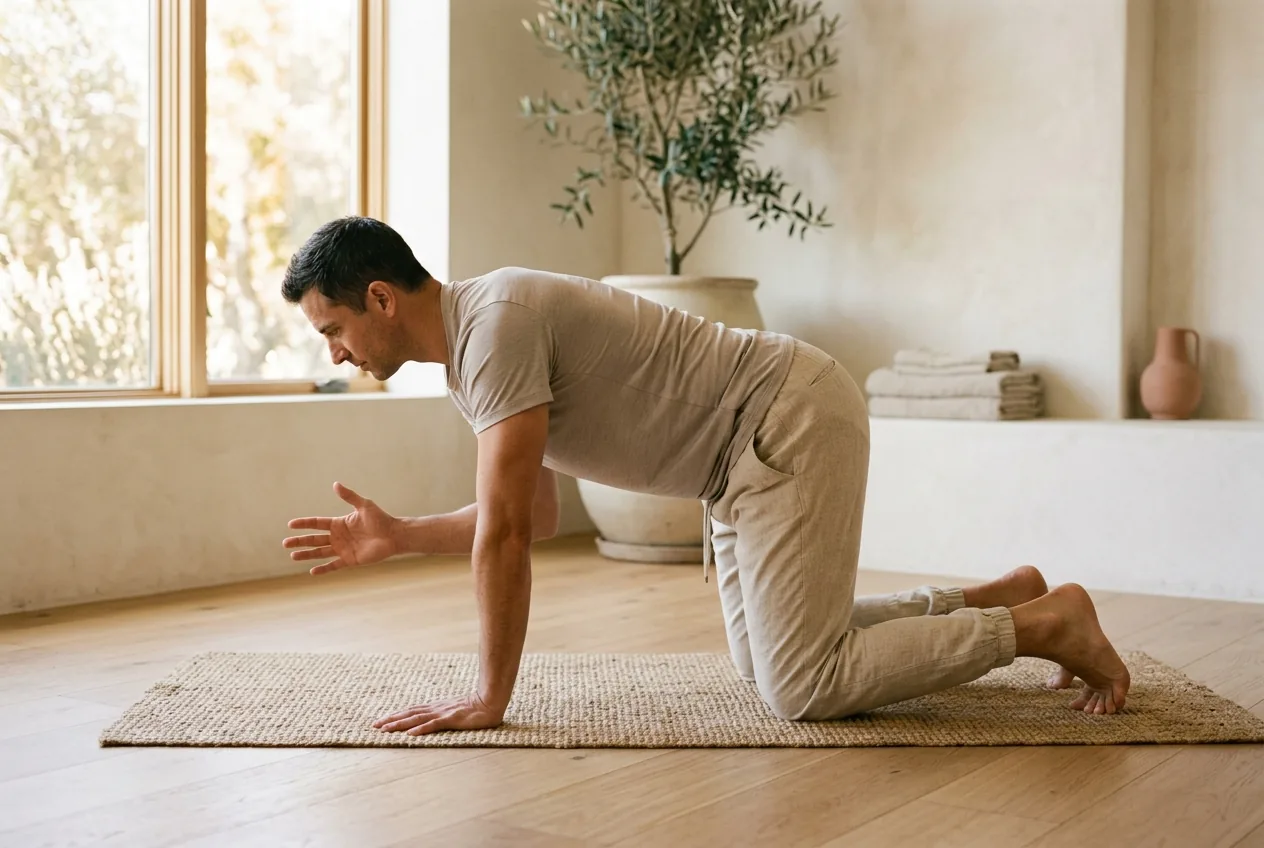
Quadruped / modified bird dog
On hands and knees, spine neutral, slowly extend one arm and the opposite leg until they're level with your back, hold a beat, return. Keep your hips square the whole time. This is one of the best Pilates-style moves for teaching the back and core to stabilize against movement, and it's gentle on the spine.
The Pilates moves to be careful with
Pilates for back problems goes wrong when it leans on deep, loaded spinal flexion. While your back is sensitive, go easy on or skip:
- The roll-up and roll-over — slow articulation of the spine into deep flexion. Lovely for a healthy back, often provoking for an irritated one.
- Double-leg stretch and the hundred with both legs low — these load the lower back hard if your deep core can't yet hold neutral.
- Deep teasers and heavy flexion-rotation combos until your control is solid.
None of these are banned forever. They're just poorly timed when your back is flared. Build the stabilizing base first, then add range.
How to make it actually stick
A class once a week feels nice but rarely changes a years-old pattern. What changes it is short, frequent practice — ten minutes of the core moves above most days beats one long session weekly. Consistency is what retrains the deep muscles to fire automatically, which is the whole goal.
If you also do yoga, the two complement each other well; the yoga for lower back pain routine leans more on mobility and breath, while Pilates leans on control. Many people rotate both.
When to see a doctor
Pilates is education and movement therapy, not medical treatment. See a clinician promptly if you have numbness or weakness spreading down a leg, any loss of bladder or bowel control, back pain after a fall or accident, fever alongside back pain, unexplained weight loss, or pain that's severe or steadily worsening. Those are red flags that need assessment before any exercise program.
Why the right moves depend on your back
Here's the part the average class can't account for: the same Pilates move that frees up one person's back can aggravate another's, because it depends on which way your spine is loaded and where your imbalance sits. A back that flattens too much needs a different emphasis than one that arches too much. Generic routines are a fair starting point, but the moves that help most are the ones matched to your actual pattern. A posture assessment that maps your real alignment is one way to know whether you should favor the flexion-leaning or extension-leaning side of Pilates rather than guessing from how a class feels.
Pilates helps your back when it teaches your deep core to brace — not when it bends your spine harder.
Common questions
Is Pilates good for lower back pain?
For most chronic, non-traumatic back pain, yes, because it builds the deep core control that takes load off the lower back. The benefit comes from the stabilizing moves more than the flexion-heavy ones. If a particular exercise sharply worsens your pain, skip it rather than pushing through.
Is Pilates or yoga better for back pain?
Neither is universally better — they do different jobs. Pilates emphasizes core control and stability; yoga emphasizes mobility, stretching, and breath. Many people benefit from a mix. Choose based on what your back needs: more stability, or more gentle movement.
How often should I do Pilates for back pain?
Short and frequent beats long and rare. Ten to fifteen minutes of the core-control moves most days retrains the deep muscles better than one weekly class. Consistency over weeks is what changes a long-standing pattern.
Can Pilates make back pain worse?
It can if the routine leans on deep, loaded spinal flexion that your back isn't ready for, or if you push through sharp pain. Mat Pilates done with a neutral spine and controlled breathing is usually safe. Back off any move that radiates pain into a leg.