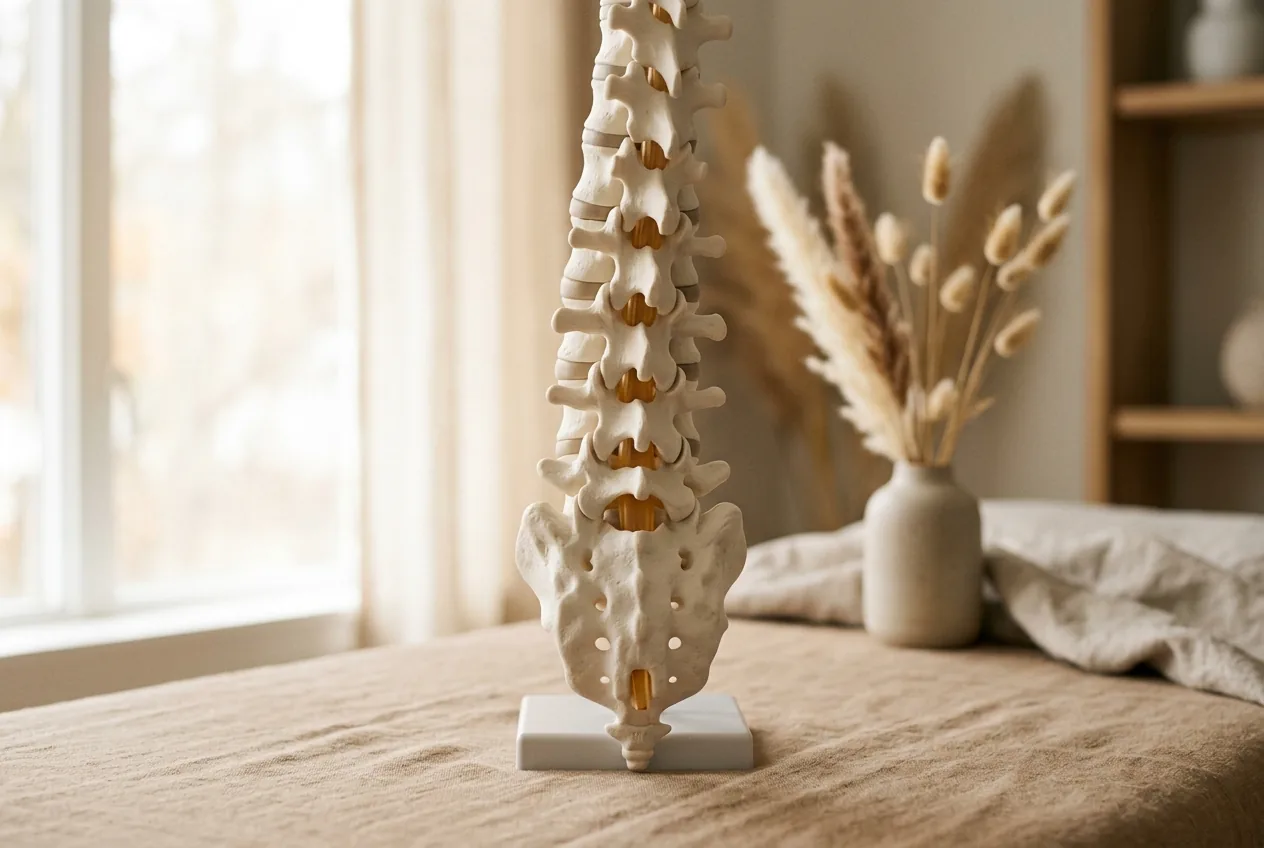

The name does a lot of damage on its own. "Degenerative disc disease" sounds like something eating away at your spine, getting worse by the month, and the natural instinct is to wrap yourself in cotton wool and stop moving. That instinct is one of the worst things to avoid with degenerative disc disease — because the stiffness and weakness that come from doing too little usually hurt more than the discs themselves.
Here's the reframe. Degenerative disc disease isn't really a disease, and it isn't a fast slide downhill. It's the gradual drying-out and thinning of discs that happens to nearly everyone with age — the spinal equivalent of grey hair. Lots of people have it on a scan and feel nothing. When it does cause symptoms, the goal isn't to halt an unstoppable decline. It's to keep the back moving well and loaded sensibly so the worn discs stay calm. That changes what you should avoid.
Avoid going still
The single biggest mistake is treating your back like it's fragile. Long stretches of rest, moving cautiously all day, and skipping exercise let the muscles that support your spine weaken and the joints stiffen. A deconditioned back around worn discs feels far worse than a strong one.
What helps instead is regular, gentle, repeated movement — the kind covered in degenerative disc disease exercises. Frequent short walks, gentle mobility, and graded strengthening keep the area nourished and supported. Motion is part of the treatment, not the threat.
Avoid long stretches of slumped sitting
Sitting raises pressure inside the discs more than standing does, and slumped sitting raises it more still. For worn discs, hours folded into a chair is one of the most reliable ways to stir up an ache.
- Don't sit for more than twenty to thirty minutes without standing, even briefly. The break matters more than the perfect chair.
- Don't let your pelvis roll backward into a C-shaped slump. Keep a small support behind your lower back so it holds its natural curve.
- Don't work from the sofa or bed for hours. Soft, unsupported surfaces let the spine collapse into exactly the shape worn discs dislike.
Avoid loading the spine the wrong way
Worn discs tolerate load fine — they just dislike load applied through a bent, twisted spine.
- Don't bend and lift from a rounded back. Hinge from the hips, keep the spine long, and let your legs do the work. Repeated deep forward bending, like toe-touches, loads the front of the disc and is a common flare trigger.
- Don't twist under load. Lifting and turning at the same time concentrates force on a single segment. Turn your feet instead of wrenching your spine.
- Don't jump into high-impact pounding cold. Running on hard surfaces or heavy jumping isn't forbidden, but build into it. There's a useful list in exercises to avoid with lower back pain.
Worn discs aren't fragile. They dislike being bent, twisted, and left to stiffen — not being used.
Avoid the all-or-nothing trap
A flare doesn't mean you've damaged something or undone progress. People with degenerative disc disease often swing between pushing too hard on good days and shutting down completely on bad ones. Both feed the cycle. A good day isn't a reason to deadlift your bodyweight; a bad day isn't a reason to lie still for a week.
Steady, moderate, daily activity beats the boom-and-bust pattern every time. Pace your day. Spread tasks out. Treat a flare as information about what provoked it, not as a verdict on your spine.
A short list of dos
To balance the don'ts:
- Do walk daily, in several short bouts if needed.
- Do build a simple core and hip routine so the muscles share load with the discs.
- Do change position often — the best posture is the next one.
- Do strengthen your glutes, since weak glutes leave the lower back doing their job.
When to see a doctor
Most degenerative disc symptoms are mechanical and manageable, but some signs need a proper look. See a clinician for numbness or weakness spreading down a leg, a foot that catches when you walk, or back pain after a fall or accident. Seek urgent care for any loss of bladder or bowel control, or numbness in the saddle area between the legs — uncommon, but an emergency. Also get assessed for pain that's severe, steadily worsening, or paired with fever or unexplained weight loss. The label "degenerative" sounds frightening, but these red flags are what actually warrant urgency.
Why the "avoid" list isn't the same for everyone
Here's the catch with any general list of things to avoid. The movements and positions that flare worn discs depend on how your spine is loaded, and that depends on your posture. If your pelvis tips forward and your lower back over-arches, the segment carrying the extra load is different from someone whose back is flat and stiff — and the moves that aggravate each are different too. A stretch that relieves one person can worsen the other.
That's why the most useful step is knowing your own pattern: which muscles have switched off, which are overworking, and where load is actually concentrating on your spine. Generic advice can't tell those apart. A posture-based approach to chronic back pain measures your specific deviations and builds a daily routine to redistribute load off the worn segments, instead of handing everyone the same do-and-don't list.
Degenerative disc disease isn't a countdown. Nothing here cures it or replaces your doctor's guidance. But avoiding stillness, sparing your discs the slump and the twist, and pacing your days steadily is usually enough to keep ordinary life — sitting through dinner, lifting your kid, sleeping through the night — well within reach.
Common questions
What activities should you avoid with degenerative disc disease?
Avoid long stretches of slumped sitting, bending and lifting from a rounded back, twisting under load, and high-impact pounding you haven't built up to. The bigger thing to avoid is going still — prolonged rest and over-cautious movement weaken the support around the discs and usually make things worse.
Is it bad to sit a lot with degenerative disc disease?
Prolonged sitting is hard on worn discs because it raises pressure inside them, and slumped sitting raises it more. The fix isn't to never sit, but to break it up every twenty to thirty minutes, keep a small support behind your lower back, and avoid working from soft, unsupported surfaces for hours.
Will exercise make degenerative disc disease worse?
Sensible exercise generally helps rather than harms. Worn discs do best with regular gentle movement, mobility work, and graded strengthening that builds support around the spine. What aggravates them is the wrong kind of load — deep forward bending, loaded twisting, sudden high impact — not movement itself.
Does degenerative disc disease keep getting worse?
The name makes it sound like a fast decline, but it's the gradual age-related thinning of discs that happens to nearly everyone, and many people have it with no symptoms. When it does cause pain, keeping the back strong, mobile, and sensibly loaded usually keeps symptoms manageable rather than steadily worsening.