
You went to the dentist about your jaw — the clicking, the ache near your ear, the soreness when you chew or first thing in the morning. Maybe you got a night guard. It helped a little. But the jaw pain keeps coming back, and nobody quite explained why a problem in your mouth won't settle.
Here's a connection that gets missed a lot: the way you hold your head can drive jaw pain. TMJ and forward head posture are linked through simple mechanics, and if your jaw trouble has stuck around despite the guard, your posture might be part of the picture.
How your head position reaches your jaw
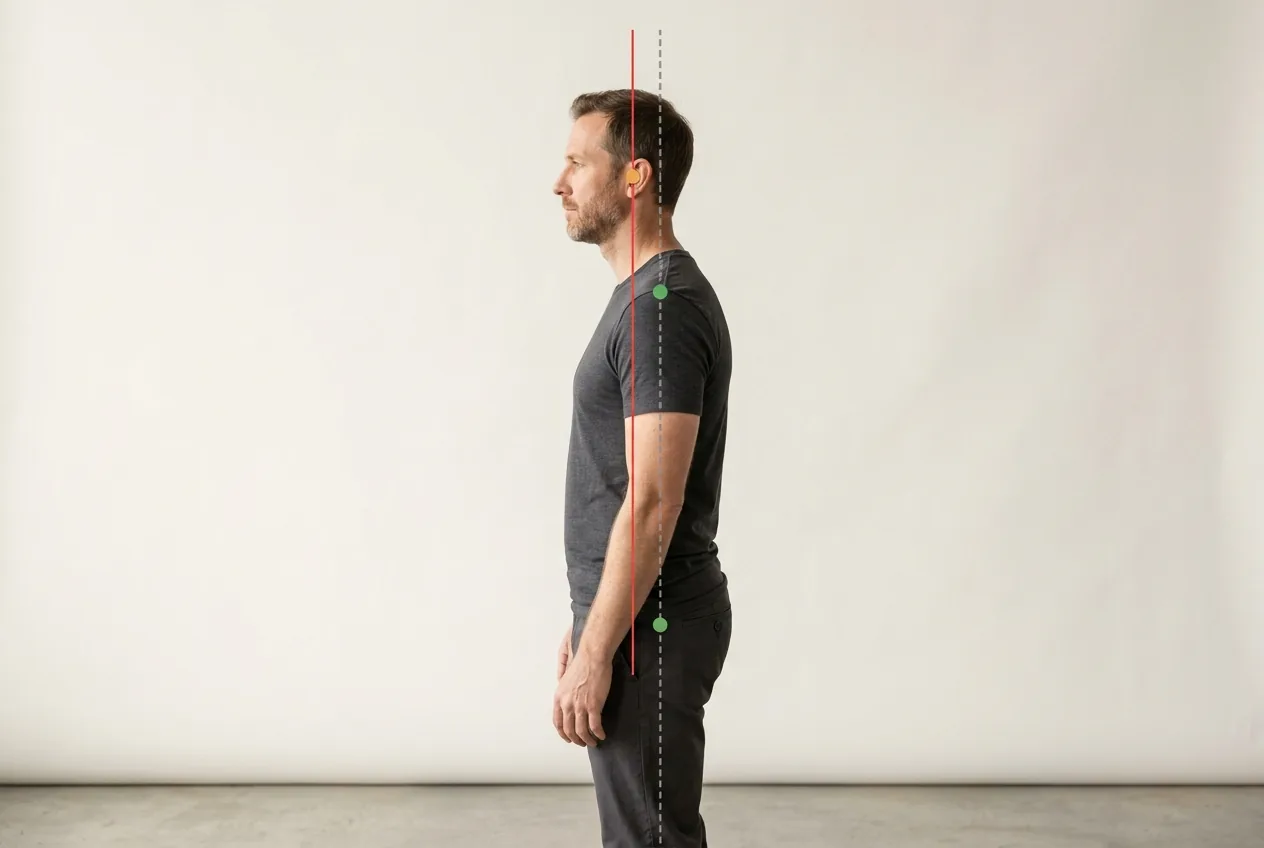
Your jaw doesn't hang in isolation. It sits beneath your skull, and where your skull sits depends on your neck. When your head drifts forward of your shoulders — the everyday desk-and-phone position — a chain reaction happens. To keep your eyes level, your skull tilts back slightly on the neck. That tilt changes the resting position of your lower jaw and the pull of the muscles that open, close, and stabilize it.
The muscles that move your jaw and the muscles at the front of your neck work together more closely than you'd think. Pull the head forward and the jaw's whole working environment shifts. The joint gets loaded differently, the muscles compensate, and you feel it as clicking, aching, or tightness around the joint just in front of your ear.
This is the same forward-head pattern behind so much neck and upper-back trouble — the lever effect explained in forward head posture. The jaw is simply one more thing that pays when the head sits in the wrong place. It's also why people with jaw pain so often have neck pain too; they share a cause.
The night guard protects your teeth from the symptom. It doesn't change the head position feeding it.
How to tell if posture is feeding your TMJ
Some signs that point toward a postural contribution:
- Your jaw pain comes with neck tightness, base-of-skull aching, or tension headaches.
- It's worse on long desk or phone days and after stretches of looking down.
- You notice your head sits forward in photos, or your chin pokes out when you concentrate.
- The night guard helps the grinding but not the daytime ache.
If the headache piece sounds familiar too, it often shares the same root — tension headaches from your neck and posture covers that overlap.
What to do about it
You're not trying to fix the jaw directly. You're changing the head and neck position the jaw sits beneath, and easing the muscles that have been compensating.
Chin tucks to restack the head
Bringing your head back over your shoulders restores a more neutral position for the skull, which in turn settles the jaw's resting position. This is the foundation. The chin tucks exercise guide shows how to glide the head back without tilting it — a few short sets through the day.
Unclench, drop, and rest the jaw
Through the day, check in: are your teeth touching? They shouldn't be at rest. Let your jaw hang slightly, tongue resting gently on the roof of your mouth behind your front teeth, teeth apart. This is the jaw's neutral rest position, and learning to default to it takes pressure off the joint.
Gentle jaw and neck release
Massage the muscles at the angle of your jaw and the sides of your neck with light circular pressure for a minute. Pair it with releasing the base of your skull — two fingers where skull meets neck, head resting into the pressure. Easing the neck muscles often calms the jaw muscles they're connected to.
Try a gentle controlled jaw opening
Once the daytime clench is under control, a slow, even jaw opening helps the joint track properly. Rest your tongue on the roof of your mouth, place a fingertip lightly on the chin, and open your mouth slowly while keeping the jaw moving straight down rather than deviating to one side. A few slow reps, no force. This trains the jaw muscles to share the work evenly instead of one side overpowering the other — a common pattern when the head sits forward and tilts the skull.
Fix the screen and phone angle
Raise your monitor to eye level and lift your phone toward your face. The forward-head position is what tilts your skull and shifts your jaw, so reducing the hours you spend in it does more than any single exercise. Sleeping on your stomach with your head cranked to one side is worth dropping too, since it holds the jaw and neck in a lopsided position for hours.
What to stop doing
- Stop clenching when you concentrate. Notice it and let the teeth part.
- Stop chewing gum all day or biting your nails if your jaw is flaring — give the joint a rest.
- Stop relying on the night guard alone if your pain is daytime and postural. It's one tool, not the whole fix.
- Stop holding your head forward at the desk and phone, which is where the chain starts.
When to see a doctor or dentist
Posture work is education, not medical or dental care, and it can't diagnose a jaw disorder. Keep working with your dentist on the joint itself. See a clinician promptly if your jaw locks open or shut, if there's significant swelling, if jaw pain comes with chest pain (jaw pain can occasionally be a heart warning sign), or if you have a fever, numbness, or weakness. Pain that's severe or steadily worsening deserves a proper look.
Why the right approach is specific to you
Chin tucks, jaw rest, and a better screen angle help many people whose TMJ has a postural component, because the forward-head pattern behind it is common. But how far forward your head sits and how your jaw has compensated differ from person to person. Generic advice is a fine starting point — lasting relief comes from working your actual pattern.
A proper posture assessment measures how your head and neck actually sit and builds a daily routine around it. Settle the head position, and the jaw beneath it often gets the relief the night guard alone never delivered.
Common questions
Can forward head posture really affect my jaw?
It can change how your jaw sits and tracks. When your head juts forward, it tilts the skull and shifts the lower jaw's resting position, which can throw off how the joint moves and loads. That's why some jaw pain eases when the head position improves.
Why does my jaw click or feel tight when my neck is bad?
The jaw and neck muscles work together, so tension in one tends to show up in the other. A forward, strained neck often comes with a clenched, overworked jaw, and the clicking can reflect the joint moving unevenly under that strain.
Will a night guard fix posture-related jaw pain?
A night guard protects your teeth and can help with night-time clenching, but it doesn't change a daytime, posture-driven pattern. If your pain is worst during the day, the guard is one tool rather than the whole answer. Keep working with your dentist on the joint itself.
Should I stop chewing gum if my jaw hurts?
While the joint is flared, yes, it's worth resting it. Constant gum chewing, nail biting, and chewy foods keep an irritated jaw working when it needs a break.