
By two in the afternoon your shoulders have crept up toward your ears, the muscle that runs from your neck to the top of your shoulder feels like a cable pulled tight, and you keep reaching up to dig your thumb into it for a second of relief. You roll your shoulders, you stretch, maybe you book a massage — and within a day the tension is right back. If you're hunting for trapezius pain relief that lasts longer than an afternoon, the loop itself is the clue.
The upper trapezius is one of the most overworked muscles in the modern body. Getting it to relax isn't about attacking the knot harder. It's about understanding why it never gets to clock off.
What the upper trap does, and why it's exhausted
The trapezius is a big, kite-shaped muscle spanning the back of the neck and upper back. The upper part — the bit you keep rubbing — runs from the base of your skull and neck out to the top of your shoulder. Its job is partly to support and move the head, and partly to help shrug and steady the shoulder.
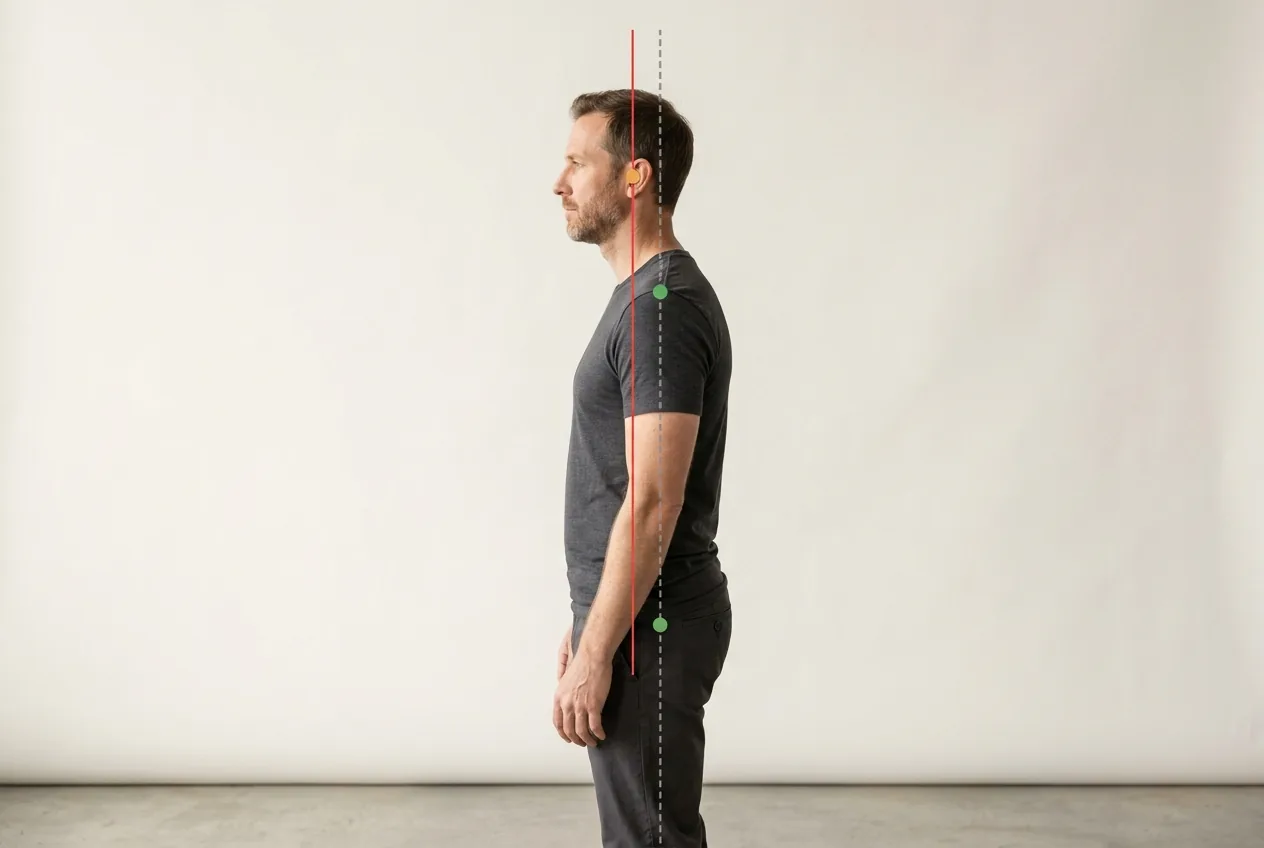
Here's the problem. When your head drifts forward of your shoulders, which it does at every screen and steering wheel, the upper traps have to hold it there. The head is heavy, and the further forward it sits, the harder these muscles pull just to stop it dropping. They end up working a low-grade contraction all day, never fully releasing. A muscle held switched on for hours becomes tight, tender, and full of the tense bands people call knots.
So the upper trap isn't tight because it's strong or because you slept on it wrong. It's tight because it's tired. It's covering for a posture that asks it to do a job it was never meant to do all day. That forward-head pattern is the engine behind most upper-trap tension, and it's described in forward head posture.
The knot in your trap isn't the problem. It's the muscle that's been left holding your head up all day.
Why rubbing the knot doesn't last
Pressing on the knot feels good for the same reason cracking a joint does — it briefly interrupts the tension signal and triggers a short relaxation. But the muscle goes back to work the moment you stop, because the reason it was contracting hasn't changed. Your head is still forward. The trap is still covering.
That's why massage, foam rolling, and stretching the trap all help for a day or two and then fade. They treat the tense muscle without changing the load on it. To get lasting relief you have to take the job off the upper trap — and that means waking up the muscles that are supposed to be doing it.
What actually releases the upper trap
The most useful approach combines easing the tight muscle with switching the supporting muscles back on.
Release first
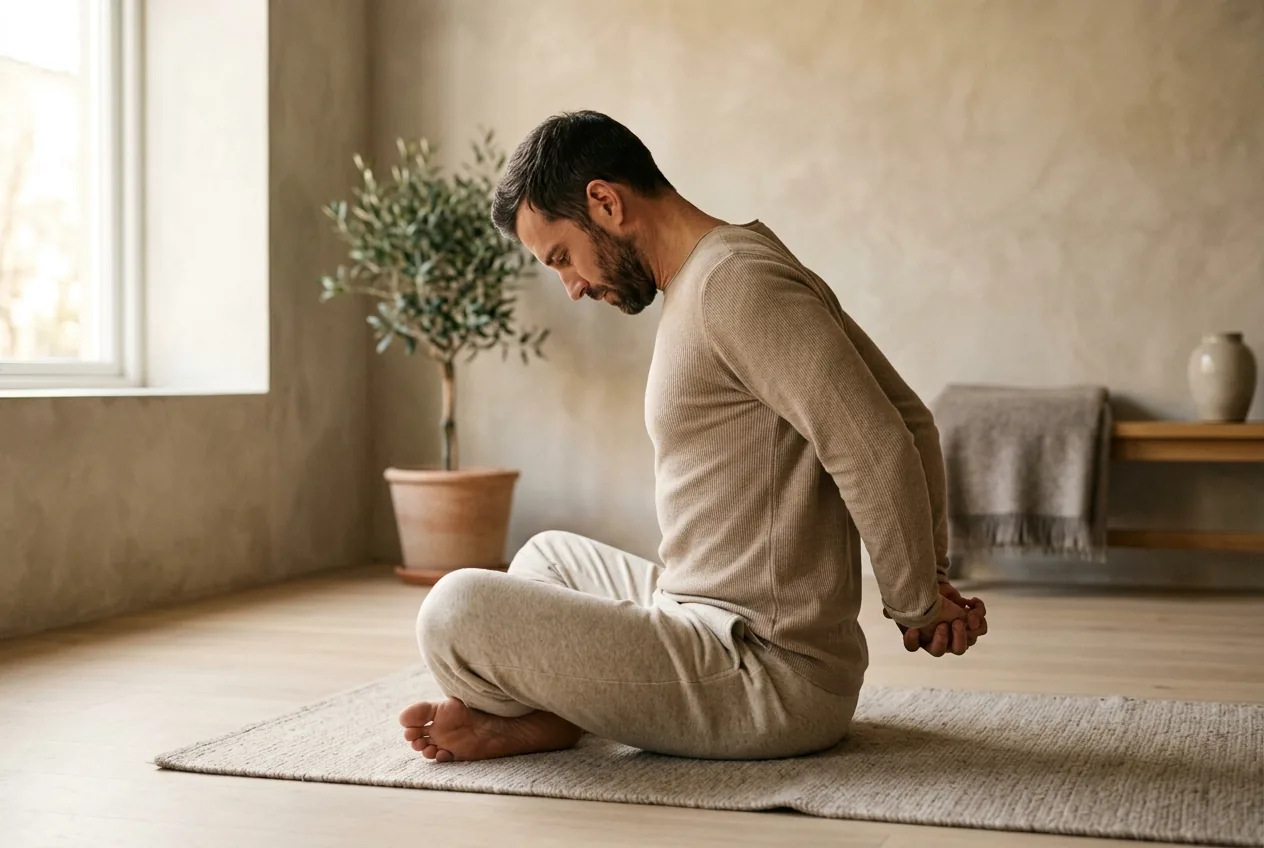
- Levator and upper-trap stretch. Sitting tall, gently tilt your ear toward one shoulder and let the opposite shoulder relax down. Turn your nose slightly toward the armpit on the stretched side to reach the back of the neck. Hold for a slow thirty seconds, breathe out, switch sides.
- Shoulder rolls and drops. Lift both shoulders to your ears, then let them fall completely as you exhale. Do this a few times an hour to break the creeping-up habit.
Then reactivate
- Chin tucks. Draw your head straight back over your shoulders, hold a couple of seconds, release. This unloads the upper trap by stacking the head where it belongs. The chin tucks exercise guide has the details.
- Wall angels. Stand with your back to a wall and slide your arms up and down keeping contact. This wakes up the mid and lower back muscles that should be steadying your shoulder blades, taking pressure off the overworked upper trap. The wall angels exercise guide shows the form.
- Band pull-aparts. Pulling a light band apart at chest height trains the muscles between the shoulder blades that the upper trap has been compensating for. See band pull-aparts for posture.
The pattern here matters more than any single move: loosen the muscle that's overworking, then strengthen the ones that should be sharing the load. Do only the first half and you're back to square one tomorrow.
What to stop doing
- Don't keep digging the same knot all day. Short-term relief, long-term irritation.
- Don't shrug toward the screen when you concentrate — notice the creep and let the shoulders drop.
- Don't carry a heavy bag on one shoulder for hours. It locks the trap into a permanent shrug on that side.
- Don't only stretch. Stretching a muscle that's tight from overwork without addressing the overwork just resets the clock.
When to see a doctor
Posture work is education, not medical advice. Ordinary upper-trap tension from desk work is rarely serious. But see a clinician if the pain is severe, steadily worsening, or not improving, if it comes with numbness, tingling, or weakness spreading into an arm or hand, if you have a headache with neck stiffness and fever, or if it followed a fall or accident. Tension that's tied to jaw clenching or stress headaches can also be worth raising with a professional.
Why your own pattern is the missing piece
Stretching and reactivation help most tense traps. But how forward your head sits, whether one shoulder rides higher than the other, and which back muscles have switched off are specific to you. A generic routine can leave the real driver untouched, which is why the tension keeps coming back.
A proper posture assessment measures how your head and shoulders actually sit and builds a daily routine that unloads the trap and rebuilds the muscles meant to carry the load. Take the job off the upper trap for good, and the afternoon tension stops being inevitable.
Common questions
Why is my upper trapezius always so tight?
Usually because it's holding your head up. When the head sits forward of the shoulders at a desk or phone, the upper traps contract all day to support it, so they stay tight and tender. The tightness is a sign of overwork, not weakness, and it eases when you take the load off.
Does massage help trapezius pain?
It helps temporarily by releasing the tense muscle, but the relief fades because massage doesn't change the posture that keeps the trap working. Pairing release work with exercises that reactivate the supporting back muscles gives longer-lasting relief.
What's the fastest way to relieve trapezius tension?
A gentle upper-trap stretch plus a few shoulder drops eases it quickly in the moment. For relief that lasts, add chin tucks and a couple of moves that wake up the muscles between your shoulder blades, and keep your head stacked over your shoulders through the day.
Can stress cause trapezius pain?
Yes. Stress and concentration make people unconsciously shrug and hold the shoulders up, which keeps the upper trap contracted. Combined with forward-head posture, that's a common reason the traps stay tense, so noticing and dropping the shoulders through the day matters.