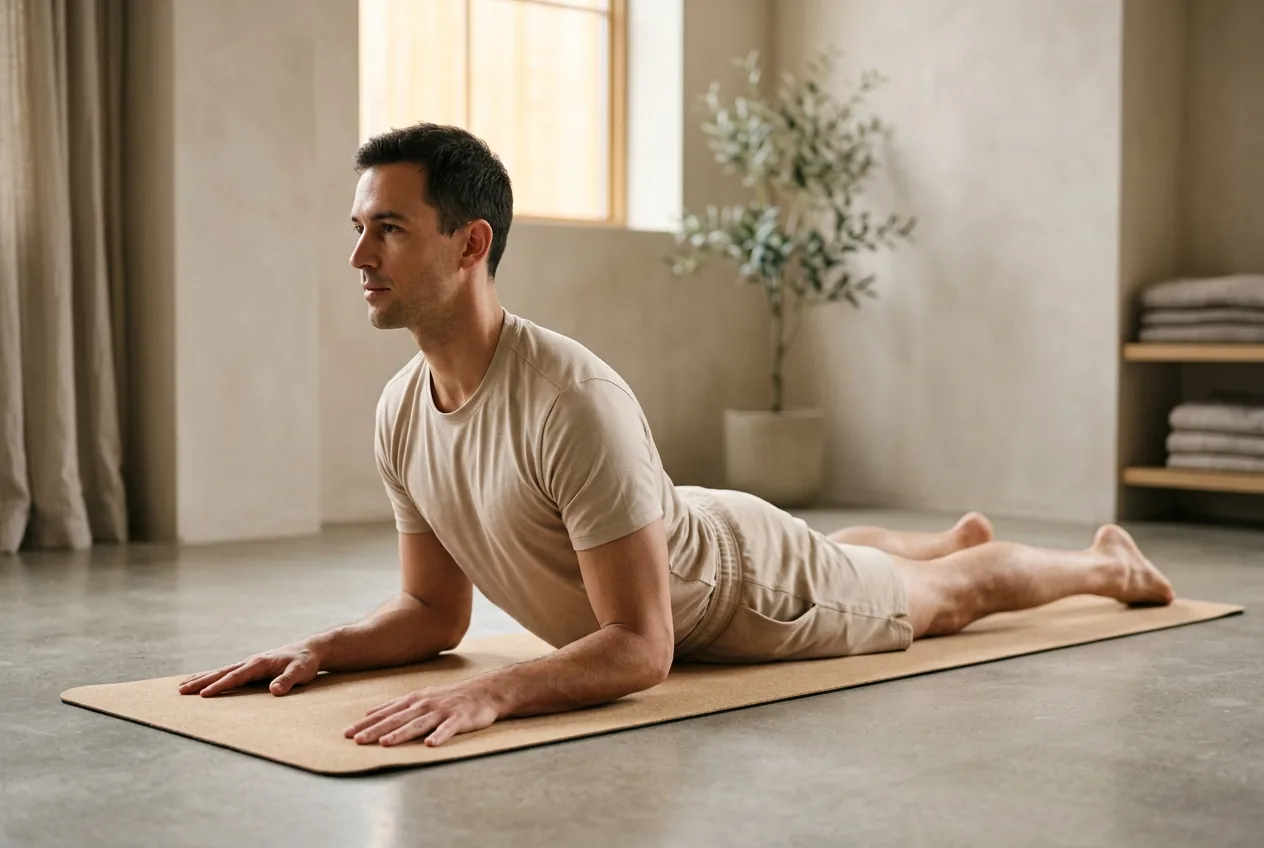

If your lower back is stiff and achy when you first get up, loosens once you start moving, then nags again after sitting too long, that pattern is the one this article is about. Arthritis lower back pain has a recognisable rhythm — worst at rest, better with gentle motion, flaring after a long day on your feet or a long stint in a chair. A diagnosis of arthritis in the spine can sound alarming, like your back is wearing out and there's nothing to do but brace for it. The reality is more hopeful: how you move, hold yourself, and load the joint changes how much it bothers you, often a lot.
This guide explains what arthritis in the lower back actually is, why movement helps rather than harms, the moves that tend to calm it, and what to ease off.
What arthritis in the lower back actually means
"Arthritis" in the spine usually refers to wear-related changes in the small joints at the back of your vertebrae — the facet joints — and the discs and surfaces around them. Over time these joints can lose some of their smooth cartilage, the bone can thicken a little, and the area can get irritated and stiff. It's a common part of how spines age, and the amount of change on a scan often doesn't match how much pain a person feels. Plenty of people have arthritic changes and little pain; others have modest changes and more discomfort.
The day-to-day pain is mostly about how irritated and stiff those joints are, and how well the muscles around them share the load. That's the part you can influence. Stiff joints that never move stay angry. Joints that get gentle, regular motion and are supported by working muscles tend to settle. If the facet joints are your main pain source, our notes on facet joint pain go deeper on that specific structure.
Why movement helps, not harms
The instinct with an aching, arthritic back is to protect it and stay still. With this kind of pain, that usually backfires.
Joints are fed and lubricated by movement. The gentle pumping action of motion brings fluid and nutrients into the joint and keeps the surrounding tissue supple. Sit still for hours and the joint stiffens and complains; move it through a comfortable range and it loosens. That's exactly why your back feels worst in the morning and after long sitting, and better once you've been walking around — the joint is telling you it wants motion.
Strong, active muscles matter just as much. When the muscles around your spine and hips do their job, they absorb load that would otherwise pound through the irritated joints. When they're weak or switched off, every step and bend drives more stress into the joint. So the two levers that calm arthritic back pain are gentle, frequent movement and muscle support — not rest.
An arthritic joint doesn't want to be spared. It wants to be moved gently and supported well.
Moves that tend to calm it
These are low-load, joint-friendly options. Move within comfort, stop anything that sharpens the pain, and aim for little and often rather than one hard session.
- Walking. The single best daily habit for an arthritic lower back. It's rhythmic, low-impact, and keeps the joints fed — here's why walking helps a sore back. Short, frequent walks beat one long march.
- Pelvic tilts. Lie on your back, knees bent, and gently rock your pelvis to flatten and arch your lower back through a small, pain-free range. It mobilises the lumbar joints without loading them.
- Knee-to-chest, one leg at a time. Lying on your back, draw one knee gently toward your chest and hold for a few slow breaths, then switch. This eases the facet joints and is often comfortable for arthritic backs.
- Cat-cow. On hands and knees, slowly alternate between a gentle arch and a gentle round. It takes the spine through its full comfortable range and is a great morning loosener.
- Glute and core work. Build the muscle that protects the joint. A daily glute bridge and gentle core exercises for lower back pain help the muscles share the load so the joints take less of it.
Do a short version each morning to break the overnight stiffness, and again in the evening if sitting has tightened you up.
What to ease off
A few things reliably wind up an arthritic lower back:
- Long, unbroken sitting. Stiffness builds fast. Get up and move every 30 to 45 minutes.
- Heavy, repeated loaded extension or twisting — deep backbends, jarring twists, heavy overhead lifting — can grind the facet joints. Keep loaded movement controlled and within comfort.
- Total rest during a flare. Tempting, but it stiffens everything. Scale movement down, don't stop it — and see whether bed rest helps a sore back.
- High-impact pounding if it flares you. Swap running for walking, cycling, or swimming when the joint is irritable.
Warmth before movement and gentle motion are usually friendlier to an arthritic joint than aggressive stretching — for stubborn flares, see heat or ice for back pain.
When to see a doctor
Arthritic back pain is usually manageable, but some symptoms need prompt attention. See a clinician promptly if you have numbness, tingling, or weakness spreading down a leg, any loss of bladder or bowel control, back pain after a fall or accident, fever with back pain, unexplained weight loss, or pain that's severe or steadily worsening. This article is education and posture therapy, not medical advice, and it doesn't diagnose your back. If you're not sure what's driving your pain or it isn't settling, get it assessed — and read when to worry about back pain.
Why posture changes how much it hurts
Here's what often gets missed with spinal arthritis: where your joints sit while you move decides how evenly the load spreads across them. If your pelvis is tipped, your spine over-arched, or your weight habitually thrown onto one side, the same daily movements grind the same arthritic joints over and over — concentrating wear and irritation in one spot.
Improve how your spine and pelvis are positioned, and that load spreads more evenly across the joint surfaces and the muscles around them. The arthritis is still there, but the joint gets a gentler ride. That's why two people with similar scans can feel so different. A posture assessment measures where your alignment actually deviates and builds a daily routine to even out the load and strengthen the muscles that protect the joint. You can also check your posture at home to start seeing where your weight is landing.
You can't undo wear in a joint. You can change how much that joint has to absorb — and for arthritic back pain, that's most of the comfort.
Common questions
Does walking help arthritis in the lower back?
Yes, for most people it's one of the best things you can do. Walking is low-impact and rhythmic, which keeps the joints lubricated and the surrounding muscles working. Short, frequent walks usually beat one long one, and gentle daily movement helps break the morning stiffness arthritic backs are known for.
Should I rest or move with arthritis back pain?
Move, gently and often. Rest stiffens arthritic joints and weakens the muscles that protect them. During a flare, scale movement down rather than stopping — short walks, pelvic tilts, and easy mobility usually calm an irritated joint faster than lying still.
What makes lower back arthritis flare up?
Common triggers are long unbroken sitting, heavy or jarring loaded movement, twisting, high-impact pounding, and stretches of total inactivity. Cold, stiff mornings and overdoing it on a long day on your feet are typical too. Regular gentle movement and good muscle support reduce how often flares happen.
Can you fix lower back arthritis with exercise?
Exercise won't reverse the joint changes, but it can dramatically reduce the pain and stiffness they cause by keeping joints mobile and strengthening the muscles that share the load. Combined with better posture and even loading, many people get long stretches of comfortable, normal activity.