Sometime in the afternoon you catch yourself taking a big, deliberate sigh — the kind your body does on its own when it feels like it hasn't had a full breath in a while. You're not short of breath exactly. It's more that your breathing has gone small and high in your chest without you noticing, and every so often the body demands a real one. If you spend your day hunched at a desk, that pattern is closely tied to how you're sitting.
Breathing and posture are connected far more directly than most people realize. The muscle that's supposed to do most of your breathing sits right in the middle of your torso, and whether it can work well depends entirely on the shape your posture puts your trunk in. Collapse the chest and round the upper back, and you physically take away the room that muscle needs. Breathing then shifts up into the chest and neck, where it's shallow, effortful, and quietly draining.
The muscle that should be doing the work
Your main breathing muscle is the diaphragm, a dome of muscle under your lungs that separates your chest from your belly. When you breathe well, it contracts and drops down, pulling air into the lungs while your lower ribs expand outward and your belly gently rises. That's a full, low, efficient breath. It moves a lot of air with little effort and barely involves the neck.
For the diaphragm to drop and the lower ribs to expand, your trunk needs to be reasonably tall and open. The rib cage has to be stacked over the pelvis with room to move. This is exactly what a good upright posture provides and what a slump takes away.
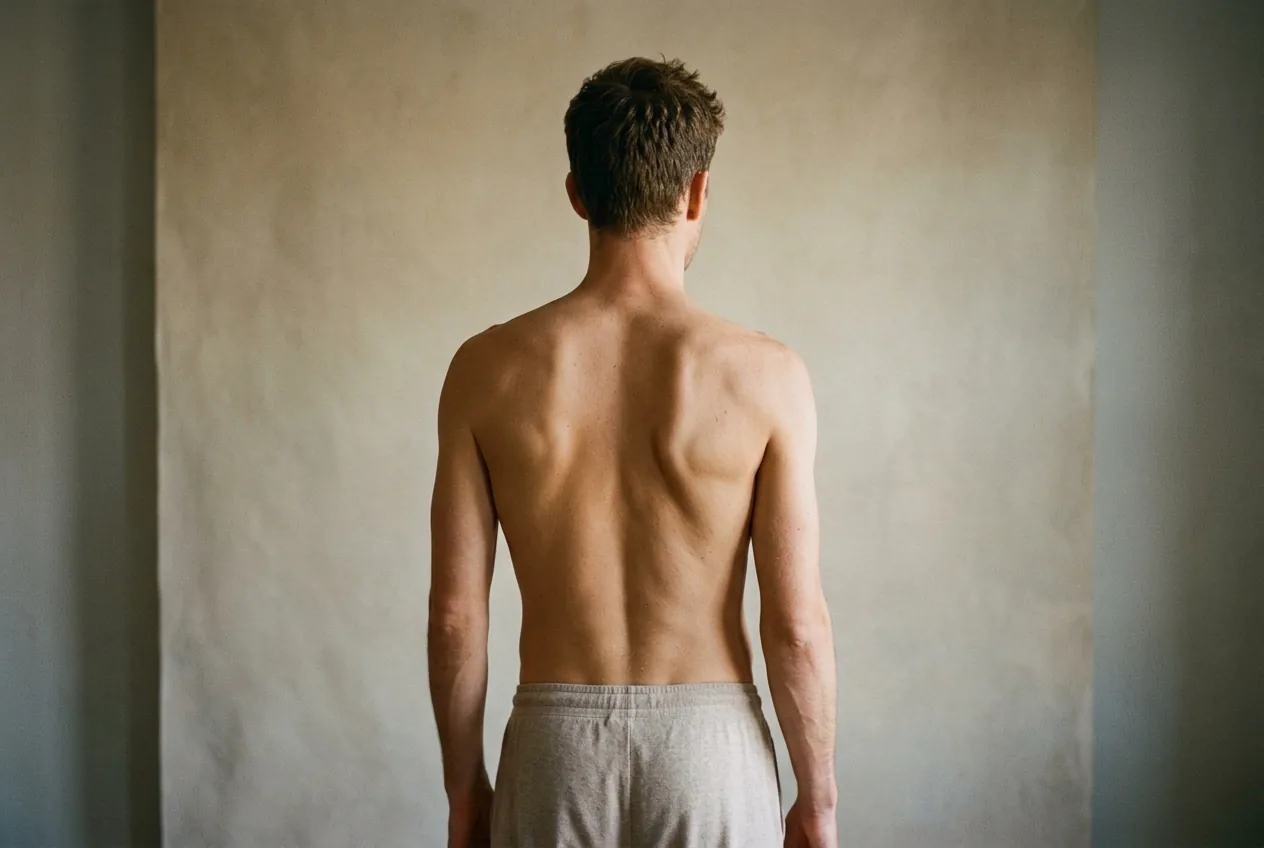
When you collapse forward — shoulders rounded, upper back hunched, chest caved in — you compress the whole cage and crowd the diaphragm. It can't drop fully because there's no room beneath it. So the body recruits backup: the muscles of the upper chest, shoulders, and neck start lifting the rib cage to pull air in. That's chest breathing. It's shallow, it moves less air per breath, and it keeps a set of muscles working that were never meant to run all day.
Your posture decides whether you breathe from your center or from your neck. The neck loses that job slowly, and it complains.
The cost of breathing from your neck
Shallow chest breathing isn't just less efficient. It feeds a loop that makes posture and tension worse together.
The neck and upper-shoulder muscles that get drafted into breathing are the same ones that already stay clenched in a forward-head, rounded-shoulder posture. Now they're not just holding your head up — they're helping you breathe, thousands of times a day. No wonder they ache. This overlap is a big part of the picture in neck and shoulder tension from stress and the headaches in tension headache from posture.
There's a stress angle too. Fast, shallow, high-chest breathing is the breathing pattern your body uses when it's stressed. Do it all day from a slumped posture and you keep nudging your nervous system toward a low-grade stressed state, which tightens muscles further and makes you breathe even higher. Posture, breathing, and tension pull each other in a circle. The good news is you can break into that circle from the breathing side as easily as the posture side.
How to fix both at once
The aim is to restore the room your diaphragm needs and retrain the low, full breath, while easing the neck muscles out of a job they shouldn't have. These work together — better posture allows better breathing, and better breathing reinforces better posture.
Make room
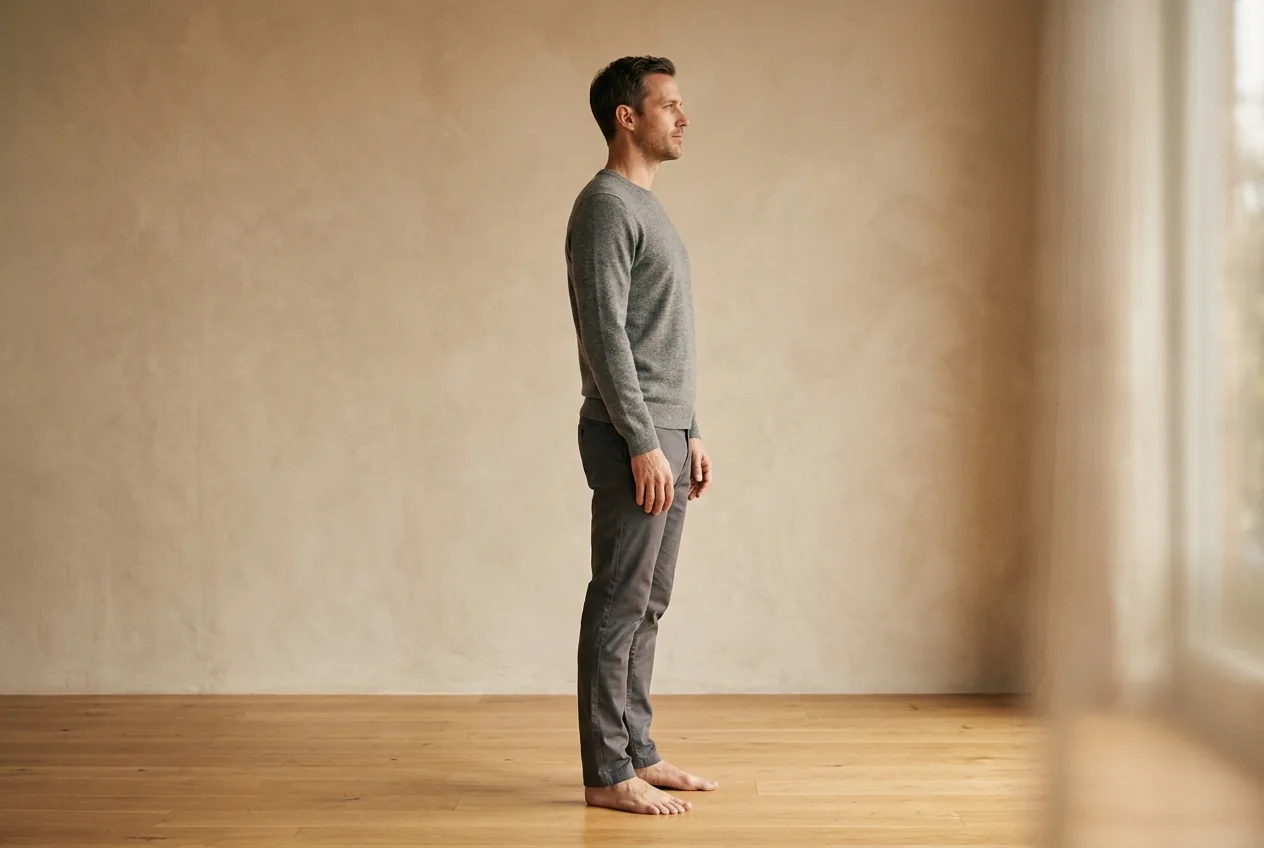
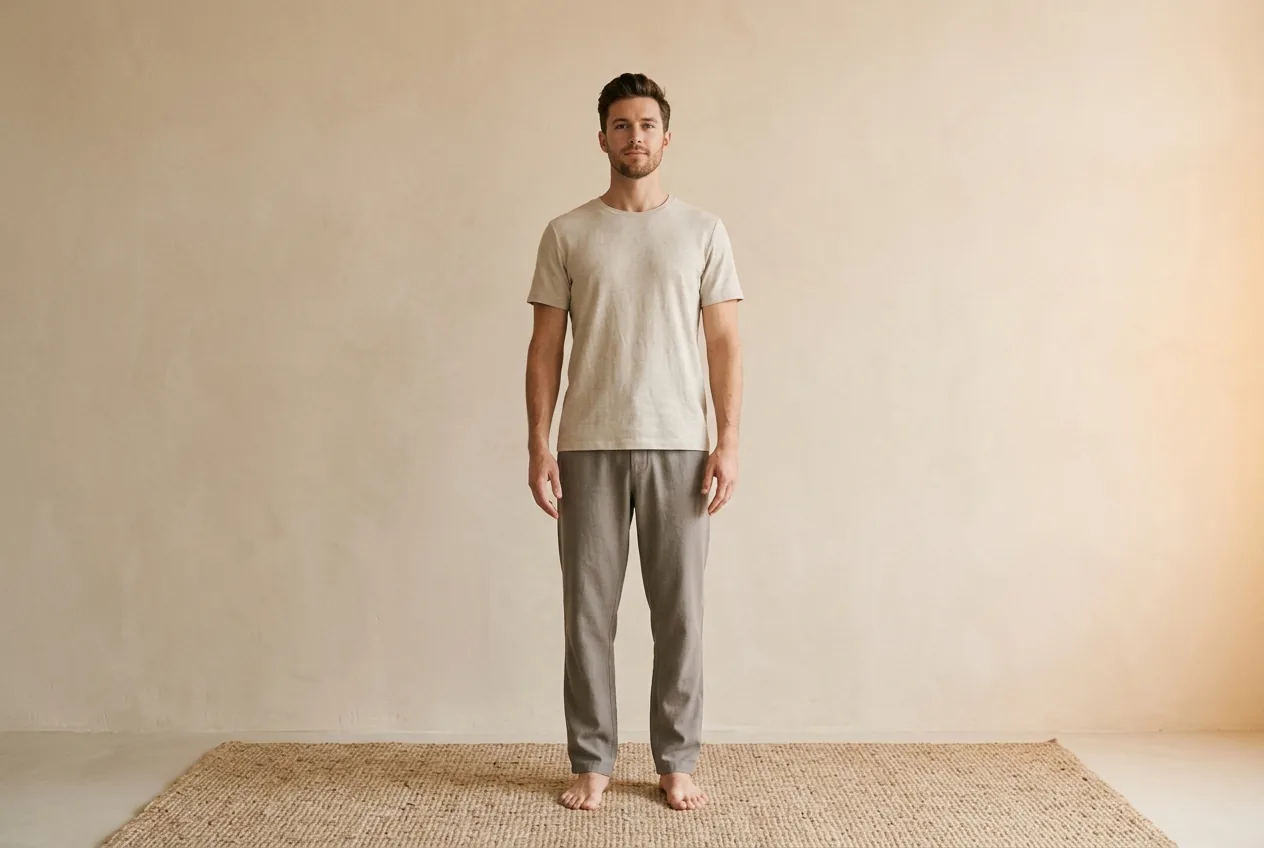
- Sit and stand tall. Stack the rib cage over the pelvis, lift the chest gently, and let the shoulders settle back and down. You're not bracing like a soldier — just uncollapsing. Notice how a fuller breath becomes available the moment you do.
- Open the chest. A doorway chest stretch — forearm on the frame, step gently through — releases the tight front that holds you collapsed. Hold 20–30 seconds each side.
- Extend the upper back. Sit, hands behind your head, and gently arch your upper back over the chair's backrest. This restores the extension a slump takes away, giving the cage room to expand.
Retrain the breath
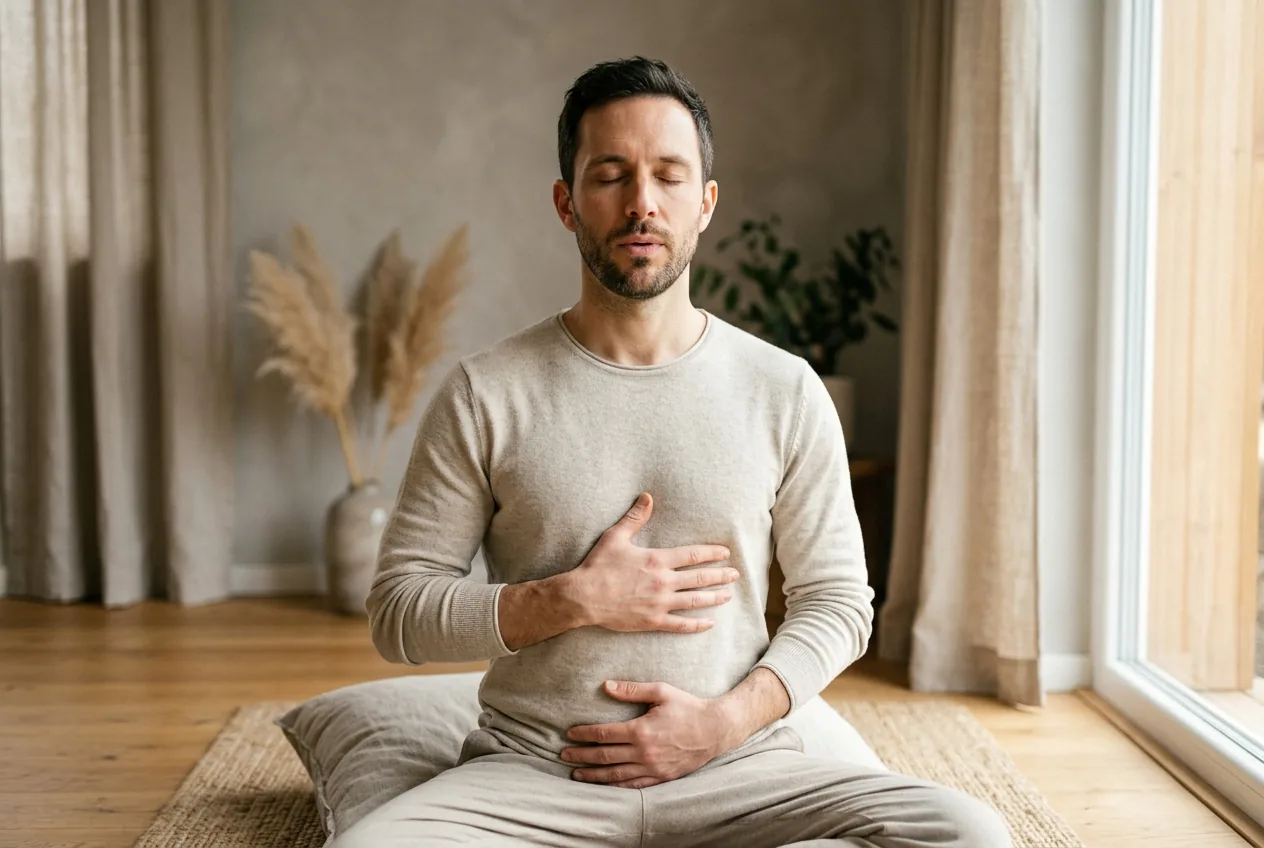
- Diaphragmatic breathing. Lie on your back, one hand on your chest, one on your belly. Breathe slowly so the belly hand rises and the chest hand stays mostly still, letting the lower ribs widen sideways. Two or three minutes, a few times a day. This is the drill that moves the work back to the diaphragm.
- Slow exhales when stressed. A longer exhale than inhale settles the nervous system and brings the breath back down out of the chest, enough to interrupt the loop.
Change the daily input
- Raise your screen so you're not folding the chest closed for hours; the slump is what crowds the diaphragm. It's the same fix that helps forward head posture.
- Each time you reset your posture at the desk, take one slow, full breath into the lower ribs. Pairing the two builds the habit.
- Notice if you hold your breath while concentrating — many people do, and it locks the cage and the neck together.
When to see a doctor
Posture-related shallow breathing is mechanical and eases as the chest opens and the diaphragm gets room. But breathing symptoms can have medical causes that posture work does not address. See a clinician promptly for genuine shortness of breath at rest or with mild activity, breathlessness that comes on suddenly, wheezing, chest pain or pressure with breathing difficulty, a persistent cough, or a feeling of not getting enough air that's new or worsening. Those need assessment, not breathing drills. If breathing feels genuinely hard rather than just shallow and high, treat it as a medical question first.
Why it's worth retraining
If you sigh through your afternoons and your neck and shoulders never quite let go, your breathing pattern may be part of the reason — and it's downstream of how you sit. A collapsed posture crowds the diaphragm, hands the job to the neck, and quietly feeds the tension you're trying to stretch away.
Lasting change comes from addressing the posture and the breath together, and the posture side depends on your own pattern — how rounded your upper back is, how far your head sits forward, what's tight and what's switched off. The right work for one posture can be wrong for another. A posture assessment measures your real deviations and builds the routine around them. If your breathing stays shallow despite stretching, see how a posture-based method addresses these patterns by starting from your actual alignment.
Give the diaphragm its room back, and a full breath stops being something you have to remember to take.
Common questions
Can posture really affect my breathing?
Yes, directly. Your main breathing muscle, the diaphragm, needs a tall, open trunk to drop and pull in a full breath. A slumped, collapsed-chest posture crowds it, so breathing shifts up into the chest and neck where it's shallow and effortful. Sitting tall and opening the chest restores the room a full breath needs.
Why do I keep needing to take a big sigh?
When breathing goes shallow and high in the chest for a long stretch, the body periodically demands a full breath with a spontaneous sigh to make up for it. Frequent sighing through the day can be a sign you've slipped into shallow chest breathing, often tied to a slumped posture.
How does shallow breathing cause neck and shoulder tension?
When the diaphragm is crowded by a slump, the neck and upper-shoulder muscles get recruited to lift the rib cage with each breath. Doing that thousands of times a day keeps those muscles working constantly, on top of holding a forward head, which is why shallow breathing and upper-body tension so often travel together.
When should breathing problems be checked by a doctor?
See a clinician for genuine shortness of breath at rest or with mild effort, sudden breathlessness, wheezing, chest pain with breathing difficulty, a persistent cough, or a new feeling of not getting enough air. Those need medical assessment rather than breathing drills.