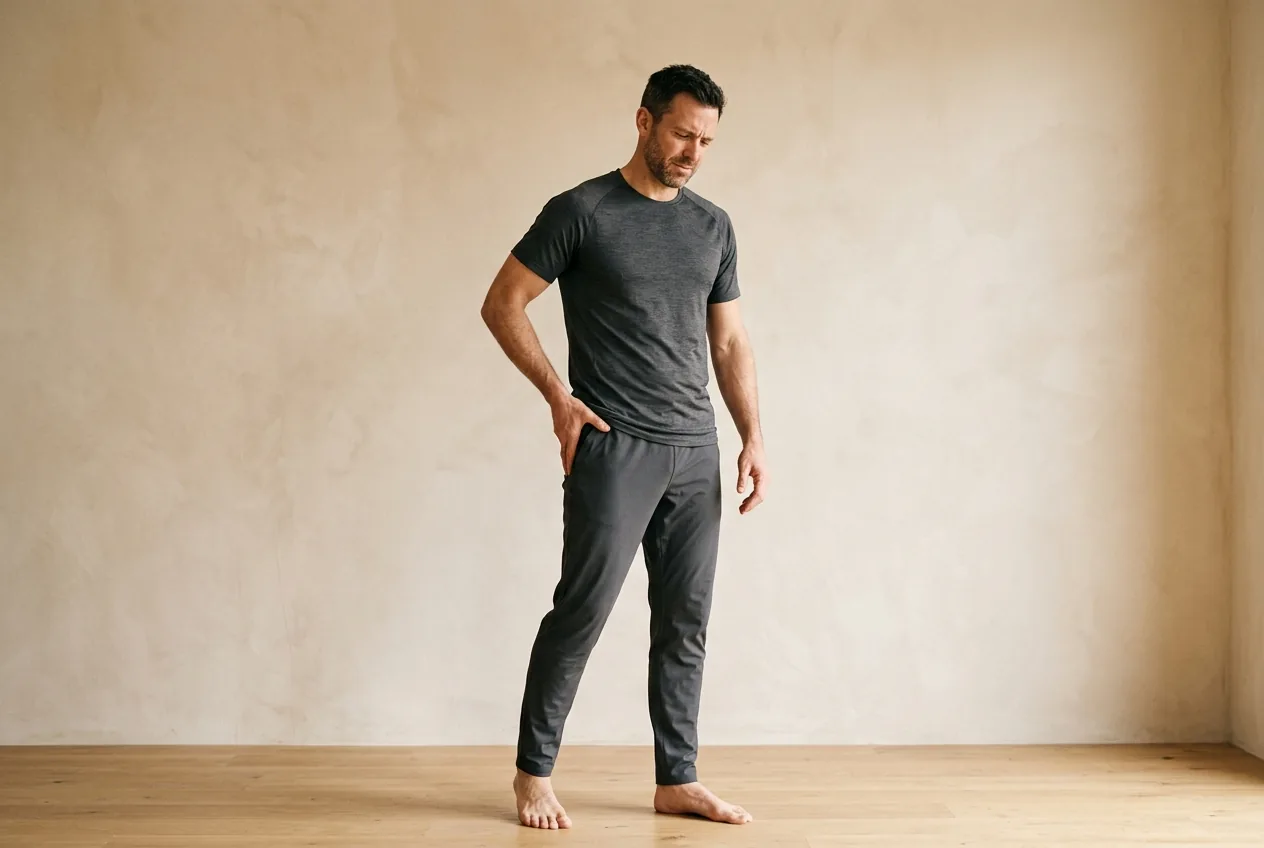

You can put a finger on it. The pain sits right on the bony point on the outside of your hip, it's tender to press, it bites when you climb stairs or get up from a chair, and lying on that side at night is out of the question. That precise, point-tender, outer-hip pain is the signature of hip bursitis — more accurately called trochanteric bursitis — and it's one of the more treatable causes of hip pain once you know what's keeping it lit.
The good news is that most cases settle without anything dramatic. The catch is that if you only calm the inflammation and ignore why it started, it tends to come back. Posture is usually part of why it started.
What hip bursitis actually is
On the outside of your hip there's a bony bump — the greater trochanter, the top of your thigh bone you can feel through the skin. Over it sits a bursa, a thin fluid-filled sac that acts as a cushion between bone and the muscles and the band of tissue gliding over it.
When that tissue rubs the bursa too much or presses on it too hard, the bursa gets inflamed. Now every time the tissue slides over it — every step, every stair, every time you roll onto it in bed — it's irritated. That's the point tenderness and the sharp catch you feel.
The pain often spreads a little down the outside of the thigh, which leads some people to think it's coming from deeper in the joint. It isn't. Bursitis is a surface problem over the bone, which is exactly why it's so tender to touch and why a worn joint, by contrast, hurts more on weight-bearing than on pressing.
If you can point to the exact sore spot on the outside of your hip and it hates being pressed, that points to the bursa, not the joint inside.
What causes hip bursitis
It's rarely one thing. The bursa gets overloaded by repeated rubbing or pressure, and a few setups make that far more likely.
A weak glute medius is the big one. That muscle keeps your pelvis level when you stand on one leg — which is every step you take. When it's weak, the pelvis drops on each step and the band of tissue on the outside of the hip snaps tighter over the bursa, grinding it. Weak side hips are a posture problem, and they tie straight into patterns like uneven hips and a weak glutes and back pain cycle.
Other contributors: standing for years with your weight slumped onto one hip, a pelvis that's tipped or rotated, leg-length differences, lying on the same hard side every night, and a sudden ramp-up in walking or running. Often it's a tight, overworked outer hip on a weak base — the worst of both.
How to get relief
Calm it first, then fix the cause. Both matter.
Settle the flare
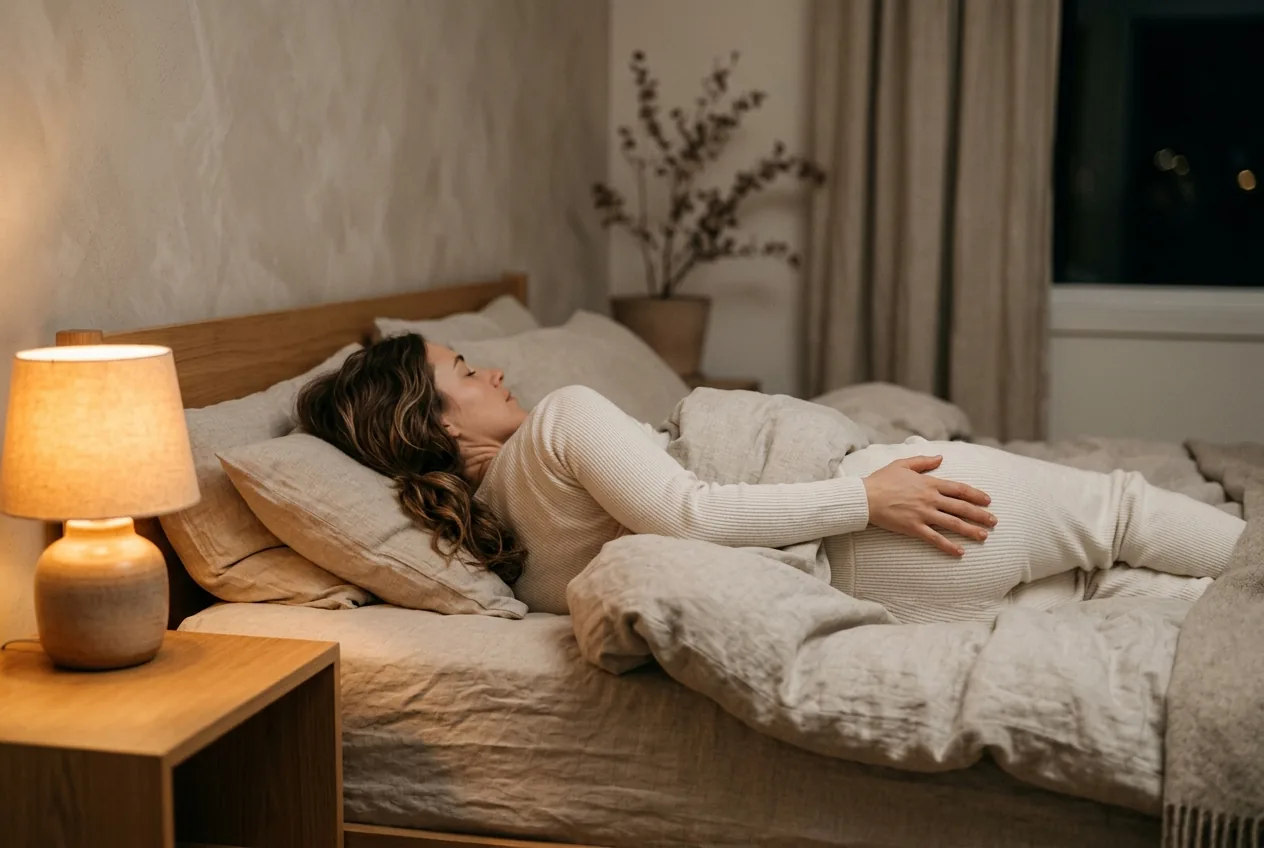
- Stop pressing on it. Don't sleep on the sore side. Put a firm pillow between your knees when you sleep on the good side so the top leg doesn't drop and yank the tissue across the bursa. The hip pain at night positions apply directly.
- Ice the tender point for 10 to 15 minutes a few times a day while it's hot and angry.
- Back off the aggravators for a week or two — deep stair climbing taken fast, long downhill walks, sitting cross-legged, standing slumped on one hip.
Don't over-stretch it
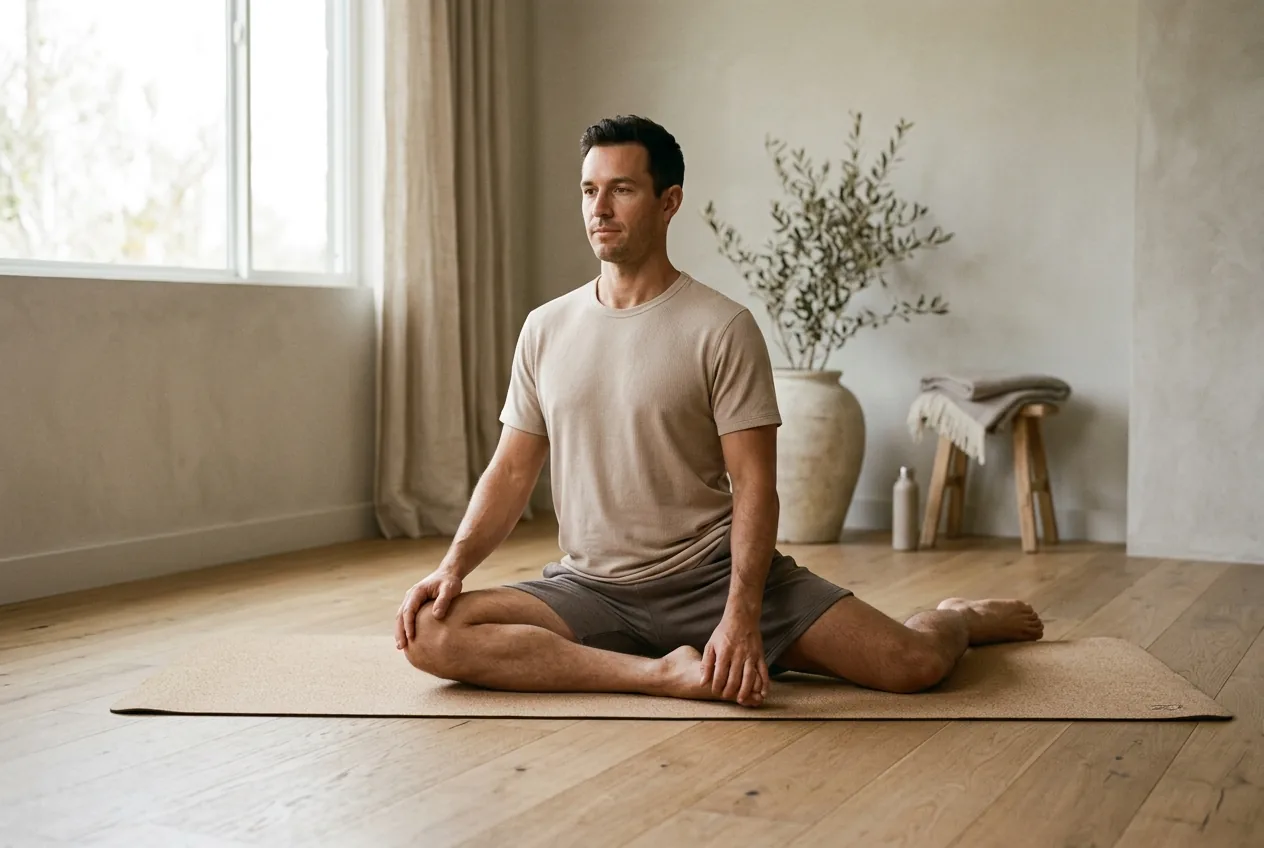
This is where people go wrong. Aggressively stretching the outside of the hip — pulling the leg hard across the body — can compress the already-irritated bursa and make it worse. If a stretch produces sharp pain right on the sore point, that's a sign to stop, not push through.
Rebuild the support
Once it's less acutely tender, strengthen the muscle that lets the pelvis drop.
Glute bridge. Lie on your back, knees bent, feet flat, lift your hips by squeezing your glutes, hold two seconds, lower slowly. 10 to 12 reps. See the glute bridge for back pain for the cues.
Side-lying leg raise. Lie on the good side, top leg straight and slightly behind you, and lift it a foot or so under control, leading with the heel. This targets the glute medius directly. Start with 8 to 10, keep it pain-free.
Standing stance reset. Stop standing hip-cocked. Keep your weight even on both feet so one outer hip isn't taking the brunt all day.
When to see a doctor
This is posture education, not medical advice. See a clinician promptly if the hip pain came after a fall, if you can't bear weight on the leg, if the area is red, hot, and swollen or you have a fever (which can signal infection, not simple bursitis), if there's numbness or weakness spreading down the leg, unexplained weight loss, or pain that's severe or steadily worsening. Bursitis that doesn't improve at all after several weeks of sensible self-care is worth having assessed.
Why posture is the part that lasts
You can ice and rest a flare into quiet. But if the glute medius stays weak and your pelvis keeps dropping with each step, the band of tissue keeps grinding the bursa and the pain keeps circling back. The flare is the symptom; the alignment that overloads the bursa is the cause.
That's the case for a proper posture assessment rather than treating flare after flare: find why your pelvis isn't staying level — a dropped hip, a tipped pelvis, a weak side — then train the muscles that should be holding it, so the bursa stops getting hammered in the first place.
Common questions
What causes hip bursitis?
Repeated rubbing or pressure inflames the bursa over the bony point on the outside of your hip. The usual drivers are a weak glute medius that lets the pelvis drop with each step, standing slumped on one hip, a tipped or rotated pelvis, and pressure from lying on the same side.
How can I heal hip bursitis quickly?
Calm the flare first — stop sleeping on the sore side, use a pillow between your knees, ice it, and back off stairs and one-sided standing. Then strengthen the glutes so the pelvis stops dropping. Avoid hard stretches of the sore point, which can make it worse.
How do I know it's bursitis and not the hip joint?
Bursitis is a surface problem: it's tender right on the bony point, hates being pressed, and flares lying on that side. Joint problems tend to hurt more on weight-bearing and deep in the groin, and aren't as point-tender to touch.
Should I stretch hip bursitis?
Gentle movement is fine, but aggressively stretching the outside of the hip can compress the irritated bursa and worsen it. If a stretch causes sharp pain on the sore point, stop. Strengthening the glutes usually helps more than stretching.