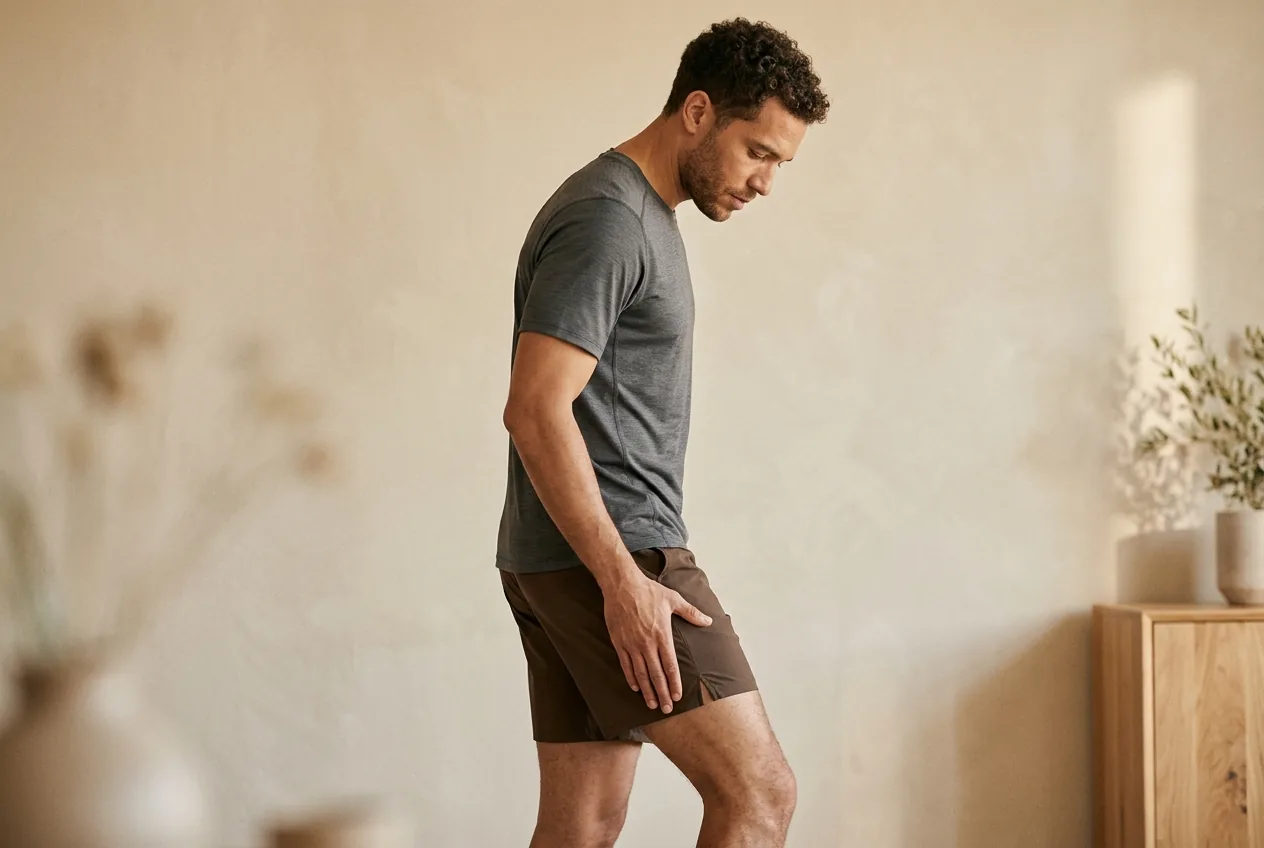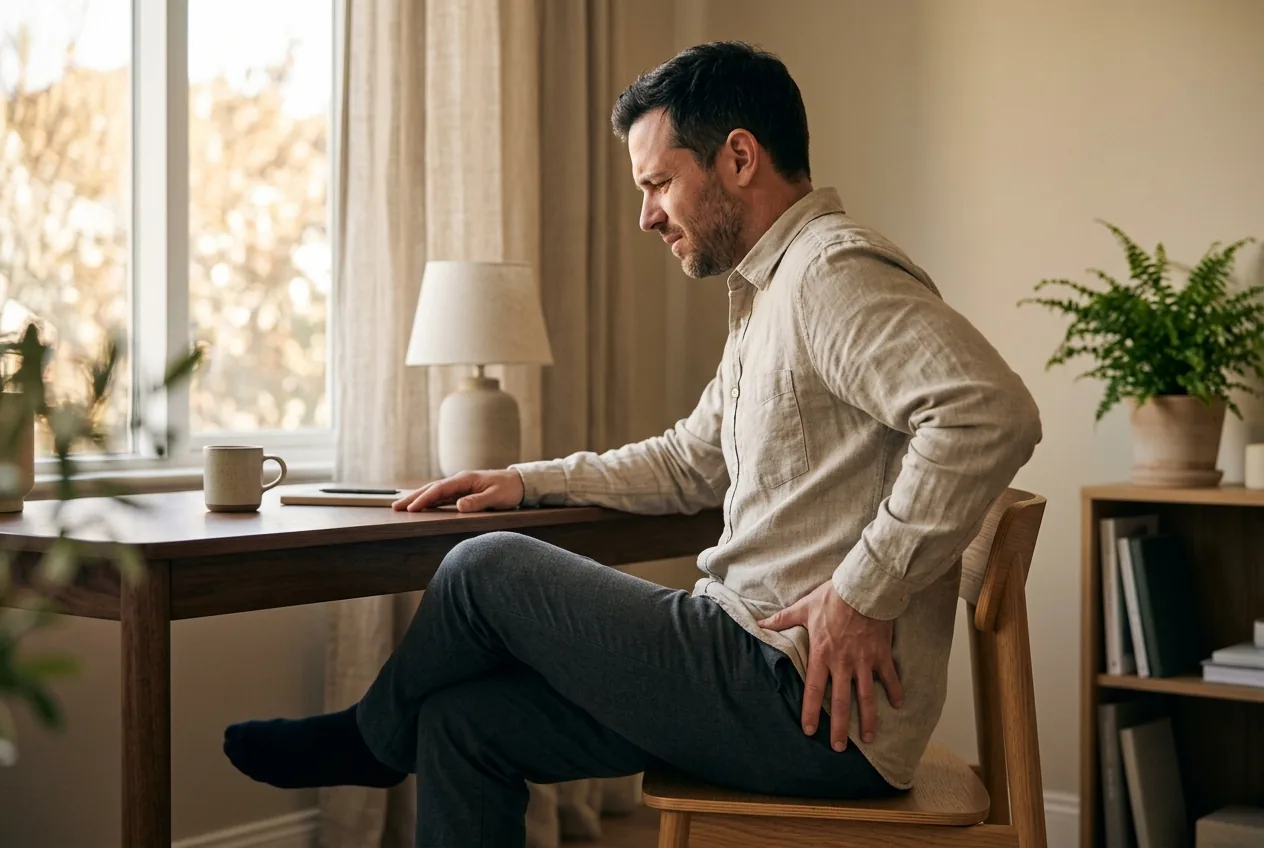
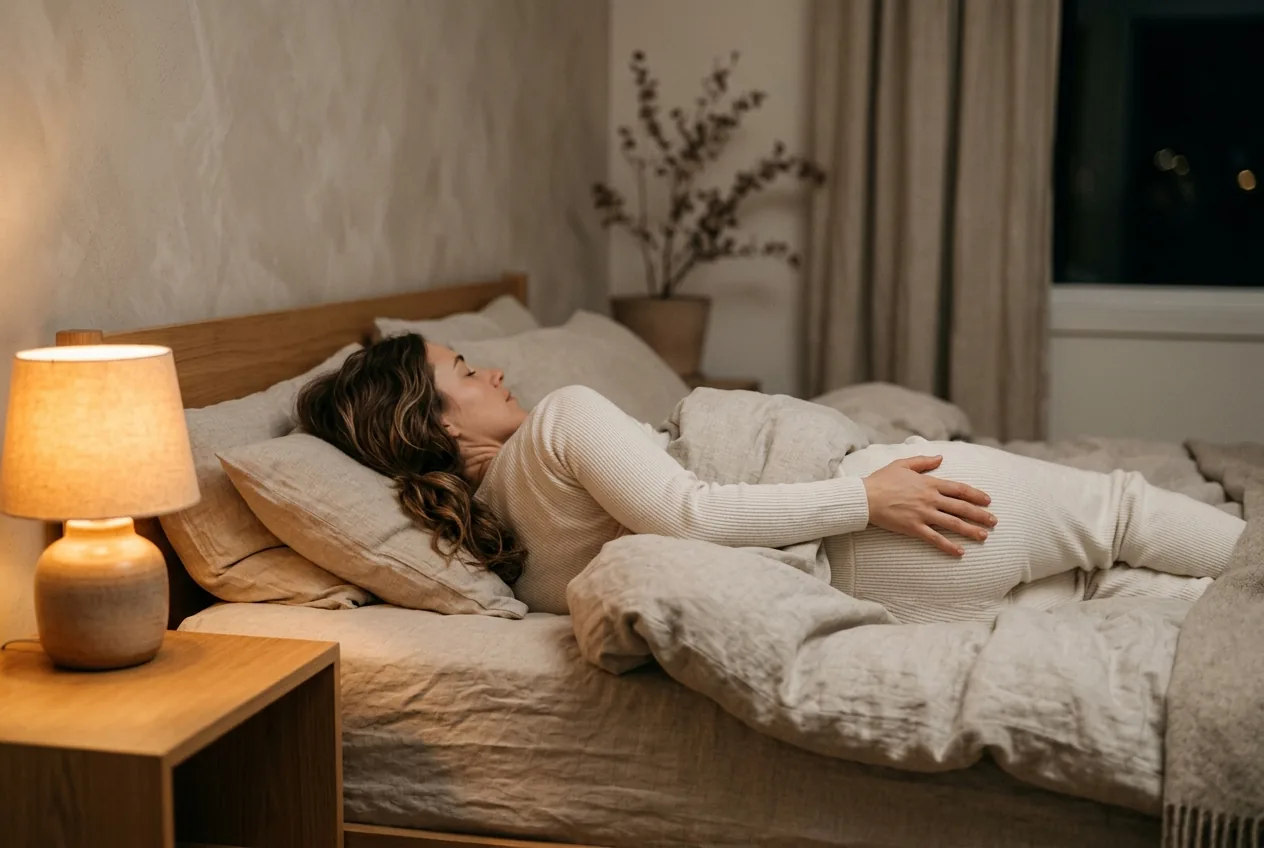
You got through the day fine. Then you lie down, and within twenty minutes the outside of your hip starts to burn. Roll onto that side and it's sharp. Roll onto the other side and the top hip aches across the gap. Hip pain at night has a way of waiting until you're still and tired before it shows up, and it's one of the most common reasons people lose sleep without ever hurting their hip in an obvious way.
The strange part is the timing. If your hip were simply worn out, you'd expect it to hurt most when you load it — walking, climbing stairs. Instead it goes quiet during the day and roars at 2am. That pattern is a clue, and once you understand it the fixes make sense.
From our own quiz data: 49% of 1,441 people said pain disrupts their sleep often or all the time, and 84% said it happens at least occasionally. Whatever else this costs people during the day, for most of them the bill arrives at night.
Why lying down makes it worse
During the day your muscles are working, your joints are moving fluid around, and the distraction of being upright masks a lot. When you lie down, three things change at once.
First, you stop moving. Joints and the soft tissue around them stiffen quickly when they're held still, and a hip that's irritated gets achy without the steady motion that was keeping it loose.
Second, you put direct pressure on it. Lying on your side compresses the bony point on the outside of your hip and the cushioning tissue over it. If that tissue is already inflamed — which is what happens in hip bursitis — pressing your full body weight onto it for hours is going to hurt.
Third, your position stops protecting the joint. Standing, your muscles hold the hip in a tidy line. Sprawled in bed with your top leg dropping across the midline, the hip rotates and the tissue on the outside gets stretched and pinched at the same time. That's why the top hip can ache even though nothing is pressing on it.
A hip that's fine when you walk but wakes you at night is usually a soft-tissue and position problem, not a worn-out joint.
The posture link most people miss
Here's the part that gets overlooked. The reason the outside of your hip is sensitive in the first place often traces back to how you stand and sit all day. When the pelvis tips or one side sits higher than the other, the muscles on the outside of the hip — the glute medius and the band of tissue running down the thigh — end up working at a bad angle. Some overwork, some switch off. By night they're irritated and primed to complain the moment you load them.
This is why two people with identical "hip pain at night one side" can need opposite fixes. One has a tight, overworked outer hip from a dropped pelvis. The other has a weak, lengthened one. The same stretch helps the first and aggravates the second. If you've ever wondered why a stretch a friend swore by did nothing for you, that's the reason. Patterns like uneven hips and anterior pelvic tilt feed straight into this.
Sleeping positions that calm it down
Position is the fastest lever you have, and it costs nothing to try tonight.
If you sleep on your side, put a pillow between your knees. This is the single most effective change for most people. Without it, your top leg drops across your body and rotates the hip into the painful pinch. A firm pillow from knee to ankle keeps both legs stacked and the hip neutral. Sleep on the *less* painful side where you can.
If lying on the sore side is unavoidable, soften the surface under it — a mattress topper or a folded blanket — so the bony point isn't pressing into a hard mattress. A too-firm bed is a common, fixable cause of outer-hip pain at night.
If you sleep on your back, slide a pillow under your knees. This takes the pull off the front of the hips and lets the lower back settle, which often quiets a hip that's been dragged out of line by tight hip flexors.
Avoid the curled-up fetal position with knees pulled high and the top leg collapsed forward. It's the position that loads the irritated tissue most.
What to do during the day
Nighttime pain is built during the day, so the daytime habits matter.
- Get up and move every 30 to 60 minutes. Long sitting shortens the hip flexors and the outer-hip tissue stiffens, setting up the night flare. The connection to tight hip flexors from sitting is direct.
- Stop standing with all your weight dumped onto one hip. That "hip-cocked" stance hammers the outer tissue on the loaded side.
- Strengthen the glutes gently. A weak glute medius lets the pelvis drop with each step, grinding the outer hip. A simple glute bridge for back pain is a safe starting point.
- Don't sleep on the same side every night out of habit if that's the painful one.
When to see a doctor
This is posture education, not medical advice. See a clinician promptly if your hip pain started after a fall or accident, if you can't bear weight on the leg, if the hip looks deformed or you can't move it normally, if you have fever with the pain, redness and heat over the joint, numbness or weakness spreading down the leg, unexplained weight loss, or pain that's severe or steadily getting worse. Night pain that's relentless and doesn't ease with any position change also deserves a proper look.
Why a matched routine beats random stretches
The position fixes above help almost everyone tonight. The deeper fix — so the hip stops being primed to flare — depends on which pattern you actually have. A dropped pelvis, an over-arched lower back, and one hip sitting higher all point to different work, and the wrong emphasis can stall you.
That's the case for a proper posture assessment instead of guessing: measure your real deviations, then train the muscles that quit, repeated daily until the night flare fades.
What I see in practice
Night pain is often the first version of hip trouble people actually act on, because it's the one that takes something they notice. Here's how I use it: if a pillow between the knees fixes your night almost completely, that tells me the hip is fine under load and it's position provoking it — which points upstream at how the pelvis sits all day, not at the joint itself. I always ask which side someone stands on while they wait for the kettle, and which shoulder carries the bag; the answer tends to match the painful hip. I'm also wary of stretching the outside of a hip that's already long — plenty of people have an outer hip that's overstretched and weak rather than tight, and a nightly IT-band stretch keeps them exactly there. Give the position fix a week, then go looking for why one side of your pelvis is doing more of the work.
Common questions
Why does my hip hurt more at night than during the day?
Lying still lets the joint and soft tissue stiffen, direct pressure compresses the irritated tissue on the outside of the hip, and a sprawled position rotates the joint into a pinch. Daytime movement and distraction mask all three.
What is the best sleeping position for hip pain?
Side-sleeping with a firm pillow between your knees keeps the hips stacked and neutral, which helps most people. Back-sleeping with a pillow under the knees is the next best. Avoid the tightly curled position with the top leg collapsed forward.
Why does the top hip hurt when I'm not even lying on it?
When your top leg drops across the midline, the hip rotates and the outer tissue gets stretched and pinched even without direct pressure. A pillow between the knees stops the leg from falling and usually settles it.
Can a too-firm mattress cause hip pain at night?
Yes. A hard surface presses into the bony point on the outside of your hip when you lie on your side. A mattress topper or folded blanket under that side often makes a noticeable difference.