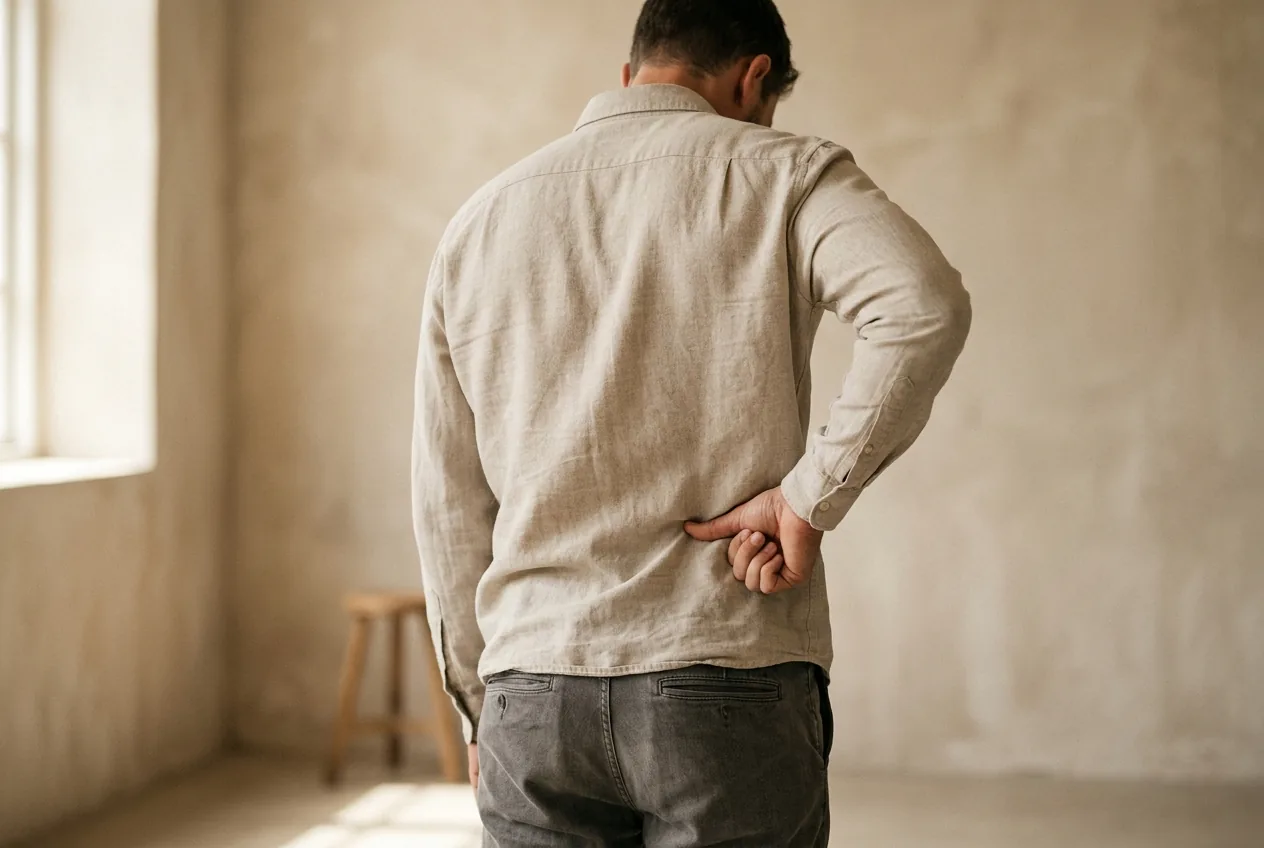
Your lower back is flaring right now, you've got a full day ahead of you, and you don't want a biology lesson — you want it to ease off. Fair enough. So here's how to relieve lower back pain fast at home, in plain order, with the things that actually move the needle in the next hour first.
One honest caveat up front: "fast" means calming the pain, not curing the cause. The two are different jobs. Today we settle the flare. Near the end I'll tell you straight what it takes to stop the flares from coming back, because nothing in this list does that on its own.
From our own quiz data: of 937 people who scored their own pain out of 10, 58% put it at 7 or above. So this page is written for a 7, not a 3 — which is why it opens with lying on the floor rather than with a stretch. At that level a back usually has to be convinced it's safe before it will agree to move, and the order below is built to win that agreement first: unload it, warm it or cool it, and only then ask for gentle range.
First, take the load off
The single fastest thing you can do is get your spine out from under the load it's straining against.
The most reliable position for most people: lie on your back on the floor, knees bent, and rest your lower legs on a chair seat so your hips and knees are both at about 90 degrees. This neutral, supported position unloads the lumbar spine and often eases a flare within minutes. Stay there and breathe slowly for five to ten minutes.
If lying on your back is uncomfortable, try lying on your side with a pillow between your knees, knees drawn up slightly. The goal either way is the same — find the position where your back stops shouting, and let it rest there for a few minutes before you do anything else.
The fastest relief is usually a position, not a pill. Unload the spine first, then add everything else.
Apply heat or ice — the right one
Temperature is the next quickest lever, but the choice matters:
- Fresh, sharp flare in the last day or two? Ice can settle the initial irritation. Fifteen to twenty minutes, wrapped in a thin towel, never directly on skin.
- Stiff, achy, tight muscle? Heat is usually better — it relaxes the muscle and increases blood flow. A heating pad, hot water bottle, or warm shower, 15–20 minutes.
If you're not sure, most chronic, stiff-feeling lower-back flares respond well to heat. The full rule for when to use each is in heat or ice for back pain. Don't sleep on either one.
Gentle moves that loosen a flared back
Once the worst has eased a little, gentle movement beats lying still. Do these slowly and stop if anything sharpens the pain.
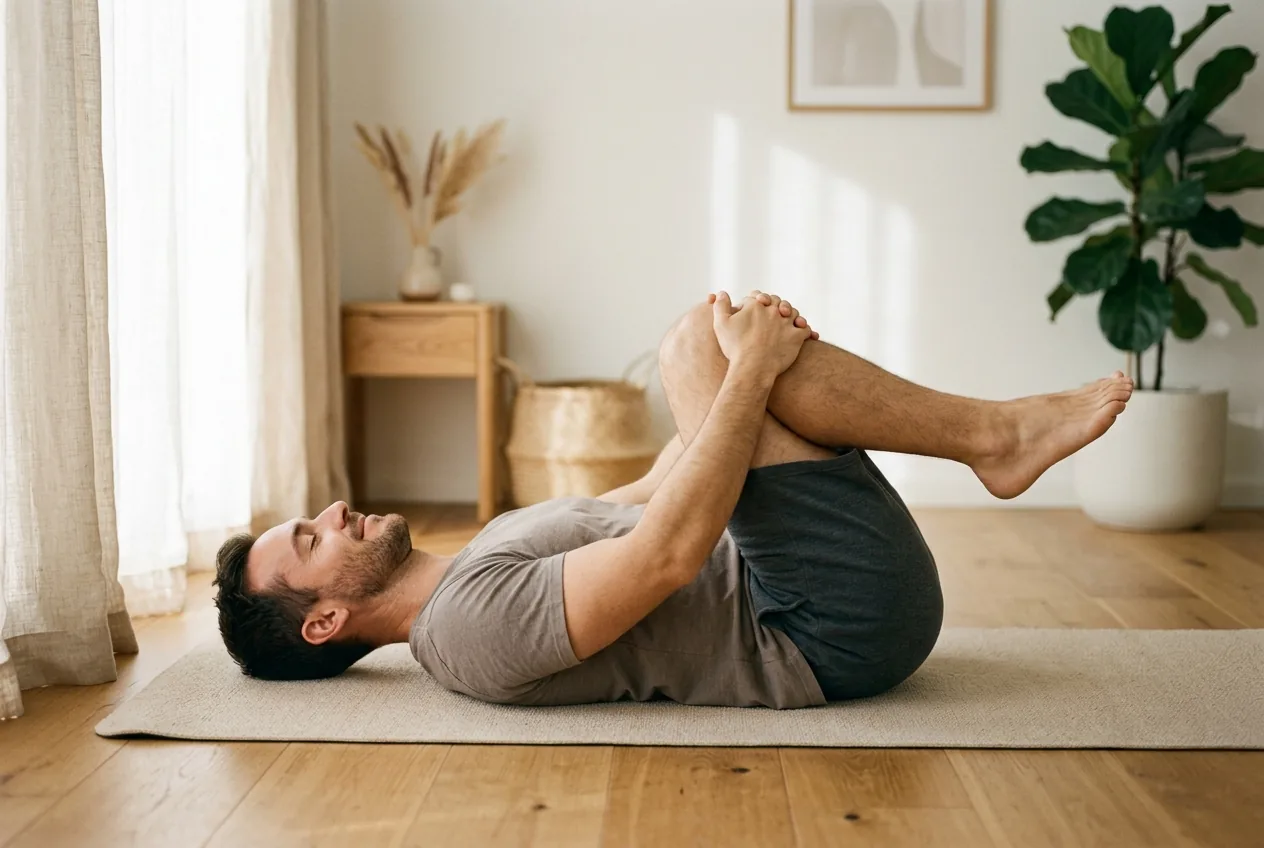
- Knee-to-chest. On your back, draw one knee gently toward your chest, hold a few breaths, switch sides, then try both knees together. Eases lower-back tension. Detail in the knee-to-chest stretch.
- Pelvic tilts. Knees bent, gently flatten your lower back to the floor by tucking your tailbone, then release. Small, slow, repeated — this wakes up safe movement.
- Cat-cow. On hands and knees, slowly alternate between arching and rounding your back, following your breath. It restores gentle motion across the whole spine. See cat-cow stretch for back.
- Child's pose. Sit your hips back toward your heels, arms forward, letting the lower back round. Soothing for many flares. See child's pose for back pain.
The principle: small range, slow tempo, no forcing. You're reassuring the back, not stretching it into line.
Keep moving the rest of the day
After the acute edge comes off, the best thing you can do is *not* park on the couch for the day. Short, easy walks — even a few minutes around the house every hour — keep the back from stiffening and tend to ease a flare faster than rest. Walking is one of the most underrated tools for an irritated back; more on why in is walking good for back pain.
Over-the-counter pain relief, used as directed, can take enough edge off to let you move and relax. Treat it as a bridge to gentle activity, not a reason to push through hard.
What to skip
A few moves slow you down:
- Strict bed rest. A short lie-down is fine; a day or two flat in bed stiffens everything and prolongs the flare.
- Aggressive stretching or "popping" the back. Forcing range into an angry back can deepen the guarding.
- Sitting slumped for hours. If you must sit, get up often and keep your lower back supported.
- Heavy lifting or hard exercise. Wait until the flare settles before loading up again.
When to see a doctor
Fast home relief is for ordinary mechanical pain. See a clinician promptly if you have numbness, tingling, or weakness spreading down a leg, any loss of bladder or bowel control, pain that began after a fall or accident, fever alongside back pain, unexplained weight loss, or pain that's severe or steadily getting worse. Those signs need more than heat and a stretch.
The fast fix versus the lasting one
Here's the honest part. Everything above will calm a flare today, and that's worth having. But none of it changes *why* your lower back flares in the first place. If you're back here in a few weeks doing the same routine, the flares aren't the problem to solve — the recurring pattern underneath them is. That overlap is worth a read in lower back pain that comes and goes.
Lasting relief comes from changing the postural and movement pattern loading your back all day. And the catch is that the right changes are specific to you: a generic routine helps one posture and can aggravate another. A posture method that measures your own deviations builds a daily routine matched to your pattern, so the work goes where it counts.
For now: unload the spine, pick the right temperature, move gently, and keep walking. That's how you get through today. The lasting fix is the next conversation.
What I see in practice
The flare I hear about most often didn't arrive during anything heavy — it came while someone was putting on a sock, picking up a pen, or climbing out of the car after a long drive. That tells me the back was already close to its limit before the moment that tipped it, so I ask what the previous few days looked like rather than what they were doing at the time. In the first hours I care less about which exact stretch someone does than about them not freezing up completely; the people who keep making small, easy movements tend to tell me the edge came off sooner. The mistake I see most is the reverse of resting too much: the morning the pain eases, they go straight back to the long drive or the garden, and the flare is back by evening. I'd rather someone spends two quiet days easing back in than ten days recovering from a second flare.
Common questions
What is the fastest way to relieve lower back pain at home?
Get into a position that unloads your spine — lying on your back with your lower legs on a chair is the most reliable — and breathe slowly for several minutes. Then apply heat or ice depending on whether the pain is stiff or sharp, and do gentle knee-to-chest stretches and pelvic tilts.
Should I rest or move with lower back pain?
A short rest to settle a sharp flare is fine, but prolonged bed rest stiffens the back and slows recovery. Once the worst eases, gentle movement and short, frequent walks usually relieve a flare faster than lying still.
Is heat or ice better for fast lower back pain relief?
Use ice for a fresh, sharp flare in the first day or two to calm irritation, and heat for stiff, achy, tight muscle to relax it and boost blood flow. Most chronic, stiff-feeling flares respond well to heat. Keep either to about 15 to 20 minutes.
Why does my lower back pain keep coming back after it eases?
Home remedies lower the strain temporarily but don't change the underlying postural pattern loading your back all day. Until that pattern changes, the flares return whenever an ordinary trigger pushes the strain over your back's limit again.