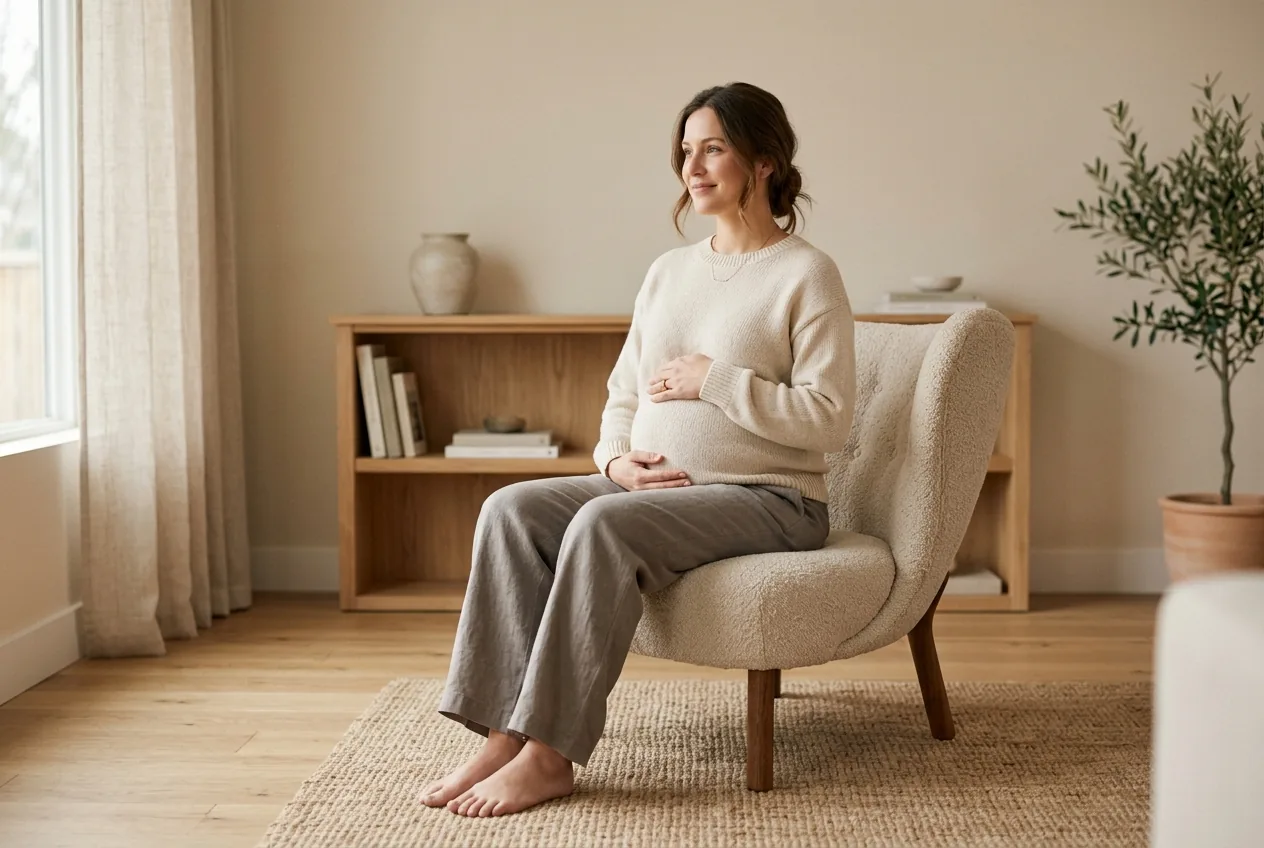
By the second trimester, sitting stops being something you do without thinking. You lower yourself into a chair, shift around to find a spot that doesn't pull on your lower back, and twenty minutes later you're aching again. As the baby grows, the way you sit starts to matter in a way it never did before — and learning how to sit during pregnancy can spare your back a lot of the day's discomfort.
The reason is simple physics on top of changing chemistry. The weight at the front of your body grows, your centre of gravity moves forward, and the hormone relaxin loosens the ligaments around your pelvis to prepare for birth. Your lower back ends up doing more work to hold you up, with less help from the ligaments that normally steady the joints. Sit badly and you pile load onto a back that's already under more strain than usual.
What changes when you're pregnant
Two things shift how you should sit.
First, the growing weight at the front tips your pelvis and pulls your lower back into a deeper arch. That arch is where a lot of pregnancy back pain settles, and slumping or perching makes it worse.
Second, looser ligaments mean your pelvis and lower back joints aren't held as firmly. The muscles have to do more of the stabilising, so they fatigue faster. A position your body could hold for an hour before now starts complaining in fifteen minutes.
The goal of good sitting during pregnancy isn't a perfect, rigid posture. It's to support your back so your muscles aren't fighting gravity unaided, and to change position often so nothing stays loaded too long. This sits alongside the wider picture in posture during pregnancy.
How to sit well during pregnancy
A few adjustments take most of the strain off:
- Sit all the way back in the chair. Get your hips to the back of the seat so the chair supports you, rather than perching on the front edge where your lower back has to hold everything.
- Support your lower back. A small cushion or rolled towel in the curve of your lower back keeps the gentle arch without letting it deepen into a slump or an over-arch. This one change helps more than any other.
- Keep your feet flat and supported. Feet flat on the floor, knees roughly level with or slightly below your hips. If your feet dangle, use a footrest so your thighs are supported and your pelvis isn't pulled out of position.
- Keep your weight even. Sit on both sit-bones evenly rather than leaning onto one hip. Loose pelvic ligaments make uneven sitting more likely to ache.
- Stand and move every 30 minutes. This matters more than usual in pregnancy. Tired stabilising muscles need the break, and moving keeps the lower back from locking into one loaded position.
When you get up, don't twist out of the chair. Shuffle to the edge, plant both feet, and push up with your legs rather than hauling yourself up with your back.
Good pregnancy sitting is about supporting your back and changing position often — not holding one perfect pose.
Sitting positions to avoid during pregnancy
Some habits make a loaded back worse, and they're worth dropping:
- Crossing your legs. It tilts and twists your pelvis, which already has loosened ligaments. Keep both feet down.
- Slumping or perching on the edge. Both leave your lower back unsupported and working overtime.
- Sitting cross-legged on the floor for long stretches, or any position that lets your lower back round backward under the bump.
- Sitting still for too long. Even a good position becomes a problem if you hold it for an hour. The fix is movement, not finding one flawless chair.
- Deep, soft sofas that swallow you and let your back round. A firmer seat you can sit upright in is kinder to a pregnant back.
If your work keeps you seated, getting the basics of proper sitting posture in place — and then adapting them for the bump and the looser ligaments — covers most of what you need.
When to see a doctor
Aches that ease when you change position and improve with better sitting are the ordinary background of pregnancy. Contact your midwife or doctor promptly, though, if you have severe or steadily worsening back pain, pain that comes in a rhythmic or wave-like pattern (which can be linked to labour), back pain with fever, any vaginal bleeding or fluid, pain with numbness or weakness in the legs, or any loss of bladder or bowel control. Sudden or severe lower-back and abdominal pain in pregnancy should always be checked rather than waited out. Posture advice is education, not a substitute for your maternity care.
Why the right setup still leaves some women aching
Here's the honest limit. Good sitting takes load off, but pregnancy back pain often comes from a postural pattern that was already there before you conceived — a pelvis that tilts too far, hips that were tight from years of sitting — and the growing bump simply amplifies it. That's why two pregnant women with the same chair can have very different backs. General advice helps everyone a bit; the version that helps most is matched to your own alignment. A posture approach that measures your specific deviations can identify the pattern your bump is loading, so the daily work targets what's actually overworked rather than treating every pregnant back the same. Day to day, the practical relief tips in back pain during pregnancy pair well with getting your sitting right.
Set the chair up to support your lower back, keep both feet down, and get up every half hour. That alone takes a real bite out of the daily ache.
Common questions
What is the best sitting position during pregnancy?
Sit all the way back in the chair with a small cushion supporting the curve of your lower back, both feet flat on the floor or a footrest, knees level with or just below your hips, and your weight even on both sit-bones. The single most useful change is the lumbar support, which stops your lower back from slumping or over-arching.
What sitting positions should I avoid when pregnant?
Avoid crossing your legs, perching on the edge of the seat, slumping into soft sofas, and sitting cross-legged on the floor for long stretches, since these twist or round the pelvis when its ligaments are already loosened. Also avoid sitting still too long — change position and stand up every half hour.
Is it bad to sit too long during pregnancy?
Sitting in one position for a long time lets your lower back stay loaded and your stabilising muscles fatigue, which is more of an issue in pregnancy because loosened ligaments make those muscles work harder. It isn't dangerous in itself, but standing and moving every 30 minutes eases the ache and keeps your back from locking up.
Why does sitting hurt my back so much in pregnancy?
The growing weight at the front tips your pelvis and deepens the arch in your lower back, while the hormone relaxin loosens the ligaments that normally steady your pelvic joints. Your back muscles take on more of the work and tire faster, so a position that was once comfortable starts to ache much sooner. Good support and frequent movement counter both.