
You take something like five thousand steps on a quiet day, and you've never once thought about how you're taking them. Then your lower back starts grumbling on a long walk, or your neck aches after a stroll with the pushchair, and suddenly the way you move matters. Walking posture is the most-repeated movement you own, so even a small fault gets practised thousands of times a day.
The good news is that walking well isn't a stiff, chin-up parade march. Proper walking form is mostly about letting your body stack and swing the way it's built to, then getting out of its way. Here's how to walk correctly without overthinking every step.
What good walking posture actually looks like
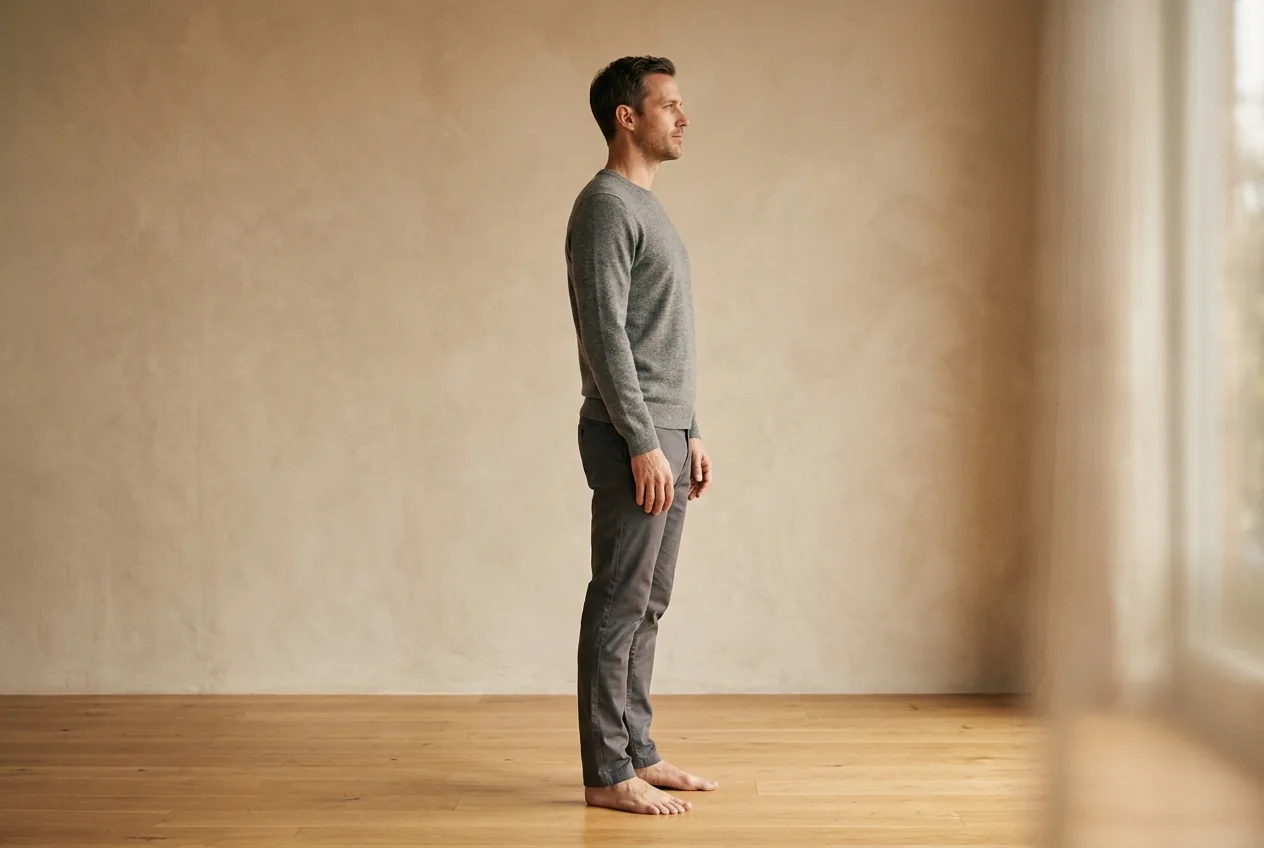
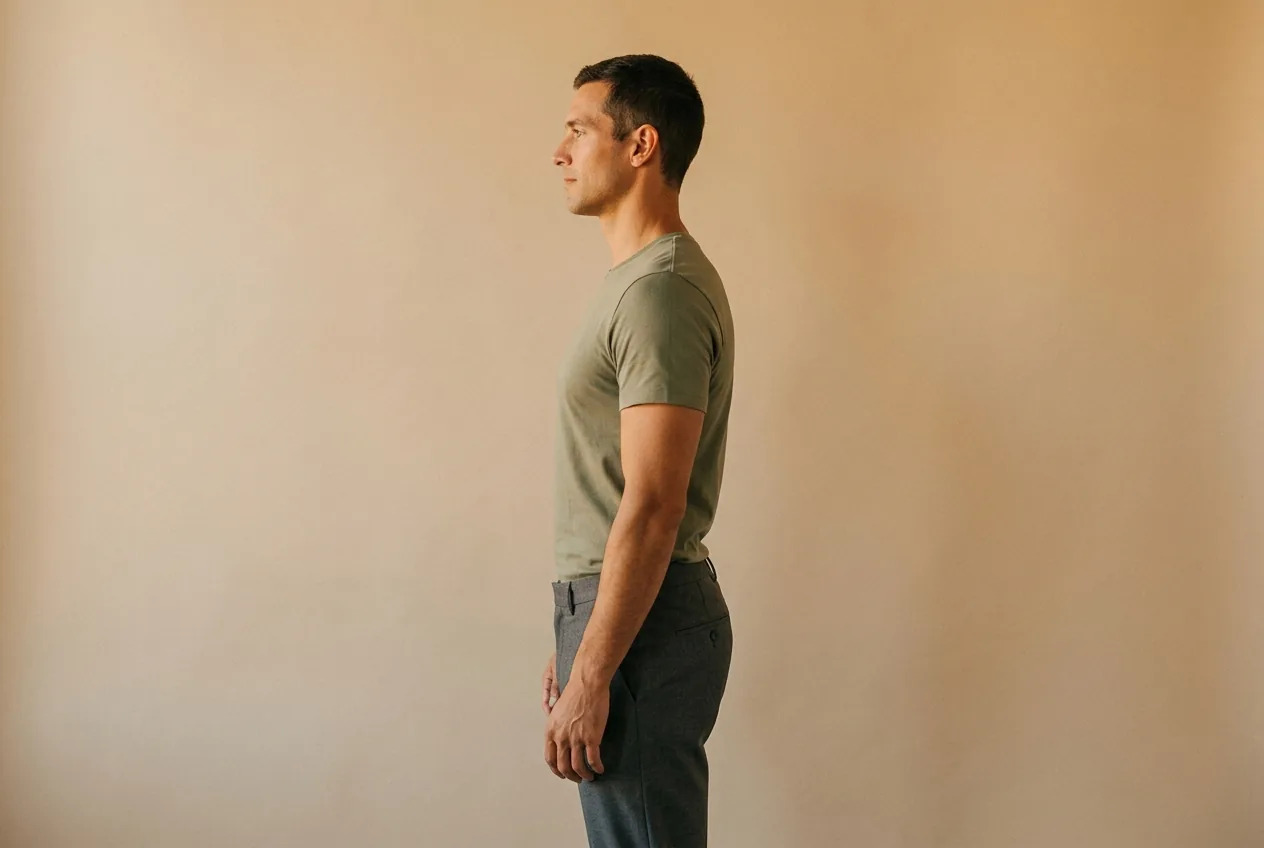
Picture a clean vertical line. Your head sits balanced over your shoulders, your shoulders over your hips, your hips over your feet as they land. From the side, your ears should sit roughly over your shoulders, not poked out in front. That stacked line is what lets each step land softly and the load travel up through your skeleton instead of getting absorbed by tired muscles.
Most walking faults are a break in that line. The head drifts forward to look at the ground or a phone. The shoulders round. The upper body leans back while the hips push ahead. Each one forces some muscle to work overtime, and over thousands of steps that's where the ache comes from.
Walking well isn't about holding a pose. It's about stacking your body and letting it swing freely.
How to walk correctly, head to foot
Run through it from the top down once, then forget the checklist and just feel the line.
Head and eyes
Keep your head level and your gaze out toward the horizon, not down at your feet. Looking down drags your head forward and loads the back of your neck — the same strain behind forward head posture. If you need to check the path, drop your eyes, not your whole head.
Shoulders and arms
Let your shoulders sit back and down, relaxed, not hunched up toward your ears. Your arms should swing naturally from the shoulder, opposite to your legs — left arm forward as the right leg steps. That swing isn't decoration; it's what helps your trunk rotate and keeps the rhythm efficient. If your arms hang dead and stiff, your lower back ends up doing the rotating instead.
Core and trunk
Hold a light tension through your middle — the feeling of standing tall, not bracing hard. This keeps your trunk stacked over your pelvis so your lower back isn't compensating for a slump. You're not sucking in your stomach; you're just not letting it all hang forward.
Hips and stride
Let your hips move. Walking from the hips, with a relaxed stride, lets the glutes drive each step. When the hips are stiff — often from tight hip flexors from sitting — people shuffle from the knees and the stride shortens, which throws more work onto the lower back.
Feet
Land toward your heel and roll smoothly through to push off the toes. That heel-to-toe roll spreads the impact. Stomping flat-footed or landing hard sends a jolt straight up the chain to the knees, hips, and back.
The faults that cause aches
A few patterns cause most of the trouble.
- Walking head-down. The single most common fault now, thanks to phones. It loads the neck and rounds the upper back with every step.
- No arm swing. Stiff, pinned arms force the lower back to do the trunk's rotation, which is a quiet driver of lower-back fatigue on long walks.
- Leaning back from the hips. Pushing the hips ahead and leaning the chest back over-arches the lower spine, the same load problem behind lordosis and swayback.
- Short, shuffling stride. Usually means stiff hips and sleepy glutes; the back picks up the slack.
If walking specifically tends to set your back off, the pattern behind lower back pain when walking is worth a closer look, because the fix often sits in the hips rather than the back itself.
How to make better walking stick
You can't think your way through five thousand steps. The trick is to set the line, then let it run on its own.
- Reset at the start. Before you set off, stand tall, roll your shoulders back, lift through the crown of your head, and take a breath. Start from that stacked line.
- Use cues, not constant focus. Pick a trigger — every street corner, every time a song changes — and use it to check: head level, eyes up, shoulders relaxed, arms swinging.
- Loosen the hips first. A quick hip flexor stretch before a long walk frees the stride so you're not shuffling from the knees.
- Let the phone go. If you're walking for your back, walking head-down at a screen undoes the point. Pocket it.
Walking is one of the best things going for an aching back when the form is right — it's gentle, repeated movement that keeps the spine fed. The detail of why is in is walking good for back pain.
When to see a doctor
This is posture education, not medical advice. See a clinician promptly if walking brings on numbness, tingling, or weakness in a leg, if pain shoots down the leg, if you feel unsteady or your legs give way, if pain follows a fall, or if there's fever, unexplained weight loss, or any loss of bladder or bowel control. Leg pain that reliably comes on after a set walking distance and eases when you stop also deserves a proper look.
Why your stride reflects your posture
Walking faults rarely start with walking. A head that lives forward at your desk walks forward too. Stiff hips from sitting shorten your stride. A tilted pelvis tips the whole line. Your gait is your standing posture set in motion, which is why fixing how you walk usually means fixing the pattern underneath it.
That's the case for knowing your own line. A short posture assessment measures where you actually deviate and builds a daily routine to settle it — and as the pattern corrects, the stride cleans up on its own without you having to police every step.
The way you walk is the way you stand, repeated five thousand times a day. Fix the stance and the stride follows.
Common questions
What does good walking posture look like?
Head level with eyes on the horizon, shoulders back and relaxed, a light tension through the core, hips moving freely, and a smooth heel-to-toe foot roll — all stacked in a vertical line from ears to shoulders to hips. Arms swing naturally, opposite to the legs. The aim is a free, stacked stride, not a stiff march.
Should I look down when I walk?
Keep your gaze out toward the horizon and only drop your eyes, not your whole head, to check the path. Walking head-down drags your head forward and loads the back of your neck with every step, which is one of the most common causes of neck and upper-back ache from walking.
Why does my lower back hurt when I walk a lot?
Often it's the hips, not the back. Stiff hip flexors and quiet glutes shorten your stride and stop your arms and trunk rotating, so the lower back does the work instead. Leaning back from the hips also over-arches the lower spine. Freeing the hips and restoring arm swing usually settles it.
Is walking good for posture and back pain?
Yes, when the form is right. Walking is gentle, repeated movement that keeps the spine fed and the muscles working, and it's one of the better things you can do for an everyday aching back. The benefit fades if you walk head-down with stiff arms, which just rehearses a poor pattern.