If your lower back feels stiff and gripped when you first lie down at night, and pulling a knee toward your chest brings an instant "ahh," that small move is doing more than it looks. The knee to chest stretch is one of the simplest things you can do for a sore lower back. You lie on your back, draw one or both knees up toward your chest, and let the muscles across your lower back and hips lengthen. It needs no equipment, almost no flexibility, and very little of you on a bad day — which is why physical therapists reach for it so often early in recovery.
This single-move guide covers the step-by-step for both the single-leg and double-leg versions, what the stretch should feel like, the small errors that flatten it, sets and timing, and who should go easy.
What the knee-to-chest stretch does for a tight back
A lower back that's been holding you upright in a chair all day tends to end the day short and clenched, with the muscles either side of your spine refusing to switch off. The hips often stiffen too, since sitting keeps them folded for hours.
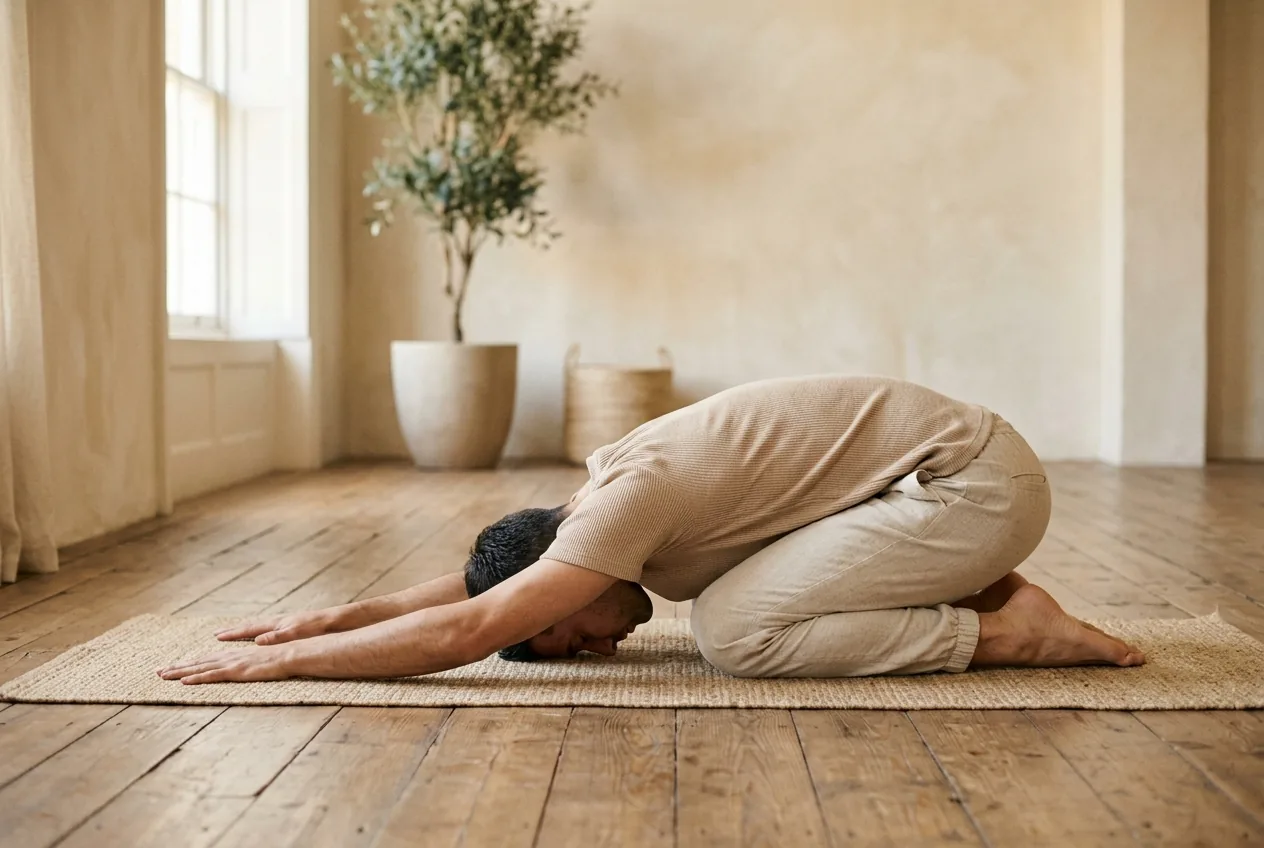
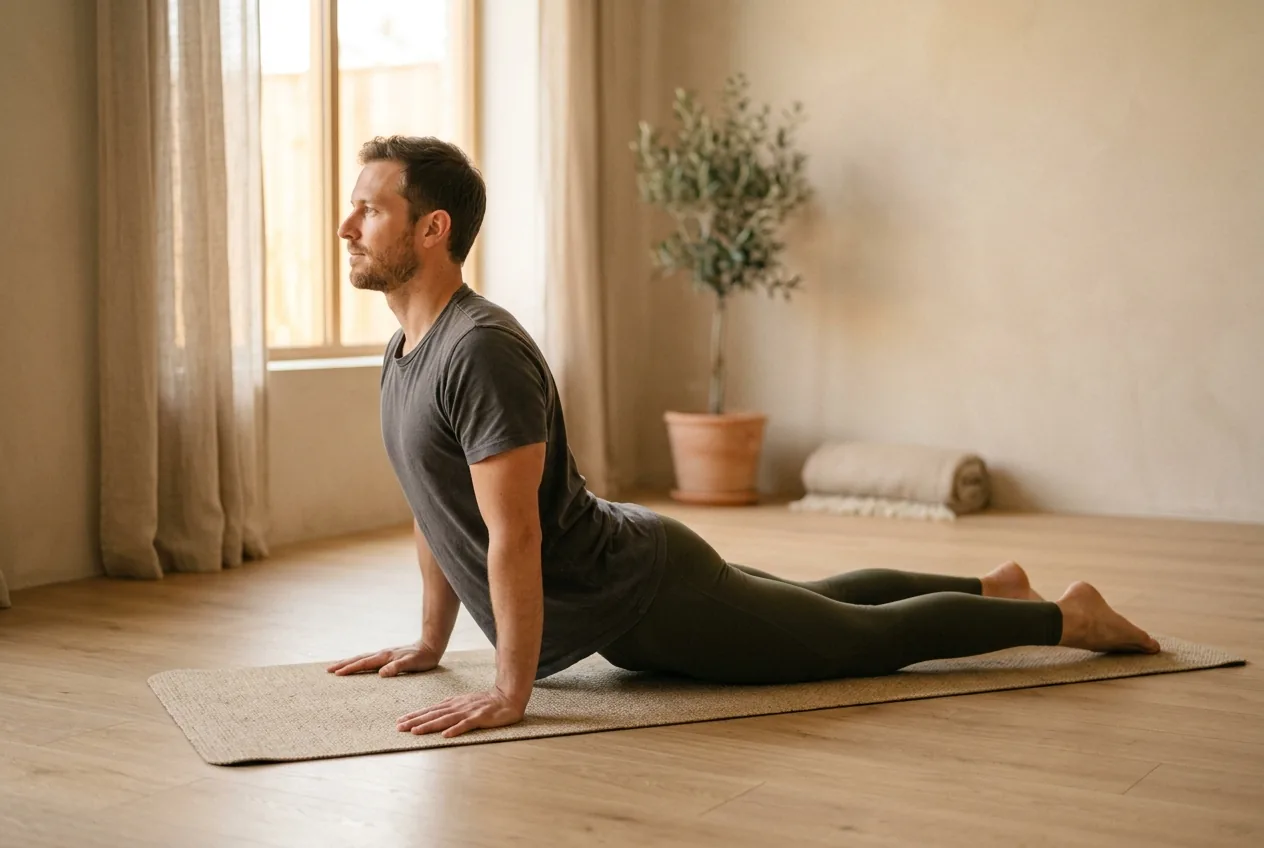
Drawing your knee to your chest puts your lower spine into gentle flexion and lengthens those clenched back muscles, while also opening the back of the hip. That combination eases the grip across your lower back and creates a small sense of space in the lower spine — which, for a stiff and achy back, is usually exactly the relief it's looking for. It's a flexion-based move, the same direction as child's pose, and the opposite of an extension move like the cobra press-up. Backs that feel better bending forward tend to love it.
A clenched back doesn't need force. It needs a position where the muscles can finally let go.
How to do it, step by step
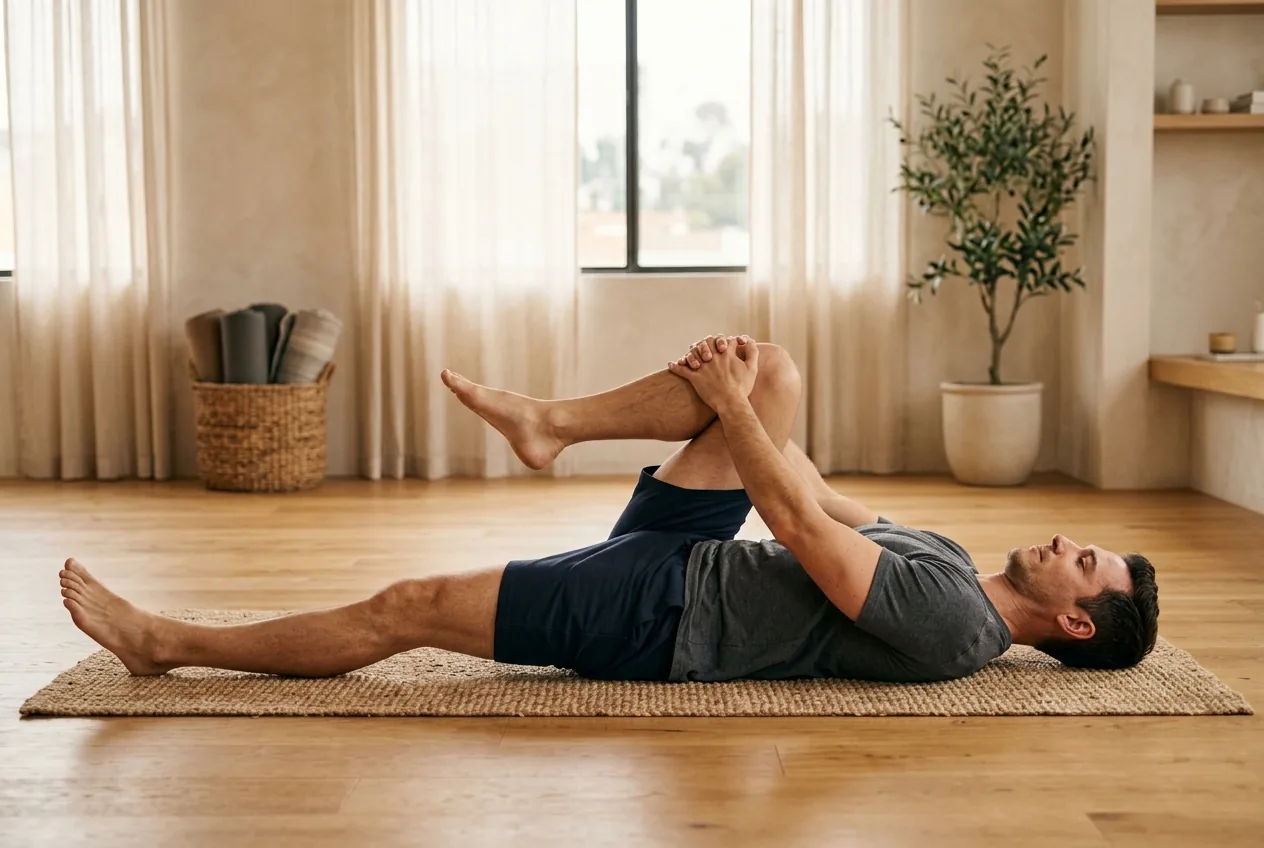
Single-leg version (start here):
- Lie on your back on a firm but comfortable surface, both knees bent and feet flat on the floor.
- Bring one knee up and clasp your hands behind your thigh, just below the knee.
- Gently draw that knee toward your chest until you feel a comfortable stretch in your lower back and the back of your hip.
- Keep your other foot flat on the floor, or extend that leg long if it feels better — whichever keeps your back relaxed.
- Hold for 20 to 30 seconds, breathing slowly, then lower the leg with control and switch sides.
Double-leg version (progression):
- From the same lying position, bring both knees up one at a time and clasp your hands behind your thighs or over your shins.
- Draw both knees gently toward your chest until you feel an even stretch across your lower back.
- Keep your head and shoulders relaxed on the floor — don't crunch up to meet your knees.
- Hold for 20 to 30 seconds, breathing easily, then lower one leg at a time.
What you want to feel: a broad, comfortable stretch across your lower back and into your hips. What you don't want: any sharp pinch in the back or pain shooting down a leg.
The small errors that blunt it
Pulling on the knee itself. Gripping over the kneecap and yanking strains the joint and changes the stretch. Clasp behind the thigh instead and draw from there.
Lifting your head and shoulders off the floor. People curl up to meet the knee, which tenses the neck and shoulders and adds nothing. Keep your head down and let the leg do the moving.
Forcing the range. A bigger pull doesn't make it better and can pinch a sensitive back. Draw the knee only to the point of a comfortable stretch and let your range improve over days, not seconds.
Holding your breath. This is a relaxation stretch. Slow breathing into your belly is part of what lets the back muscles release — breath-holding keeps them braced.
Bouncing the stretch. Pulsing the knee in and out is less effective and more irritating than a steady hold. Settle in and stay.
Sets, timing, and how to use it
Hold each stretch for 20 to 30 seconds and repeat two or three times per side (or two or three times for the double-leg version). Once or twice a day is plenty, and it's gentle enough to use more often when your back is acting up.
A few moments where it earns its place:
- Morning. A stiff back on waking eases quickly with a few knee-to-chest holds before you get up. It fits naturally into a short set of morning stretches for back pain.
- Before bed. It unwinds the day's clenching so you're not carrying that tension into sleep.
- After long sitting. A quick reset on the floor after hours in a chair, which is one of the most common triggers for a tight, aching lower back when sitting.
Start with the single-leg version and only move to the double-leg once that feels easy and comfortable — pulling both knees up at once is a bigger demand on a sensitive back.
Who should be cautious
The knee-to-chest stretch suits most tight, achy backs, but it isn't universal. Be cautious if:
- Bending forward reliably worsens your pain and arching backward eases it — that pattern often prefers extension, not flexion.
- You're pregnant, especially later on, when lying flat on your back for long is best avoided and the double-leg version may not be comfortable.
- You've had recent abdominal or spinal surgery — clear it with your clinician first.
- The stretch sends pain, numbness, or tingling down a leg, in which case stop and back off.
When to see a doctor
This stretch is gentle, but symptoms have limits worth respecting. See a clinician promptly if you have numbness, tingling, or weakness spreading down a leg, any loss of bladder or bowel control, back pain after a fall or accident, fever with back pain, unexplained weight loss, or pain that's severe or steadily worsening. Stop the stretch if drawing the knee in reliably triggers sharp or shooting pain rather than a comfortable release.
Why one stretch rarely settles it for good
The knee-to-chest stretch almost always brings quick relief, and for a tight back that relief is real. But easing the grip tonight and keeping it eased week after week are different things. If your back keeps clenching back up day after day, the question worth asking is *why* — and that usually traces back to a postural pattern that keeps loading the same muscles until they grip.
Stretching eases the symptom. Changing the pattern is what stops it returning — and knowing whether your back actually wants flexion like this or extension like a cobra is the difference between a stretch that helps and one that aggravates. A posture assessment measures where your spine and pelvis actually drift, so the routine matches your pattern. If you'd rather start by spotting your own pattern, you can check your posture at home first.
Use the knee-to-chest stretch for the easy relief it gives. Then look upstream at why the tightness keeps coming back.
Common questions
Is the knee-to-chest stretch good for lower back pain?
For a stiff, achy back it usually helps. Drawing the knee in flexes the lower spine gently and lengthens the clenched muscles across your lower back and hips, which often eases the grip. It's less suitable if your pain is clearly worse with bending.
Should I do one knee or both?
Start with one knee at a time — it's gentler and lets you treat each side. Move to the double-leg version only once the single-leg stretch feels easy and comfortable, since pulling both knees up at once asks more of a sensitive back.
How long should I hold the knee-to-chest stretch?
Hold each stretch 20 to 30 seconds and repeat two or three times per side, breathing slowly throughout. Once or twice a day is plenty, and you can use it more often when your back is acting up.
Why does the knee-to-chest stretch hurt my back?
Often you're forcing the range, pulling on the kneecap, or curling your head up. If a gentle, relaxed version still pinches or sends pain down a leg, your back may prefer extension — try the cobra instead and check the pattern with a clinician or assessment.