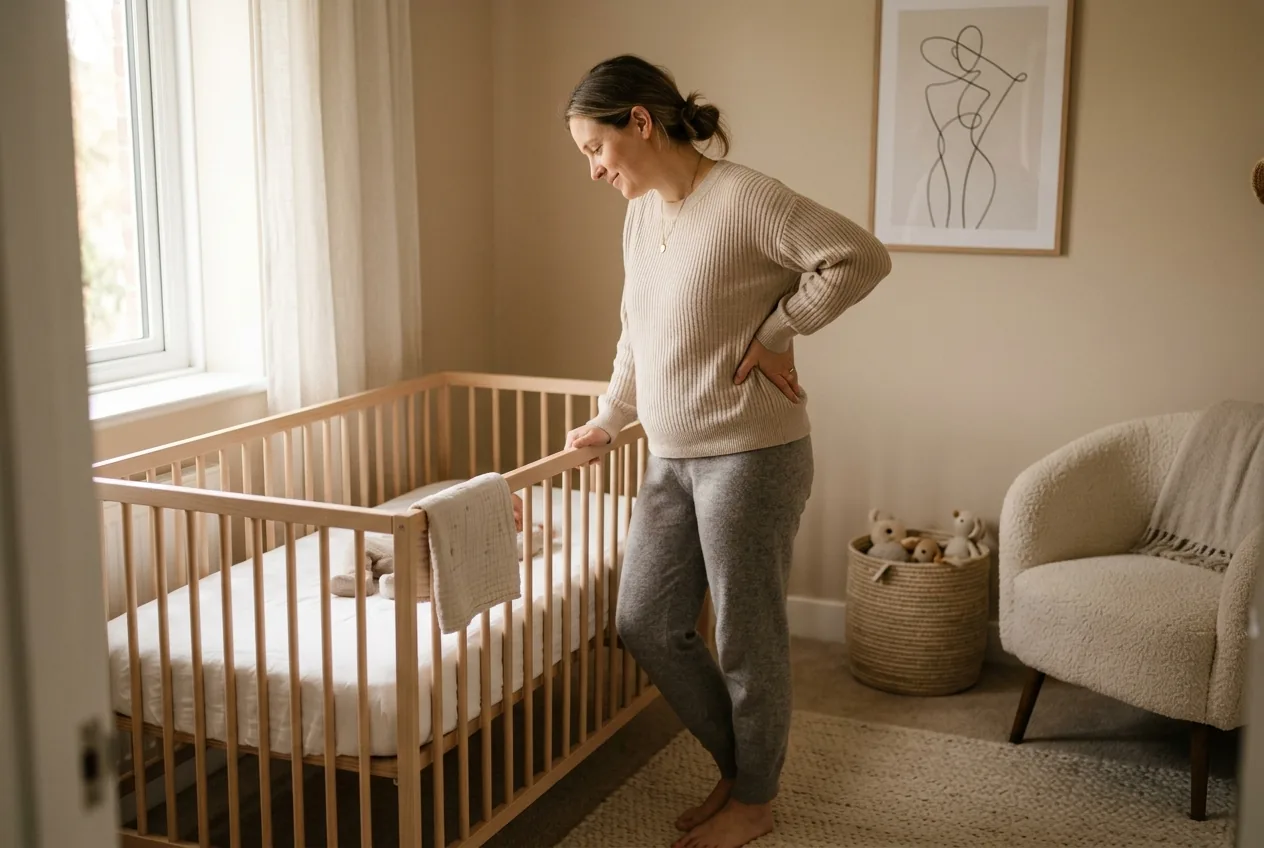
You can stand at the kitchen counter and feel fine, but ten minutes into a walk your legs start to ache, go heavy or tingly, and you have to stop — or lean on the trolley at the supermarket — until it eases. Sitting down fixes it fast. If that pattern sounds familiar, it's worth understanding what spinal stenosis is, because that specific "better when I bend forward, worse when I'm upright too long" signature is its calling card.
So, what is spinal stenosis? In plain terms, it's a narrowing of the spaces inside your spine where the spinal cord and nerves run. When those spaces tighten, the nerves have less room, and crowding them — especially during certain positions — produces the symptoms. The narrowing usually develops slowly over years, which is why it tends to show up later in life.
Where it happens and why
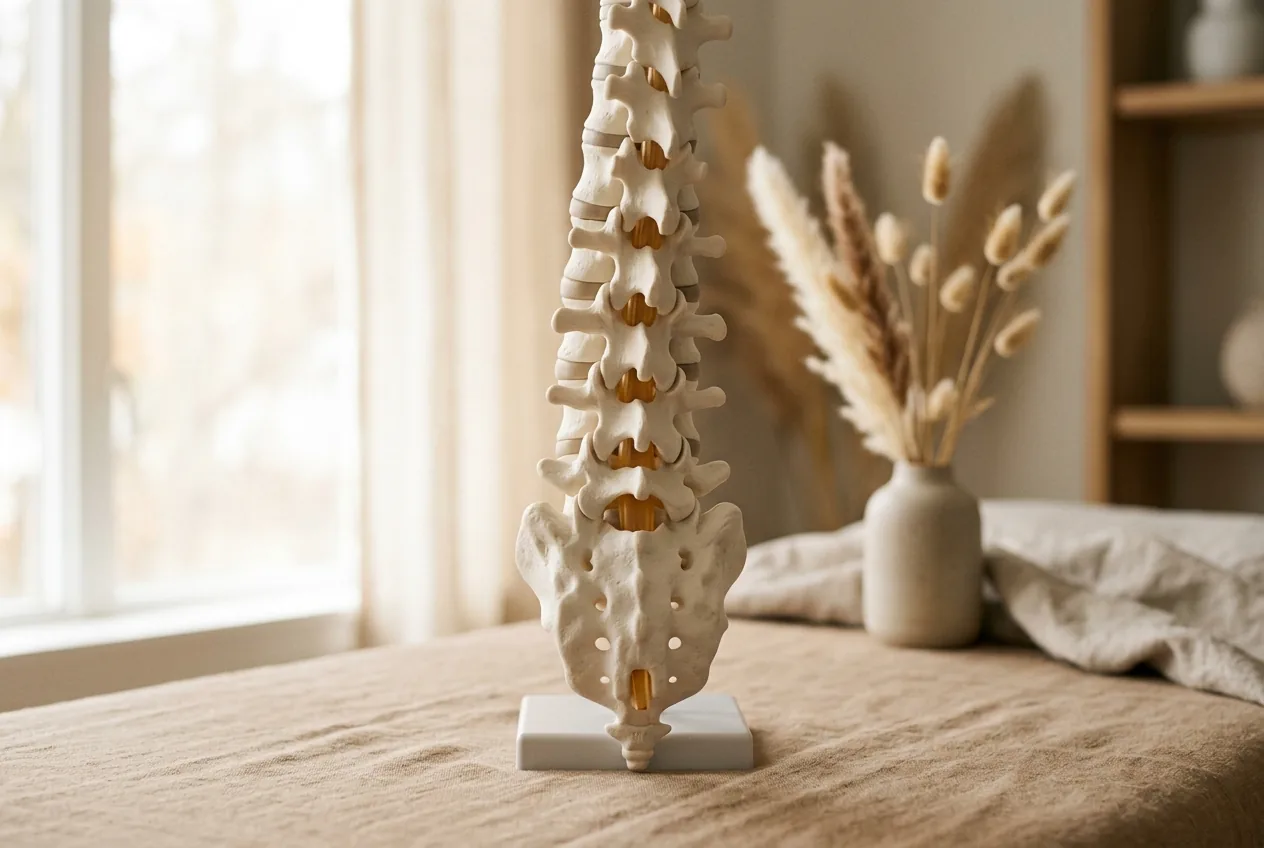
Your spinal nerves travel down a central canal and exit through small side openings between the vertebrae. Stenosis is when one or both of those spaces get narrower.
- Central canal stenosis is narrowing of the main central channel. When it's in the lower back, it tends to affect both legs.
- Foraminal stenosis is narrowing of the side openings where a nerve exits, which more often affects one leg along that nerve's path.
The narrowing is usually the result of slow, age-related changes: discs thinning and bulging, the small facet joints enlarging with wear, and the ligaments inside the canal thickening. None of that happens overnight. It's the gradual accumulation that eventually leaves the nerves short of room.
Lumbar stenosis (lower back) and cervical stenosis (neck) are the common forms. This piece focuses on the lumbar kind, since it's the one behind the classic walking-and-standing pattern.
Lumbar stenosis symptoms
The hallmark is symptoms that change with position.
- Worse when upright and walking, better when you sit or lean forward. Standing and walking arch the lower back slightly, which narrows the already-tight spaces further and crowds the nerves.
- Bending forward relieves it. Leaning over a counter, a shopping trolley, or a bike opens those spaces back up. Many people with stenosis can cycle for ages but can't walk far.
- Aching, heaviness, cramping, or tingling in the legs or buttocks that builds the longer you're on your feet, then eases with rest. This is sometimes called neurogenic claudication.
- Back pain that's often milder than the leg symptoms.
Stenosis has a tell: flexed positions open the space and ease it, extended ones close it down and stir it up.
What helps
Because the symptoms are position-driven, the management leans on positions and movements that open the narrowed spaces and build tolerance.
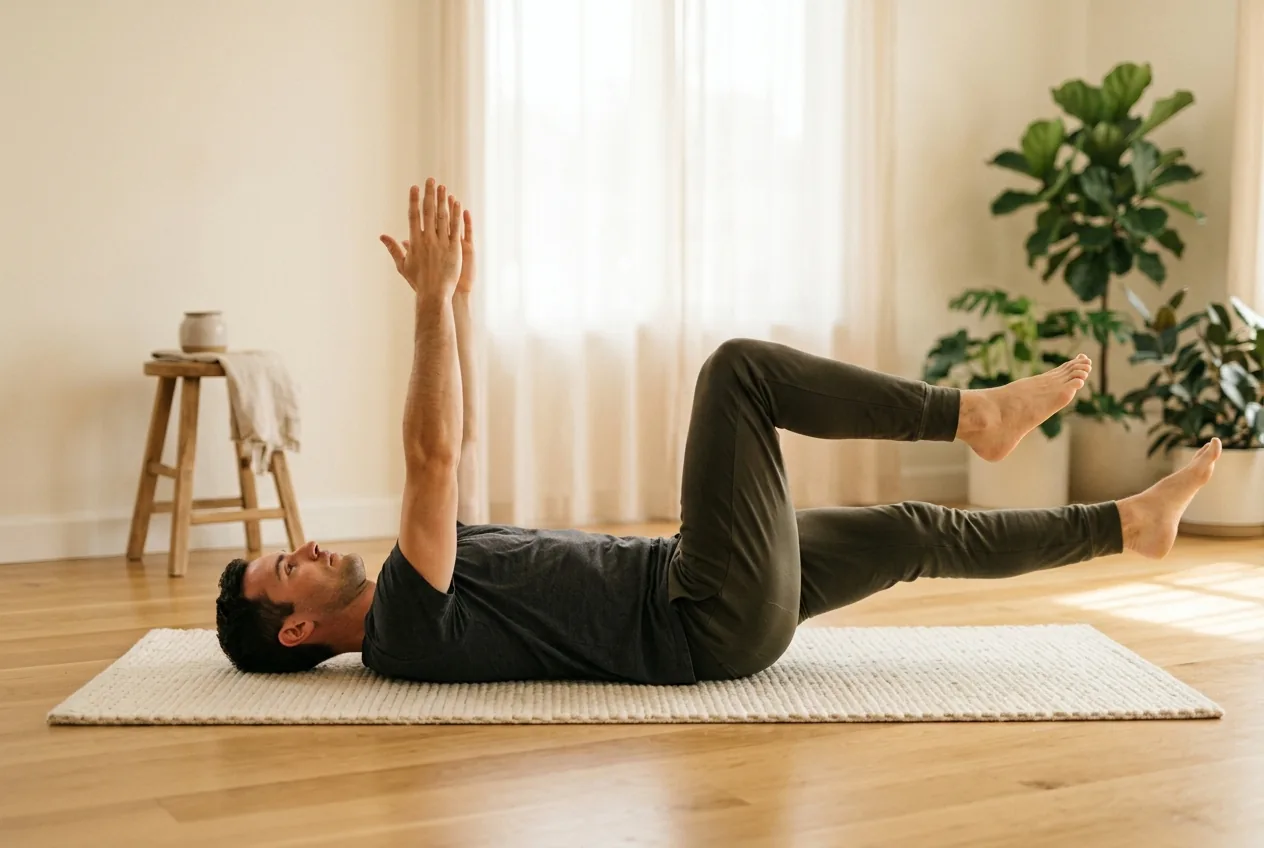
- Flexion-based exercises. Gentle moves that round the lower back — like the knee-to-chest stretch and pulling both knees toward the chest — open the canal and often settle leg symptoms. This is the opposite of what helps many disc problems, which is exactly why generic back advice misfires here.
- Walking in manageable chunks. Walk to just before symptoms force a stop, rest or lean forward, then continue. Over time the tolerated distance often grows. A stationary bike, where you're already leaned forward, lets many people get cardio comfortably.
- Core and hip strength to support the spine and improve your walking posture. The graded routine in spinal stenosis exercises is built around this.
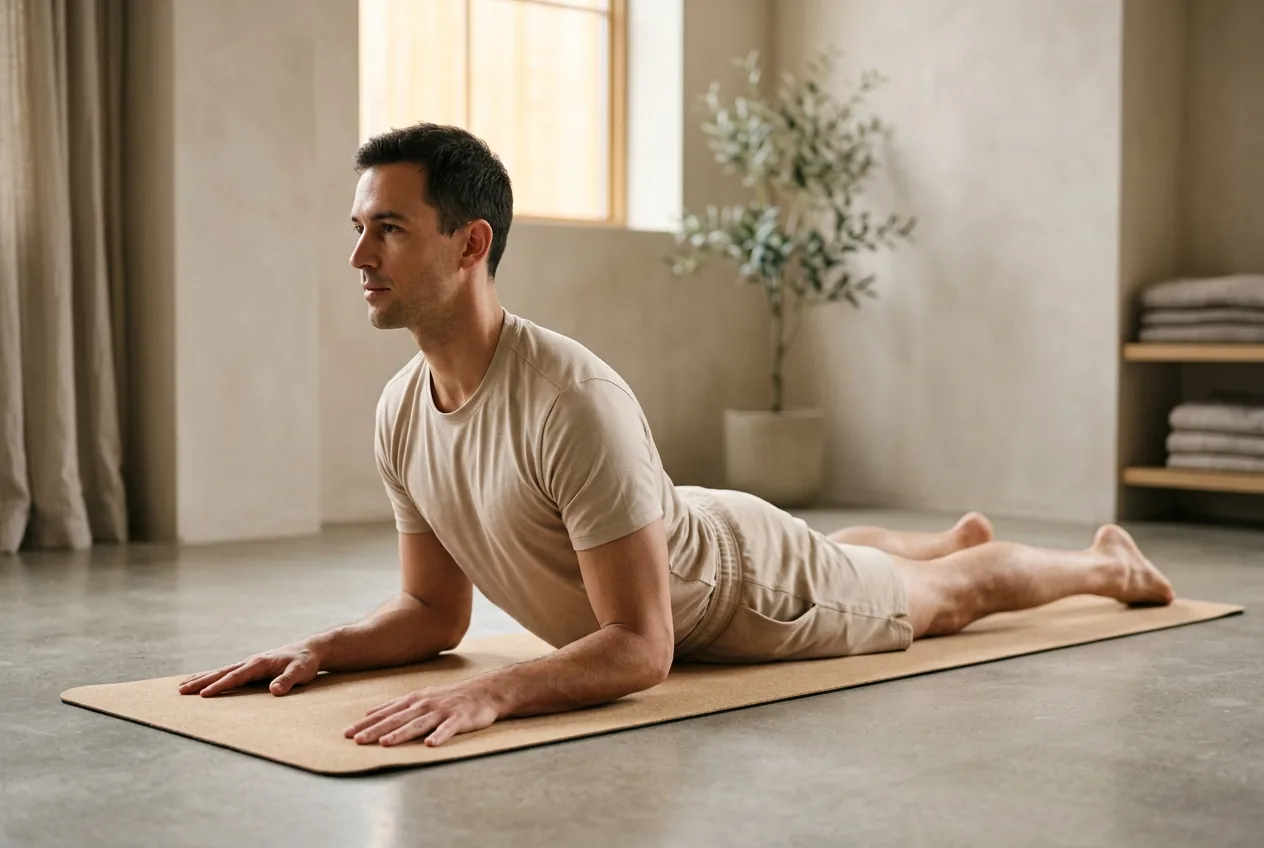
- Avoid prolonged back extension — long standing, repeated arching, sleeping flat on the stomach — which closes the spaces and provokes symptoms.
What doesn't help as much as people hope
Pushing through long walks while symptoms flare doesn't build tolerance; it just stirs the nerves. Backward-bending stretches that help disc problems often make stenosis worse. And forcing an upright "stand tall, shoulders back" posture for long periods can aggravate it, since the slight arch is part of the problem. The aim isn't rigid posture — it's movement that keeps the spaces open.
When to see a doctor
Stenosis itself should be confirmed by a clinician, and a few signs need prompt or urgent attention. See a clinician for new or worsening leg weakness, numbness that's spreading, a foot that catches when you walk, or symptoms that are steadily getting worse. Seek urgent care for any loss of bladder or bowel control, or numbness in the saddle area between the legs — uncommon, but treated as an emergency. Also get assessed for back pain with fever or unexplained weight loss, or pain after a fall. Stenosis is generally managed conservatively, but a clinician should confirm it and watch for the rare cases that need more.
Why the same routine doesn't suit everyone
Here's the trap with stenosis. The flexion-based approach that eases it is close to the opposite of what helps a herniated disc — so following generic "good for your back" advice can quietly make things worse, and following disc advice can make stenosis worse still. Even within stenosis, how much your lower back arches when you stand, how your pelvis sits, and which muscles hold you upright all change which positions provoke your symptoms and which relieve them.
That's why knowing your own pattern matters so much here. Understanding how your spine is actually positioned — where the load and the arch sit — tells you which direction your nerves want and which to avoid. A posture-based approach to chronic back pain measures those specific deviations and builds a daily routine around them, which is far more reliable than guessing with one-size-fits-all stretches.
Spinal stenosis is a narrowing, not a collapse, and for most people it's managed without surgery. Nothing here diagnoses you, cures it, or replaces your doctor's guidance. But understanding the position pattern — and working with the directions that open the space rather than against them — is usually enough to keep walking, standing, and ordinary life within reach.
Common questions
What is spinal stenosis in simple terms?
It's a narrowing of the spaces inside your spine where the spinal cord and nerves run. When those spaces tighten, usually from slow age-related changes, the nerves have less room. Crowding them — especially when standing or walking — produces aching, heaviness, or tingling that eases when you sit or lean forward.
What are the symptoms of lumbar spinal stenosis?
The classic pattern is leg aching, heaviness, cramping, or tingling that builds when you're upright or walking and eases when you sit or bend forward. Standing and walking arch the lower back and narrow the spaces; leaning forward opens them. Back pain is often milder than the leg symptoms.
Does spinal stenosis require surgery?
Most people manage it without surgery, using flexion-based exercises, paced walking, and strengthening that keeps the narrowed spaces open and builds tolerance. Surgery is considered when symptoms are severe, progressing, or not responding to conservative care. A clinician should confirm the diagnosis and guide the decision.
What exercises are good for spinal stenosis?
Gentle flexion-based moves that round the lower back, like knee-to-chest, tend to open the canal and ease leg symptoms, along with paced walking and a stationary bike where you're already leaned forward. Avoid prolonged back extension and repeated arching, which close the spaces and provoke symptoms.