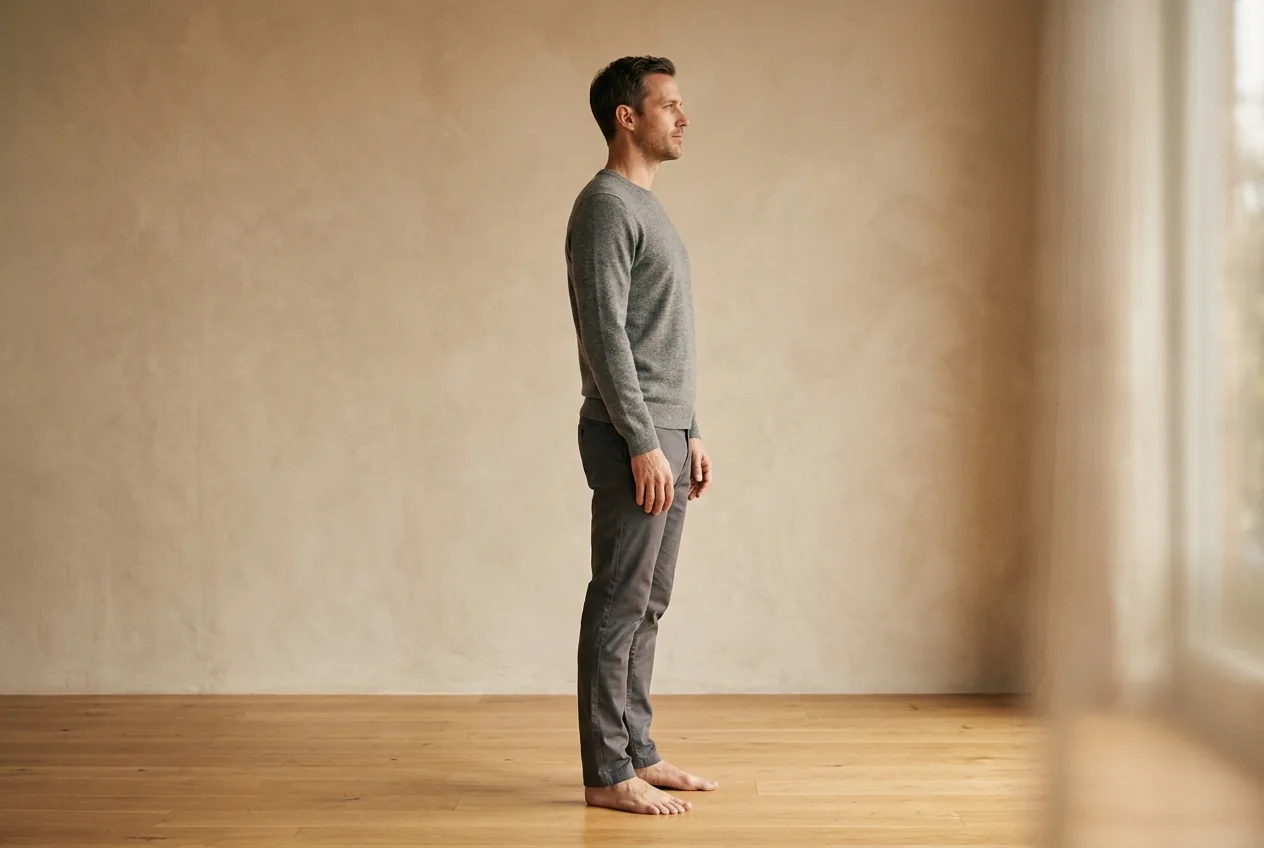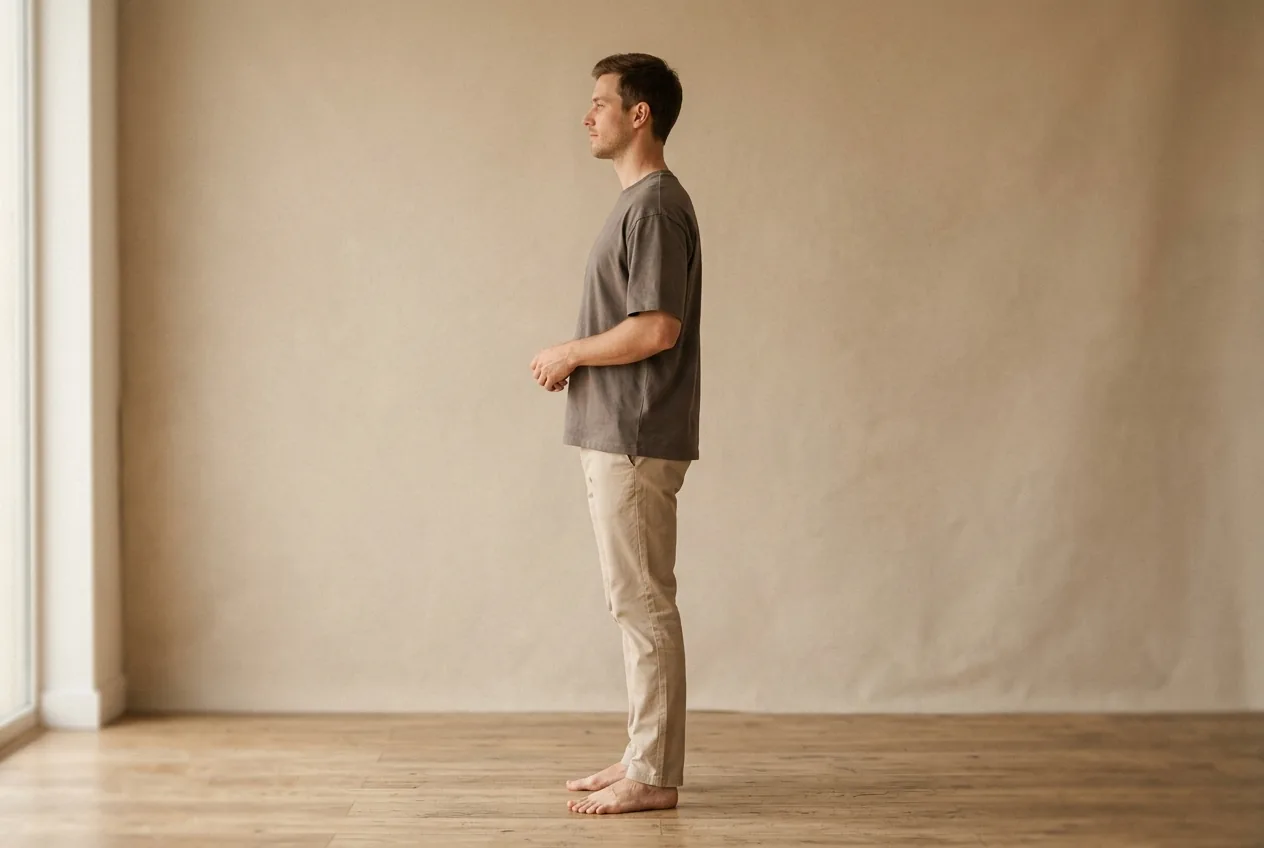
You stand side-on in the mirror and your lower back curves in sharply, your stomach pushes forward, and standing still for any length of time leaves a deep ache right in the small of your back. That pronounced inward curve is lordosis, and people also use the word swayback for the look it creates. If you're working out how to fix lordosis, the first thing to settle is which version you actually have — because two patterns get lumped under the same word.
Some inward curve in your lower back is normal and healthy. The problem is when it's exaggerated, your pelvis tips, and the curve becomes a place where load piles up instead of being shared.
From our own quiz data: 48% of 1,477 people told us their back limits their daily activities often or always. With an exaggerated lower-back curve, the activities in question are rarely dramatic. They're the chores done standing in one spot — the stovetop, the bathroom mirror, the pharmacy queue. That's worth knowing before you start the routine, because it's also where improvement tends to show up first: time how long you can stand at the counter before the ache arrives, and check the number again in a few weeks.
What lordosis is, and what swayback adds
Lordosis is an increased inward curve of the lumbar spine — your lower back arches more than it should. The classic driver is a pelvis tipped forward, which is anterior pelvic tilt. When the front of the pelvis drops, the lower spine arches to follow, and your belly and backside push out front and back.
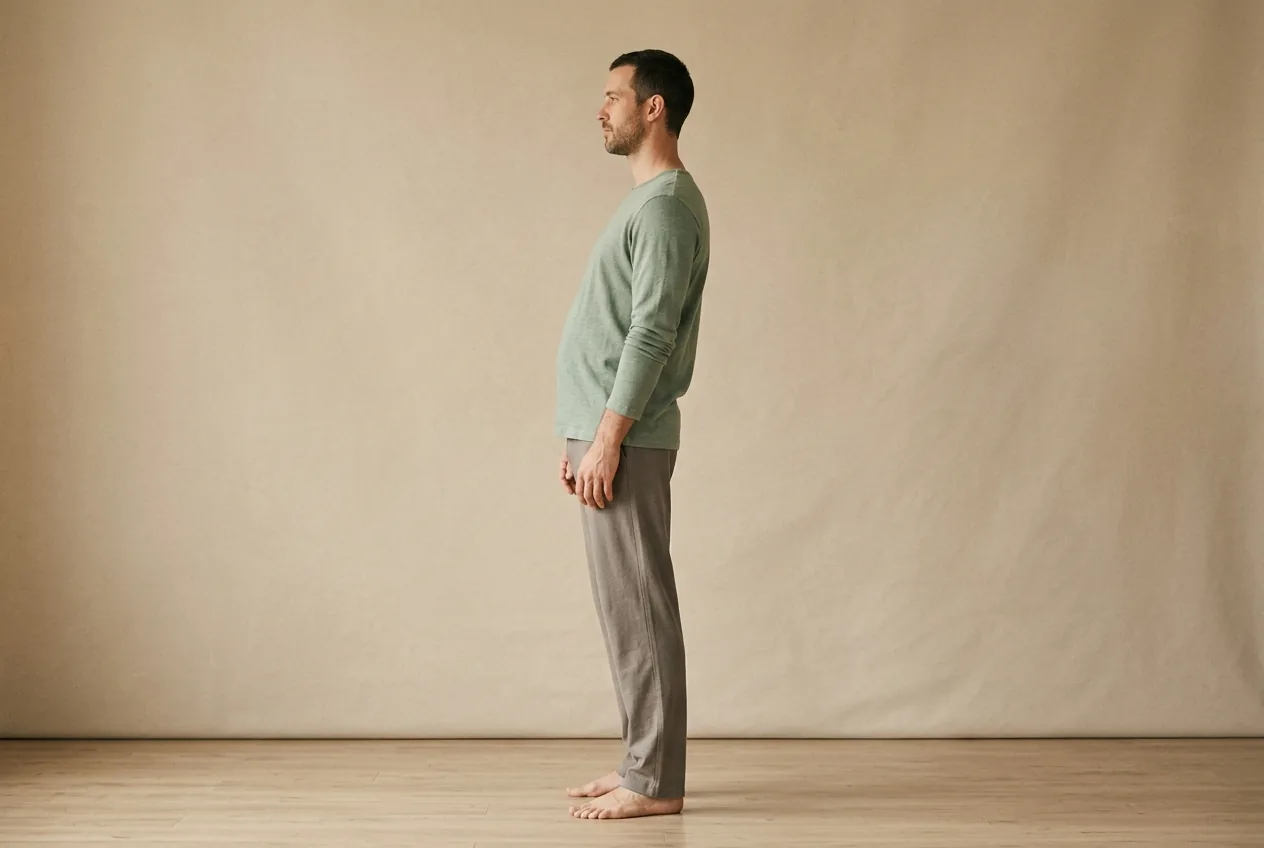
"Swayback" is often used loosely for the same look, but in posture terms it usually describes something a little different: the hips push forward ahead of the shoulders and the upper body leans back to balance, so the whole body takes on an S-lean. The two can overlap, and both put the lower back under uneven load. Telling them apart matters because the muscles you target shift.
A healthy lower back has a curve. The trouble starts when the curve gets exaggerated and the load stops being shared.
How to tell what you've got
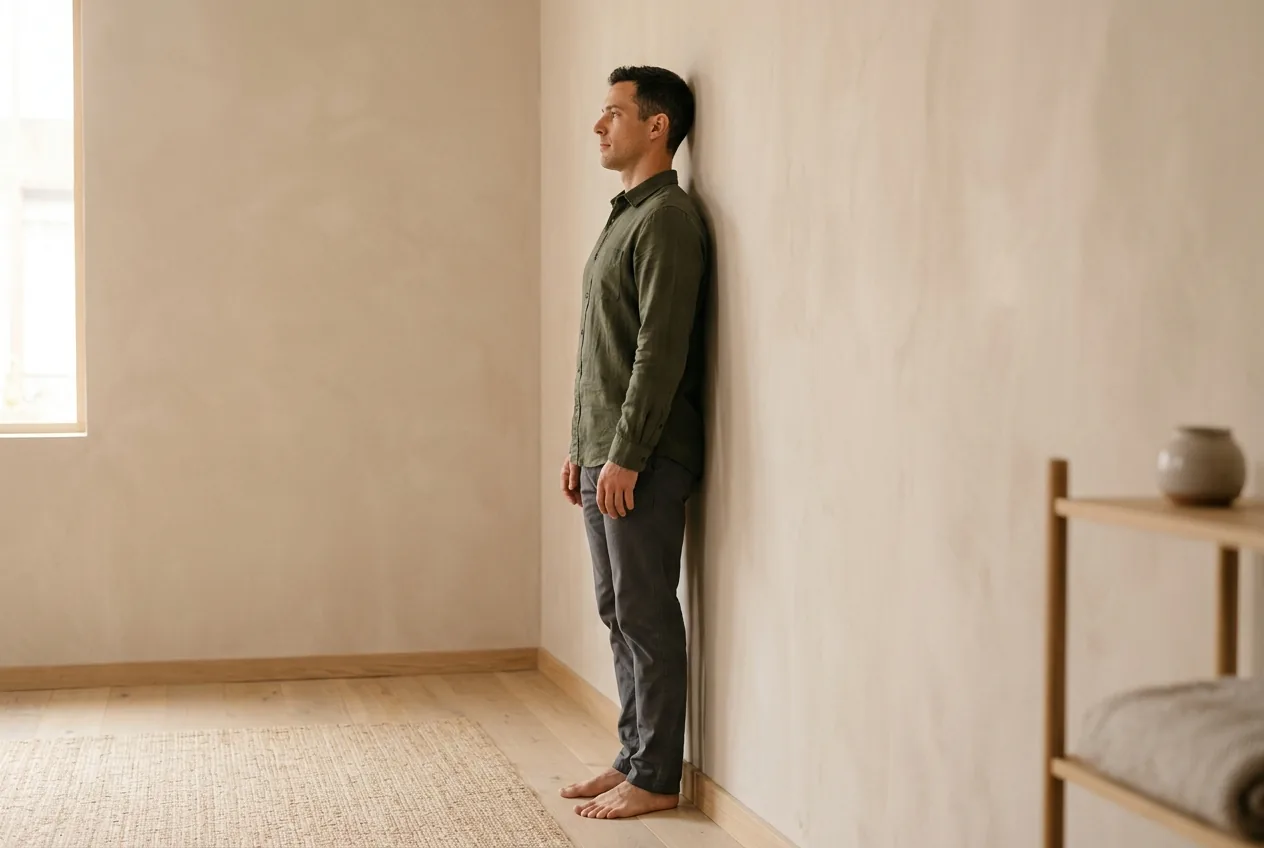
The wall check gives you a quick read. Stand with your back, head, and heels against a wall, feet a few inches out, and slide a hand into the gap behind your lower back. A flat-hand gap is normal. If your whole forearm slips through and the back feels far off the wall, the curve is likely exaggerated.
A side-on photo tells you more: look at whether your pelvis is clearly tipped forward (front of the hip pointing down, backside out) and whether your hips are shoved ahead of your shoulders. The check your posture at home guide walks through taking it properly. It's worth knowing the opposite pattern exists too — a flat, tucked posterior pelvic tilt — and its fixes run the other way, which is why a generic "back stretch" routine can backfire.
How to fix lordosis: the routine
For the common pelvis-driven version, the work mirrors a forward-tilt correction: release the tight front of the hips and lower back, strengthen the glutes and deep core that level the pelvis, and relearn a neutral stance. Most days, kept short.
Hip flexor stretch — release the front
Kneel in a lunge, back knee down, front foot flat. Tuck your tailbone under and squeeze the kneeling-side glute, then ease your hips forward until you feel the front of the back hip stretch. Hold 30 seconds each side. The tailbone tuck is essential — without it you just deepen the arch. The hip flexor stretch for back pain shows it in detail.
Glute bridge — strengthen the levelers
Lie on your back, knees bent, feet flat. Flatten your lower back gently into the floor first, then drive through your heels and lift your hips into a straight line from knees to shoulders. Squeeze the glutes at the top, hold two seconds, lower slowly. 10 to 12 reps.
Dead bug — train the deep core
Lie on your back, arms up, knees bent over hips. Press your lower back into the floor and keep it pinned. Lower one arm overhead and the opposite leg toward the floor, return, alternate. If the back arches off the floor, shorten the range. 8 per side. This teaches the core to hold the curve in check.
Standing reset
Rock your pelvis gently to find neutral, stack ribs over hips and hips over heels, and stop dumping your weight forward into the small of your back. Hold the feel for a few breaths and repeat through the day.
How it shows up in daily life
An exaggerated lower-back curve announces itself most when you're upright and still. Standing in one spot — cooking, brushing teeth, waiting in line — brings on an ache low in the back within a few minutes, because the overarched segment is absorbing load instead of sharing it. Lying flat on your back can leave a gap your spine wants to fill, so you reach for a pillow under the knees to settle. Walking long distances on hard ground can stir the same spot up.
These patterns double as honest checkpoints. As the pelvis levels and the curve settles, standing in the kitchen stops being a countdown to a backache, and lying flat feels more supported. Those everyday wins tend to show up before any obvious change in the mirror, and they arrive over weeks of steady daily practice rather than in a single session. That gradual build is exactly why a short daily habit outperforms an occasional long effort.
What to stop doing
- Stop doing repeated big back-arching stretches like cobra — you're stretching a back that's already overarched.
- Stop standing with hips pushed forward and weight slumped into the lower back. That's the swayback default.
- Stop endless crunches that can tip you into more arch. Train the deep core to brace instead.
- Stop long unbroken sitting blocks; tight hip flexors feed the tilt that feeds the curve.
When to see a doctor
This is posture education, not medical advice. Seek prompt care if back pain follows a fall or accident, if you have numbness, tingling, or weakness spreading into the legs, any loss of bladder or bowel control, fever with back pain, unexplained weight loss, or pain that's severe or steadily worsening. Those need a clinician before any exercise plan.
Why the right version matters
How to fix lordosis depends entirely on which pattern you have and what's driving it — a pelvis-led arch, a true swayback lean, or a mix. Aim the work at the wrong muscles and you can stall or even nudge yourself toward the opposite, flat-back problem. That's the case against grabbing a one-size routine.
A proper posture assessment measures your actual curve, tilt, and compensations, then orders a daily program around them. Generic advice is a fine starting point; lasting relief comes from working your own pattern.
An exaggerated lower-back curve is usually a tilted pelvis made visible. Level the pelvis, share the load, and the curve settles.
What I see in practice
Most people who come to me convinced they have lordosis are right about the arch and wrong about where it starts. Stand them side-on and it's common to find the knees locked back and the ribs flared up, with the lower back simply filling the gap between the two — which is why stretching the lower back on its own rarely changes much. The cue I give more than any other is to soften the knees and let the ribs settle down, and people are often surprised by how much of the arch goes with it before they've done a single exercise. I'm wary, too, of people who have read that they need to tuck the pelvis and then do it all day: held rigidly, that swaps one fixed position for another, and a spine that can't find neutral by itself hasn't learned anything. What I'm after is a curve that comes and goes with what you're doing, not one pinned in place.
Common questions
Is some lower-back curve normal?
Yes. A gentle inward curve in the lower back is healthy and is what lets you stand tall without effort. The problem starts when the curve is exaggerated and the pelvis tips, so load piles up on one segment instead of being shared.
What's the difference between lordosis and swayback?
People use them loosely, but in posture terms they differ. Lordosis is an exaggerated inward curve of the lower spine, usually driven by a forward-tipped pelvis. Swayback describes the hips pushing forward of the shoulders with the upper body leaning back. They can overlap, and the muscles you target shift between them.
What exercises help fix lordosis?
For the common pelvis-driven version, the work mirrors a forward-tilt correction: release the tight hip flexors and lower back, strengthen the glutes and deep core that level the pelvis, and relearn a neutral stance. Big back-arching stretches like repeated cobra tend to make it worse.
Why does standing still hurt my lower back?
An exaggerated curve announces itself most when you're upright and still, because the overarched segment absorbs load instead of sharing it and fatigues. As the pelvis levels and the curve settles, standing in one spot usually stops being a countdown to an ache.