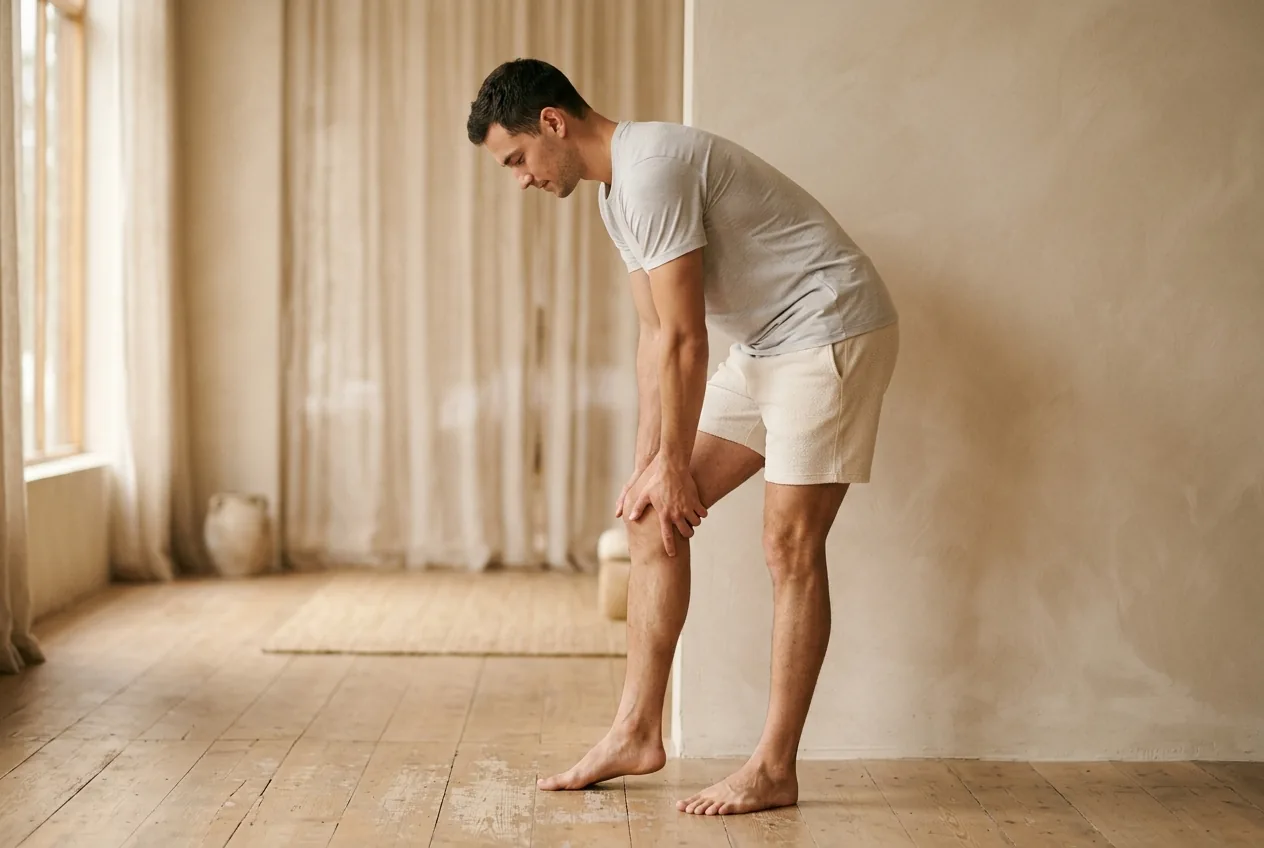
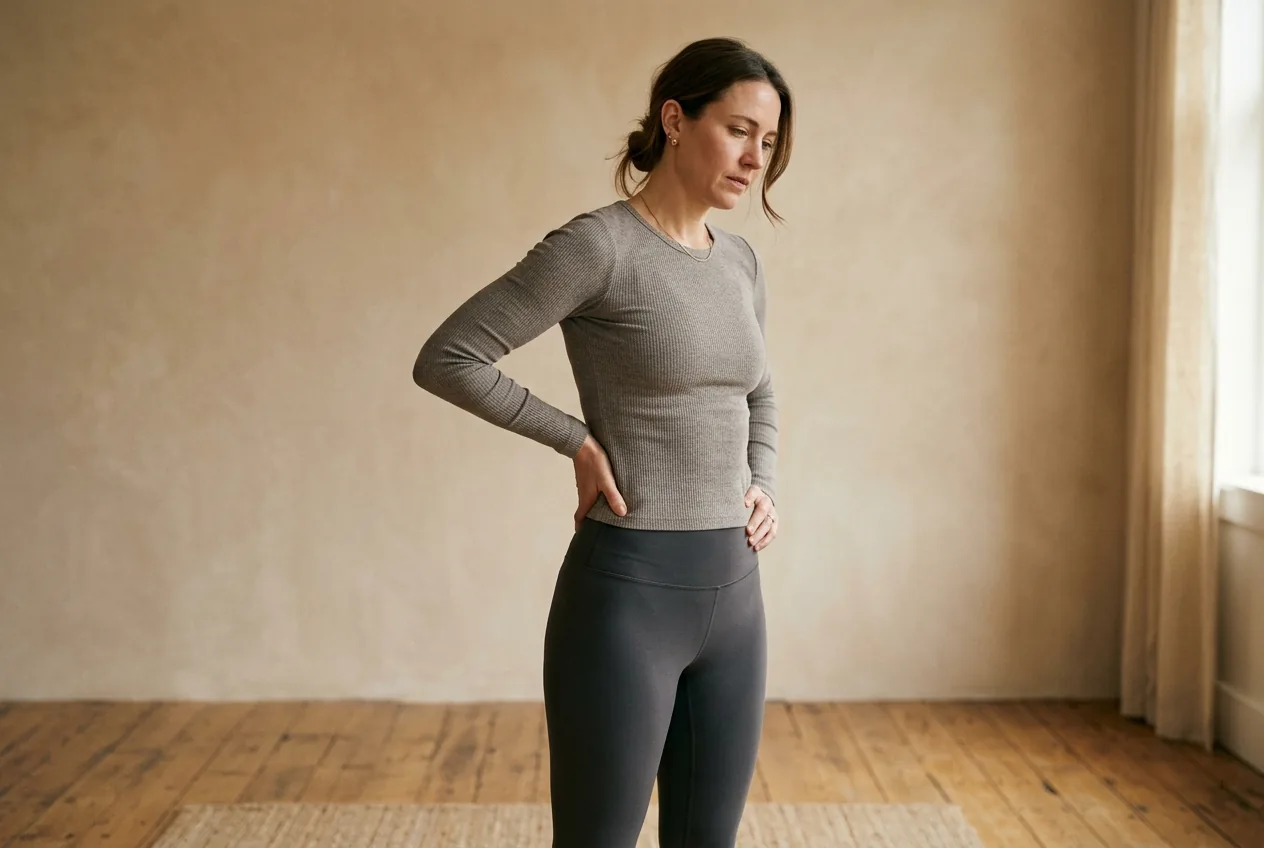
It tends to sit low across the back and wrap into both hips — a deep, dragging ache after a day of standing at the counter, carrying a toddler on one hip, or sitting through back-to-back calls. Some days one side is worse. Some days it's the band right above the buttocks. Pain in the lower back and hips is one of the most common complaints women bring up, and a lot of the standard advice ignores the reasons it shows up differently for women in the first place.
This isn't about being fragile. It's about anatomy and load patterns that genuinely differ, and once you see them the sore hips and back make more sense — and become more fixable.
Why women get this pattern
A few things stack up.
The female pelvis is wider and shaped for childbirth, which changes the angle the thigh bones meet it and shifts how load travels through the hips and lower back. That geometry alone makes the outer hips and the SI joint — where the pelvis meets the spine — more prone to irritation.
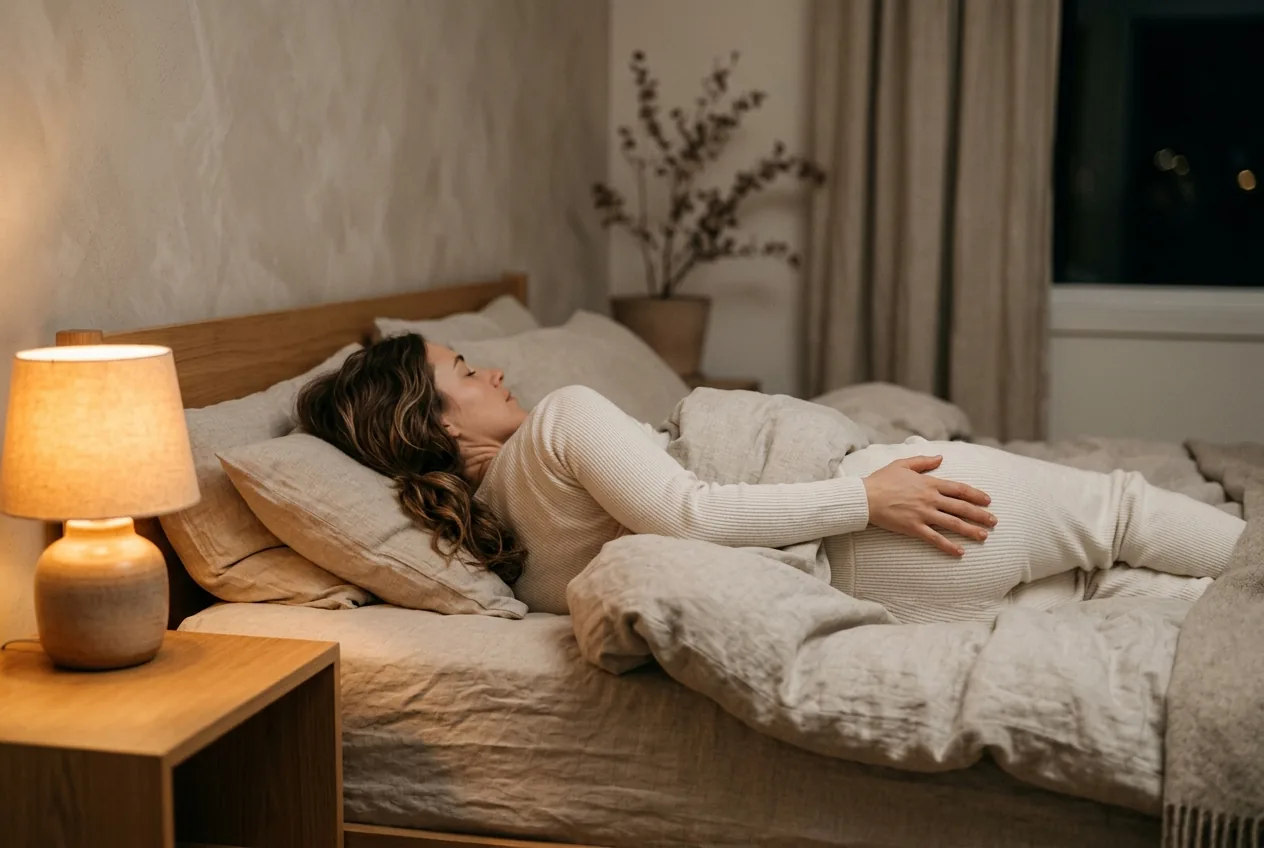
Pregnancy and the months after leave a mark even years later. Hormones loosened the ligaments around the pelvis, the growing load tipped the pelvis forward, and carrying then feeding a baby loaded one side over and over. Many women trace a low back and hip ache back to that period, and patterns like postpartum back pain can linger well past the newborn stage.
Daily load is often one-sided. A baby on the hip, a bag on one shoulder, standing with weight cocked onto one leg — repeated thousands of times, that builds an imbalance. One hip ends up doing more, the muscles on that side overwork while the other side coasts, and the lower back gets pulled out of square. The result is frequently the lower back and hip pain on one side so many women describe.
Most of this isn't damage. It's load that's gone lopsided — and lopsided load is something you can rebalance.
The muscle picture underneath
Under the pain is usually the same imbalance. The hip flexors at the front get short and tight from sitting and from years of a forward-tipped pelvis. The glutes — especially the side-hip muscle that keeps your pelvis level — get weak and switch off. With the front tight and the back weak, the pelvis tips and the lower back over-arches to compensate, while the outer hips get overloaded with every step.
That's the anterior pelvic tilt pattern, and it's behind a large share of combined back-and-hip pain. The fix isn't more stretching at random. It's releasing what's tight and waking what's weak, in the right order.
Moves that calm it down
Short and daily beats long and occasional. Keep all of these pain-free.
Kneeling hip flexor stretch. Kneel in a lunge, tuck your tailbone under, squeeze the down-side glute, and ease your hips gently forward until you feel a stretch across the front of the back hip. Hold 30 seconds each side. This releases the tight front that's tipping your pelvis. The hip flexor stretch for back pain breaks it down.
Glute bridge. Lie on your back, knees bent, feet flat. Lift your hips by squeezing your glutes, hold two seconds, lower slowly. Do 10 to 12. This wakes the muscles that quit, so the pelvis stops tipping and the hips stop overworking. See the glute bridge for back pain.
Side-lying leg raise. Lie on the less-sore side, top leg straight and slightly behind you, lift it a foot or so leading with the heel. This targets the side-hip muscle that keeps the pelvis level. Start with 8 to 10 each side.
Knee-to-chest. Lie on your back and draw one knee gently toward your chest, hold 20 to 30 seconds, switch. This eases the band of tension low in the back. The knee-to-chest stretch has the detail.
What to stop doing
- Carrying your child, bag, or load on the same side every time. Alternate, and split heavy loads across both hands.
- Standing hip-cocked with your weight dumped onto one leg. Stack your weight evenly.
- Sitting for long blocks without getting up. Long sitting is what shortens the hip flexors that start the tip. The link with tight hip flexors from sitting is direct.
- Pushing into deep back-arching stretches when your back is already over-arched.
When to see a doctor
This is posture education, not medical advice. See a clinician promptly if your pain came after a fall or accident, if you have numbness, tingling, or weakness spreading down a leg, any loss of bladder or bowel control, fever with back pain, unexplained weight loss, or pain that's severe or steadily worsening. Pelvic pain with bleeding, pain during pregnancy that's intense or one-sided, or new pain after menopause also warrant a proper check, since the lower back and hips sit near organs that can refer pain.
Why your routine should match your pattern
The moves here target the common pattern, and for many women that's enough to turn the corner. But the degree of your pelvic tilt, whether one hip sits higher, how much a past pregnancy still shapes things, and which side took the years of one-sided load are specific to you. The wrong emphasis can stall progress or aggravate the lighter side.
That's the case for a proper posture assessment rather than a generic routine: measure your actual deviations, then build the daily program around them, so the back and hips stop fighting the same imbalance every day.
Common questions
Why do women get lower back and hip pain more than men?
A wider pelvis changes how load travels through the hips and spine, pregnancy loosens pelvic ligaments and tips the pelvis, and one-sided daily loads like carrying a baby build imbalance. Together these make the outer hips, SI joint, and lower back more prone to irritation.
Is lower back and hip pain after pregnancy normal?
It's common, partly because hormones loosened the pelvic ligaments and the load tipped the pelvis forward, leaving the hip flexors tight and the glutes weak. The pattern often lingers past the newborn stage and responds well to releasing the front and strengthening the glutes.
What helps sore hips and lower back at home?
A daily routine of the kneeling hip flexor stretch, glute bridges, side-lying leg raises, and knee-to-chest, kept pain-free, addresses the usual tight-front, weak-glute pattern. Pair it with even load-carrying and standing evenly rather than cocked on one hip.
When should lower back and hip pain in women be checked by a doctor?
Get it assessed promptly if there's spreading numbness or weakness, any loss of bladder or bowel control, pain after a fall, fever, unexplained weight loss, or pain that's severe or steadily worsening. Pelvic pain with bleeding, severe one-sided pain in pregnancy, or new pain after menopause also warrant a check.