
By 2pm you notice you've folded. Chin forward toward the screen, shoulders curled in, lower back rounded into a C against the chair. You straighten up, feel virtuous for a minute, then melt right back. Most people spend the bulk of their waking day in a chair, and that's exactly why proper sitting posture is worth getting right — a small fault, held for eight hours, adds up to a lot of strain.
The aim here isn't to teach you to sit like a soldier. Rigid, perfect sitting is its own problem — no position is good if you never move out of it. Good sitting posture is a relaxed, supported default you can hold without effort, plus the one habit that matters more than any of it. Let's build it from the floor up.
From our own quiz data: 89% of 1,478 people say sitting for a long stretch sets their pain off often or always. Look at what that question actually measured — duration, not technique. Nobody was asked about their lumbar curve or where their monitor sits; the only variable in it was how long, and it still came back at 89%. That's the argument for the rule further down this page, arriving before the rule does.
What correct sitting posture looks like
Work from the ground and stack upward.
Feet flat on the floor. Both feet planted, weight even. If your chair is too tall and your feet dangle, your thighs take the pressure and your pelvis tucks. A footrest fixes it. If it's too low and your knees ride up above your hips, your lower back rounds.
Knees level with or just below your hips. A thigh line that slopes very slightly down toward the knees keeps the pelvis neutral. Knees jacked up high tip you backward into a slump.
Pelvis neutral, sitting on your sit bones. This is the keystone. You want to be balanced on the two bony points at the base of your pelvis, not rolled back onto your tailbone. Roll back and your whole spine collapses into a C. A gentle awareness of sitting "tall on the bones" sets everything above it.
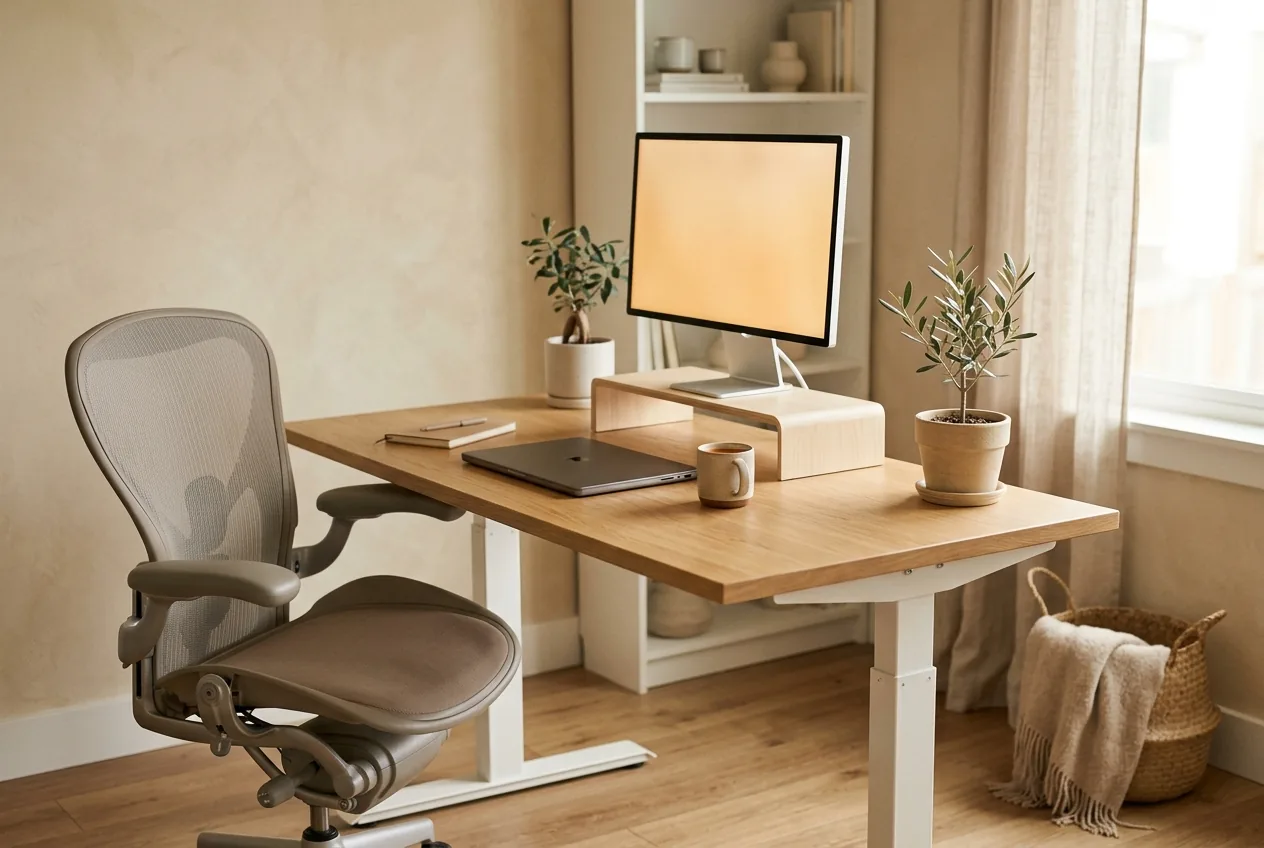
Lower back supported. Your lumbar spine has a natural inward curve, and a long day in a chair tends to flatten it. A lumbar support — a cushion or the chair's built-in curve — fills the gap and holds that curve so your back muscles don't have to.
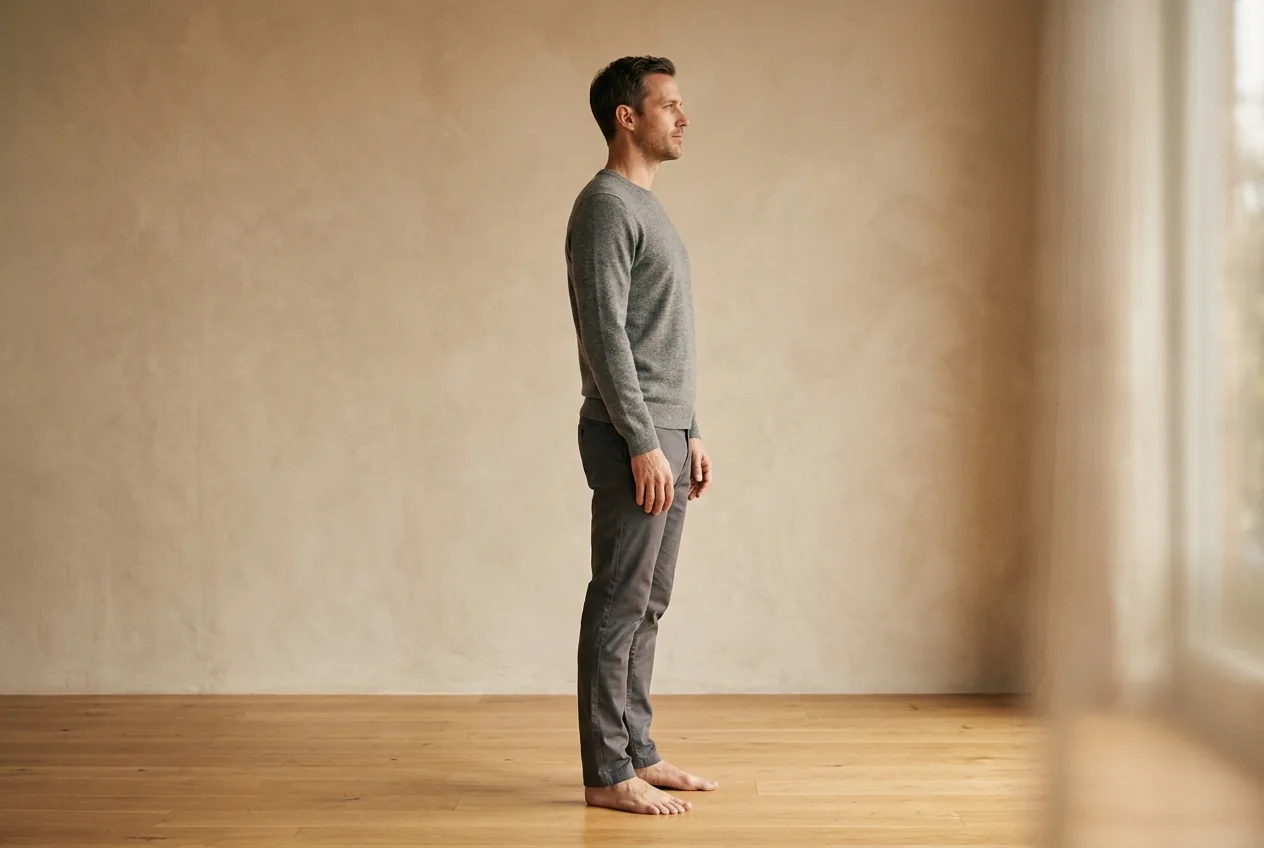
Shoulders relaxed, head over shoulders. Shoulders back and down, not hunched. Head balanced over the shoulders, not poked toward the screen — the forward drift is the same one behind forward head posture, and a screen set too low pulls you straight into it.
The best sitting posture isn't the most upright one. It's the supported one you can hold without trying.
Setting up the desk around you
Good posture is far easier when the desk cooperates. Adjust the setup, not just your willpower.
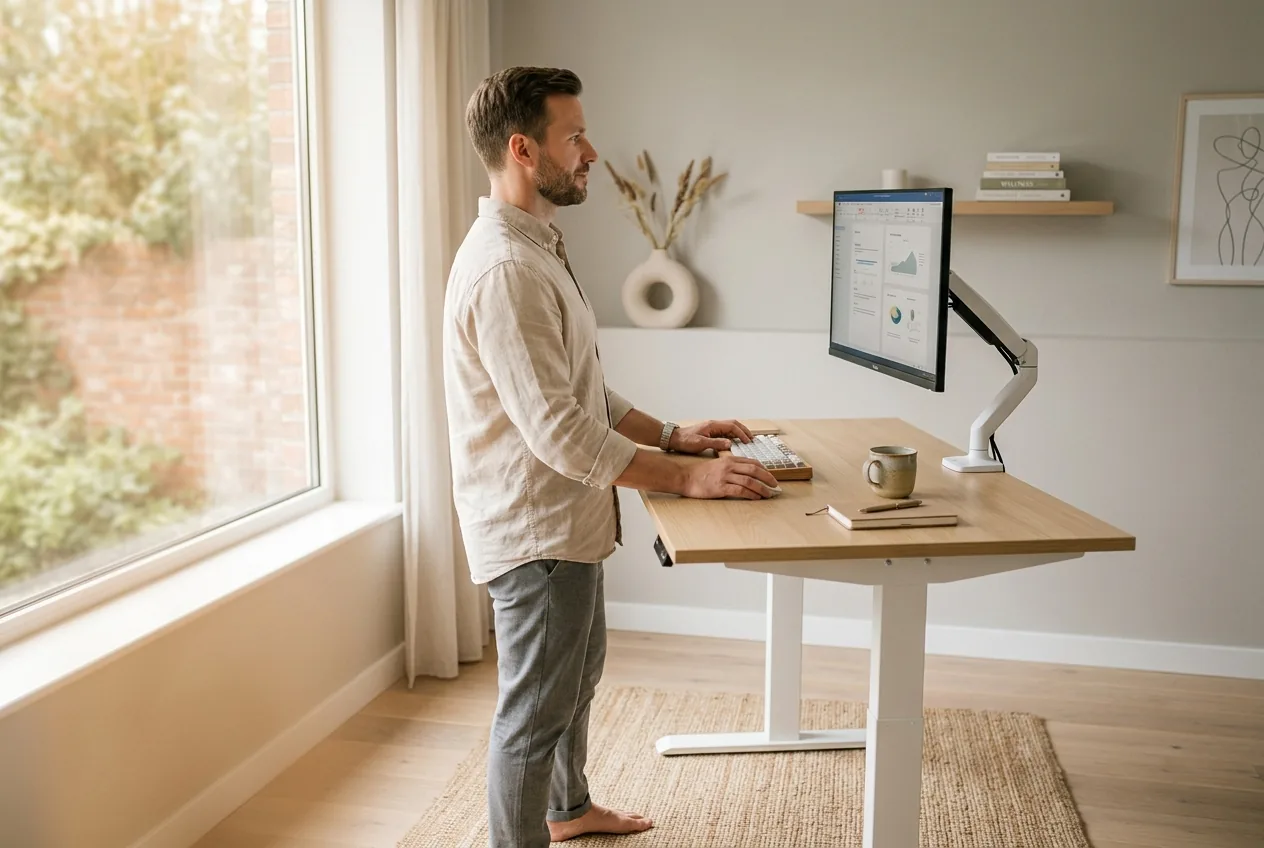
- Screen at eye level. The top of your monitor should sit at about eye height, an arm's length away, so you look slightly down at the center without dropping your head. A laptop almost always sits too low — prop it up and use a separate keyboard.
- Elbows at about 90 degrees. Your keyboard and mouse should let your forearms rest roughly level, elbows close to your sides. Reaching forward for them pulls your shoulders into a round.
- Chair height to the feet-and-knees rule above. Set the seat so your feet are flat and your knees sit level with or just below your hips.
The full walk-through of getting the gear right is in the ergonomic desk setup, and if your chair is the weak link, the ergonomic chair setup for back and hip pain covers what actually matters versus marketing.
The one rule that beats all of them
Here's the part that surprises people: the single most important thing about sitting posture isn't the posture. It's that you change it. The best position held for three unbroken hours is worse than an average position you shift out of every half hour.
Your spine is built to move, and the discs in your lower back are fed by movement — they don't have their own blood supply, so they rely on you shifting position to pump fluid in and out. Sit frozen and they get starved, stiff, and cranky. This is why long, unbroken sitting is such a reliable trigger for lower back pain after sitting all day, and why the people with the fanciest chairs still ache if they never get up.
So the rule is simple: move every 30 minutes. Stand, walk to the kitchen, roll your shoulders, do a couple of desk stretches. Set a timer if you have to. Even ten seconds of standing resets the load. Sitting posture is about good defaults plus regular breaks, not about freezing in the perfect shape.
This is posture, not pain treatment
Worth a quick distinction. This guide is about how to sit well to protect your spine over the long haul — the ergonomics-led view. If you're sitting with an already-sore lower back and need to know which positions ease it right now, that's a different question with different answers, covered in how to sit with lower back pain. One is prevention and good habit; the other is managing a back that already hurts. Use whichever fits where you are.
What to stop doing
- Stop perching on the edge of your seat with your back unsupported. You're asking your muscles to do the chair's job all day.
- Stop crossing the same leg over for hours; it tilts your pelvis and feeds an uneven sitting pattern.
- Stop slouching down onto your tailbone — it rounds the whole spine and is the default most people drift into by afternoon.
- Stop treating "sit up straight" as the whole answer. Without movement breaks, even good posture stiffens up.
When to see a doctor
This is posture education, not medical advice. See a clinician promptly if sitting brings on numbness, tingling, or weakness spreading down a leg, pain that shoots below the knee, any loss of bladder or bowel control, fever with back pain, unexplained weight loss, or pain that's severe or steadily worsening rather than easing when you stand and move. Those need a proper look before any setup change.
Why your default chair posture reflects your pattern
If you slump the moment your attention drifts, it's usually because the muscles that should hold you upright have gone quiet — and clenching into a tall position fights that without fixing it. The slump is your default, and defaults are set by muscle balance, not discipline.
That's the case for knowing your own pattern. A short posture assessment measures where you actually deviate and builds a daily routine to wake up the muscles that hold you tall, so good sitting posture stops being a thing you force and becomes the position you fall into. The chair and the breaks handle the day; the training handles the default.
Set the desk up, sit on your sit bones, and above all, get up every half hour. Movement beats the perfect posture.
What I see in practice
The advice that lands, in my experience, isn't "sit correctly" — it's have three positions instead of one. Pick a good default, a slightly reclined version where the chair takes more of your weight, and a perched or standing option, and move between them whenever you get bored of the one you're in. People manage that; they don't manage holding a single correct shape, and the ones who try tend to spend the afternoon swinging between rigid and collapsed with nothing in between. Standing desks help by adding a position, not by being the right one — three hours standing still is another held posture, and I've seen it trade a sore lower back for sore feet and a stiff neck within a month. And the reminder to move is far more likely to survive if you hang it on something that already happens every half hour — the kettle, a meeting ending — than on a timer you'll learn to dismiss.
Common questions
What is the correct sitting posture at a desk?
Feet flat on the floor, knees level with or just below your hips, pelvis neutral so you sit on your sit bones rather than rolled onto your tailbone, lower back supported in its natural curve, shoulders relaxed back and down, and your head balanced over your shoulders with the screen at eye level. The aim is a supported, relaxed default, not a rigid pose.
Is it bad to sit up straight all day?
Holding any one position all day is the real problem, even a good one. Your spinal discs are fed by movement, so staying frozen starves and stiffens them. Far more important than perfect posture is changing position and standing up every 30 minutes or so.
How should my chair be set up?
Set the seat height so your feet rest flat and your knees sit level with or just below your hips. Use the chair's lumbar support, or add a cushion, to fill the curve in your lower back. Keep your elbows near 90 degrees at the keyboard and your screen at about eye level so you don't reach or look down.
How often should I get up from my desk?
Aim for every 30 minutes. Even a brief stand, a short walk, or a couple of stretches resets the load on your spine and keeps the discs fed. Frequent small breaks protect your back far more than sitting perfectly still in an ideal position for hours.