
You don't usually notice your posture. You notice the 2pm neck ache, the tight band across your lower back when you stand up, the headache that creeps in by evening, the shoulder knot that never quite leaves. You treat each one as its own problem — and miss that they may all be coming from the same place.
That's the thing about the symptoms of bad posture. They rarely announce themselves as a posture problem. They show up as aches and niggles scattered around the body, in spots that don't obviously connect, which is exactly why they get chased one at a time and never resolved. Read them as a set and the pattern starts to make sense.
Why bad posture causes symptoms at all
A quick mechanism, because it explains everything below. When a part of you drifts out of line — the head pokes forward, the pelvis tips, the shoulders round — your body doesn't fall over. It compensates. Some muscles take on extra work to hold you upright; others, no longer needed in that position, switch off.
The muscles stuck overworking are the ones that ache, knot, and fatigue. The ones that switched off leave joints less supported, so the load lands unevenly. Most non-traumatic posture symptoms are some version of that: a muscle doing a job it wasn't meant to carry, all day, for years. The pain isn't where the problem started — it's where the compensation landed. That's why bad posture can cause back pain that feels nothing like a posture issue.
Posture symptoms are the bill for compensation. The ache is where a muscle has been covering for one that quit.
The neck, head, and jaw signals
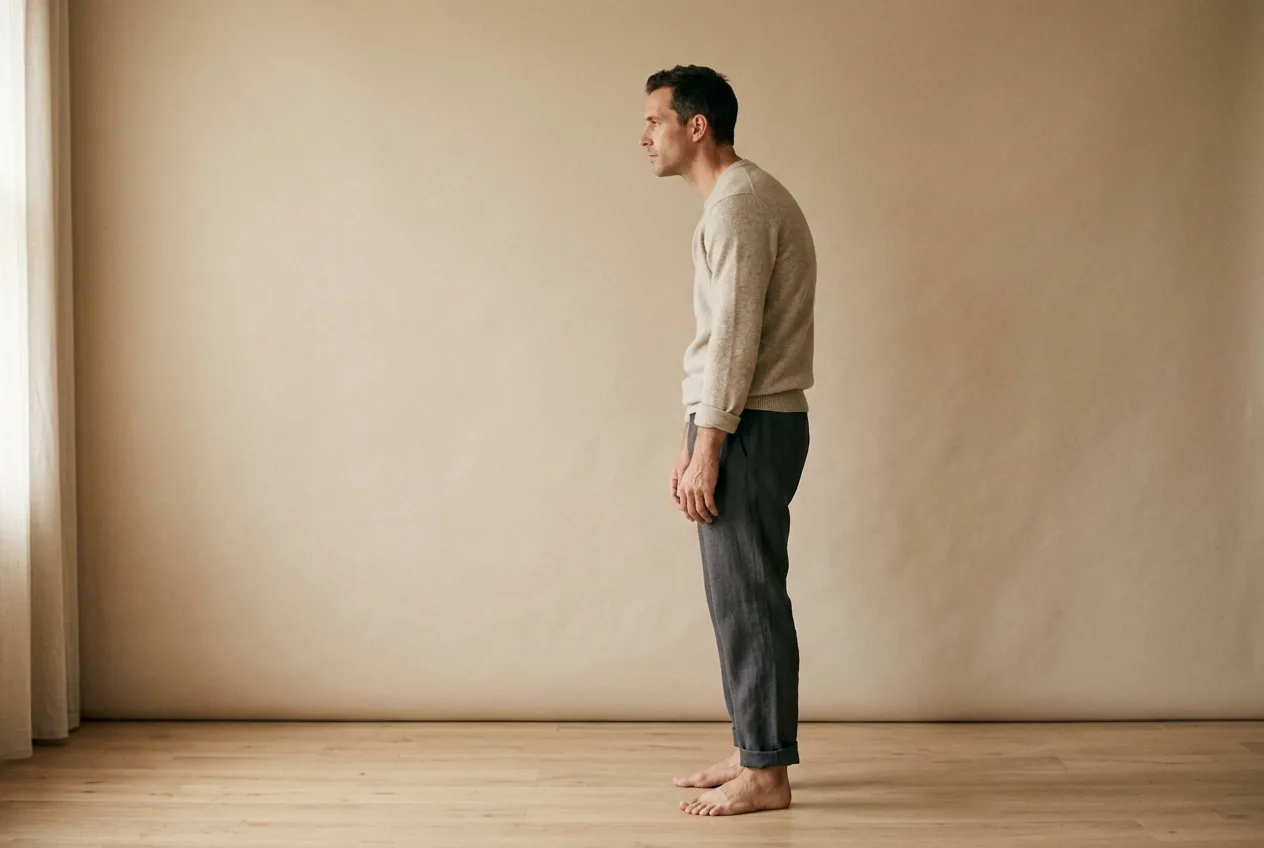
This cluster comes mostly from the head drifting forward of the shoulders.
- An afternoon neck ache at the base of the skull that builds through the day. The classic sign of forward head posture — the muscles holding your heavy head up are working overtime.
- Tension headaches that wrap from the back of the head toward the temples, often from those same overworked neck muscles.
- Jaw tension or clicking. When the head sits forward, the jaw's resting position shifts, which is the link behind TMJ and forward head posture.
- A knot between the shoulder blades that returns no matter how much you rub it.
The shoulder and upper-back signals
- Shoulders that creep up toward your ears and tension across the tops of them by mid-morning.
- A rounded, tight upper back and a chest that feels closed or short — the rounded shoulders pattern.
- Mid-back aching between the shoulder blades, especially after sitting.
- Shallow breathing. This one surprises people. When the upper back rounds and the chest collapses, the rib cage can't expand fully, so breaths get shorter and higher. You may sigh a lot without knowing why.
The lower-back and hip signals
- A tight band across the lower back when you stand up after sitting, easing once you move around.
- Tight hips and a feeling that the front of the hips won't open, common with tight hip flexors from sitting.
- A backside that doesn't seem to fire — weak, sleepy glutes leaving the lower back to do their job.
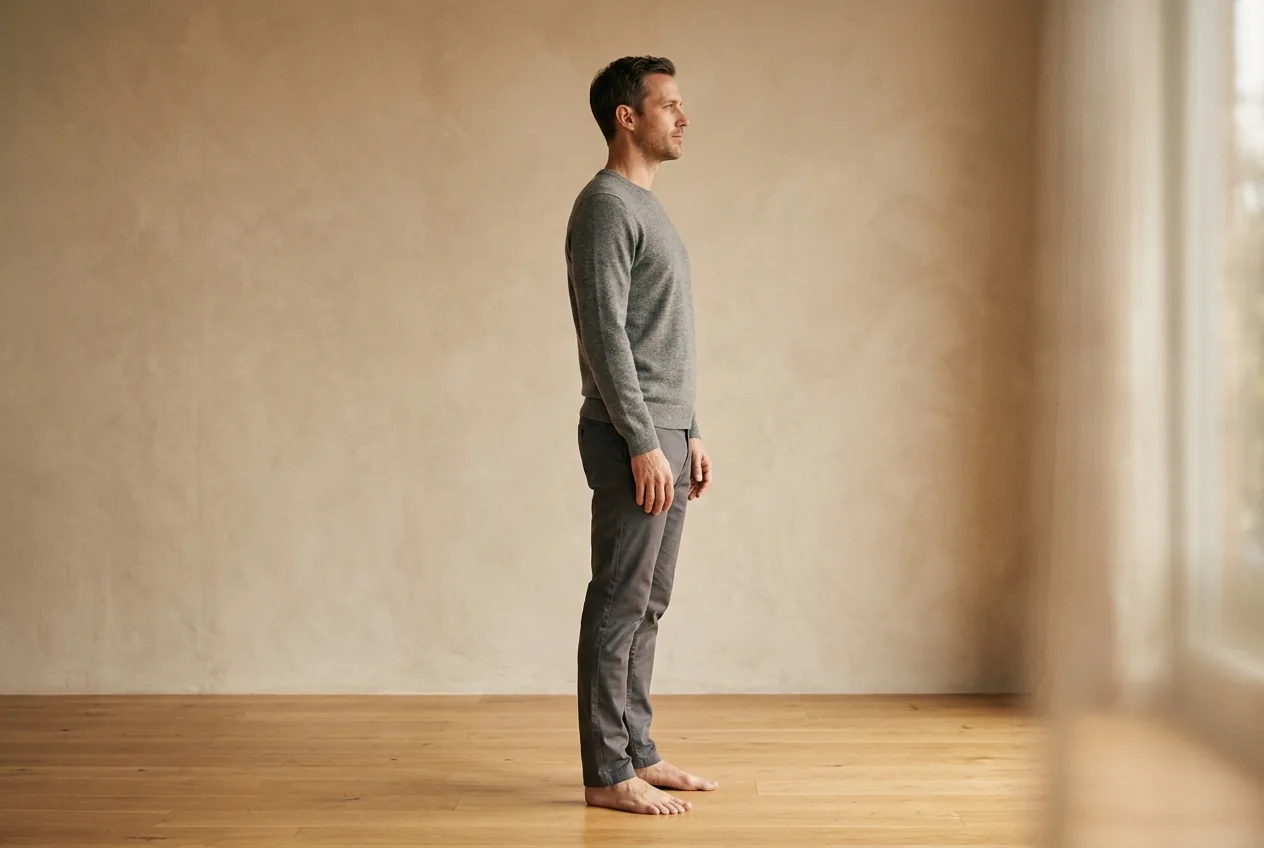
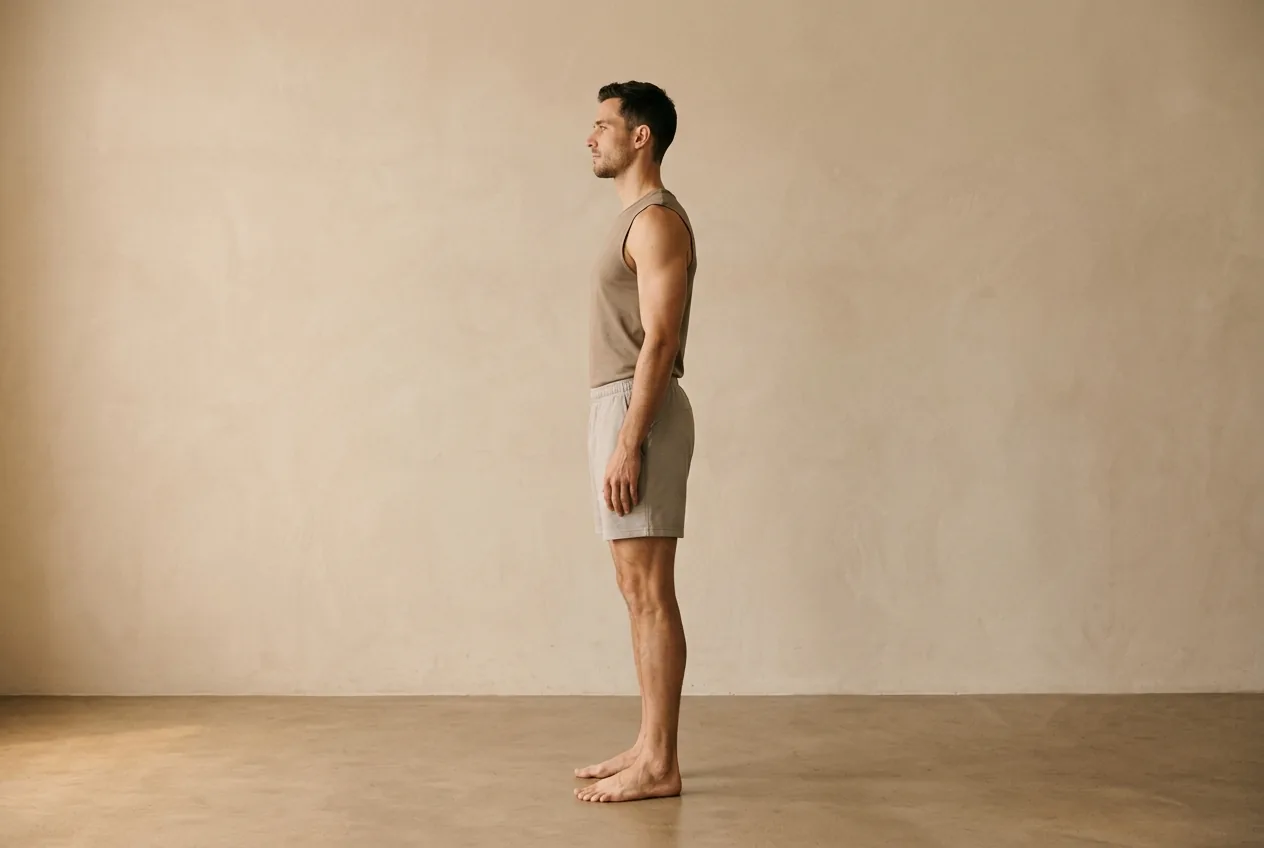
- An exaggerated arch or a flattened lower back when you look at yourself side-on.
The whole-body and energy signals
Some symptoms are less about one spot and more about the cost of holding a misaligned body upright all day.
- Fatigue that doesn't match your day. Holding a body out of alignment burns energy. Bracing against gravity is tiring even when you're sitting still.
- Aches that move around — neck one week, lower back the next — because the compensation shifts.
- Stiffness first thing in the morning that loosens as you move.
- Feeling worse the longer you sit, better when you walk. A strong hint that position, not damage, is driving it.
You don't need every one of these to have a posture pattern. Most people recognize a handful from one or two clusters — and the cluster usually points back to the same underlying drift.
When to see a doctor
This is posture education, not medical advice, and the symptoms above describe everyday postural aches. Some signs are not posture and need prompt attention. See a clinician if you have numbness, tingling, or weakness spreading into an arm or leg, any loss of bladder or bowel control, pain after a fall or accident, fever alongside back or neck pain, unexplained weight loss, chest pain or genuine breathlessness, or pain that's severe or steadily worsening. Those aren't symptoms to stretch through.
Reading your own set of signals
The reason it helps to see these as a set rather than separate complaints: they tend to trace back to a small number of postural drifts, and the drift you have decides which fix helps. The same stretch that eases one pattern can aggravate the opposite one, so matching the work to your actual shape is the whole game.
You can get a first read yourself. The at-home posture check — a wall test and a side-on photo — usually shows the loudest deviation behind your symptoms. The limit is that it shows the loudest one, not the full stack or which is driving the others.
That precision is the reasoning behind a real posture assessment: it measures your own deviations and builds a routine around the pattern producing your particular set of symptoms, in the right order. Treating each ache alone rarely sticks; treating the pattern beneath them is what changes things.
Stop chasing the aches one by one. Find the drift they share, and you'll often watch several of them ease together.
Common questions
What are the most common symptoms of bad posture?
The usual ones are an afternoon neck ache, tension headaches, a knot between the shoulder blades, rounded shoulders, a tight lower back after sitting, tight hips, and fatigue that doesn't match the day. They tend to cluster — neck and head signals together, lower-back and hip signals together — because each cluster traces to a particular drift.
Can bad posture cause symptoms beyond back and neck pain?
Yes. Because a misaligned body compensates with muscles that overwork and others that switch off, the effects can include tension headaches, jaw tension, shallow breathing from a collapsed chest, and general fatigue from holding yourself up. The symptom often shows up away from where the drift actually is.
How do I know if my symptoms are from posture or something else?
A useful clue is that postural aches tend to ease when you move and worsen the longer you hold one position, and they shift around rather than staying fixed. Signs like numbness, weakness, pain after an injury, fever, or steadily worsening pain point away from posture and should be checked by a clinician.
Can posture symptoms be reversed?
The everyday muscular symptoms often ease as you rebalance the pattern behind them, since you're changing the compensation rather than the bone structure. It takes steady, matched work over weeks rather than a quick fix, and how reversible it is depends on what's driving your particular pattern.