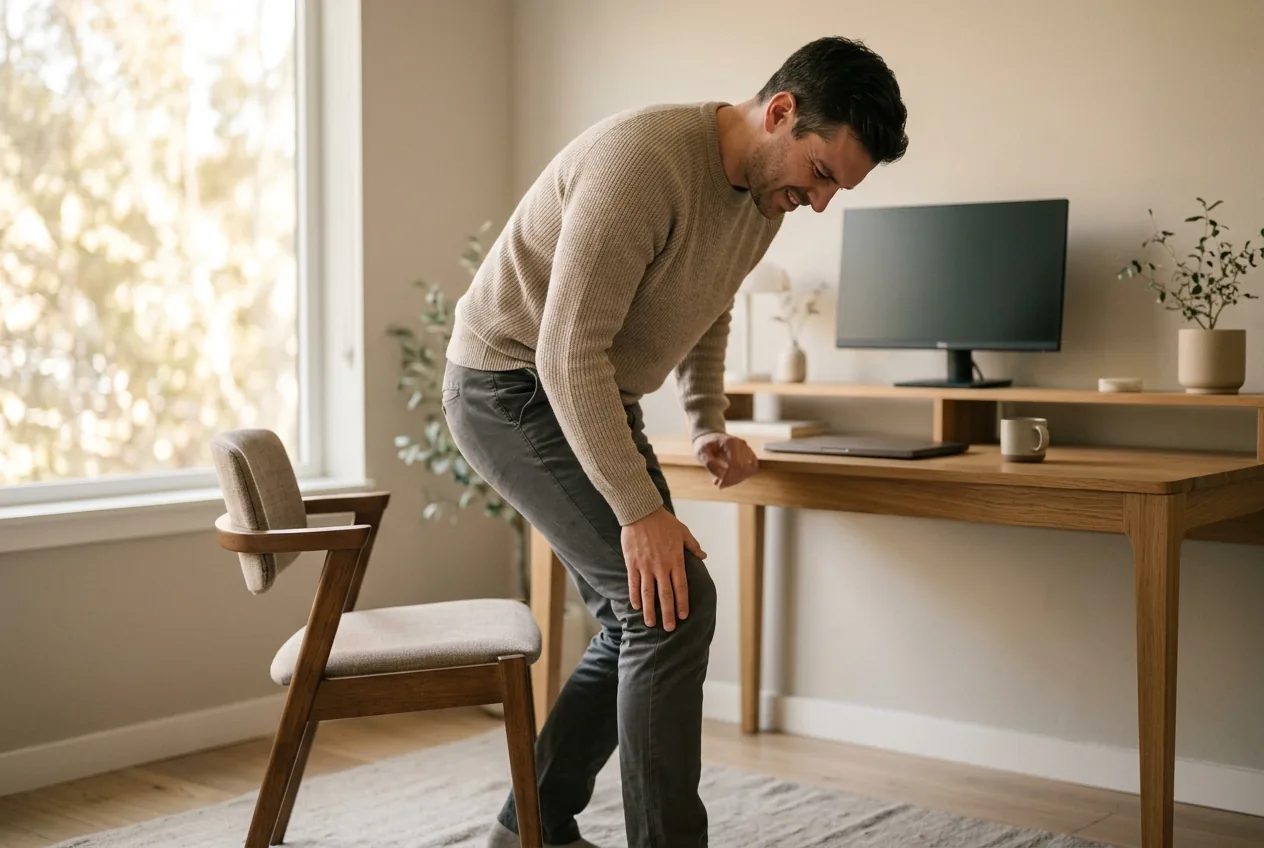
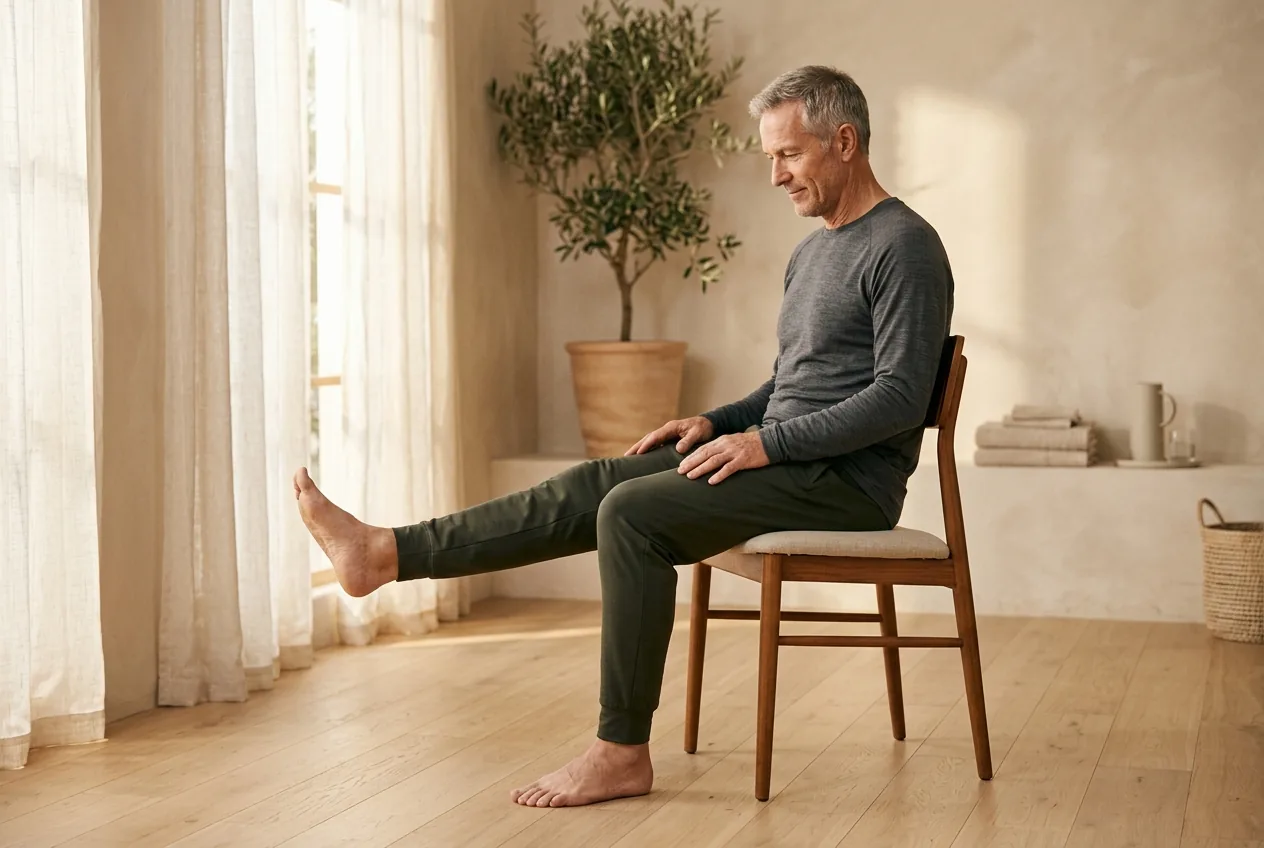
You've been told to exercise the knee, and you've also learned the hard way that the wrong move leaves it puffy and sore for two days. So you're stuck between "use it or lose it" and "every time I use it, I pay for it." That bind is the whole problem with exercises for knee arthritis: the joint needs movement to stay healthy, but the wrong load makes it worse, and most generic routines don't tell you which is which.
The way out isn't resting the knee into stiffness or grinding through pain. It's choosing moves that build the muscle around the joint and keep it gliding, without pounding it. Done right, exercise with arthritis in the knees is one of the few things that reliably helps.
Why movement helps an arthritic knee
An arthritic knee has lost some of the smooth cartilage that lets the bones glide. That sounds like a reason to keep it still, but the opposite is true. Cartilage has no direct blood supply — it gets fed by joint fluid moving in and out as you bend and straighten the knee. Stop moving, and the joint dries out, stiffens, and the muscles around it waste, leaving the joint with even less support.
The muscles are the key. Strong quads and glutes act like shock absorbers and steering for the knee. When they're strong, they take load off the joint surface and keep the kneecap tracking straight. When they're weak, every step lands harder and the knee drifts inward, grinding the worn spots. So the goal of these exercises isn't to "fix" the cartilage — it's to build the support that lets the joint carry you with less pain.
An arthritic knee doesn't need to be spared. It needs the muscles around it strong enough to take the load off the worn surfaces.
Low-impact knee exercises that work
Start gentle, keep it pain-free, and build slowly. A little ache that settles within an hour is fine. Sharp pain or next-day swelling means you went too far — drop the reps or the range.
Straight-leg raise
Lie on your back, one knee bent with the foot flat, the other leg straight. Tighten the thigh of the straight leg and lift it to the height of the bent knee, hold two seconds, lower slowly. This builds the quad without bending the joint under load — ideal when deep bending is what hurts. 10 reps, building to two or three sets.
Sit-to-stand
Sit on a firm chair, feet flat. Stand up and sit down slowly, using your legs, not momentum. If it's hard, use a higher chair or push off the armrests at first. This trains the exact motion you use all day — getting off the couch, the toilet, the car seat — and keeps the knee strong in a safe range. 8 to 10 reps.
Glute bridge
Lie on your back, knees bent, feet flat, squeeze the glutes to lift your hips, hold two seconds, lower slowly. Strong glutes steer the knee and stop it caving inward. 10 to 12 reps. The cues are in the glute bridge for back pain.
Heel slides for range
Lie on your back and slowly slide your heel toward your backside, bending the knee as far as comfortable, then slide it back out. This keeps the joint gliding and fed without any load at all. Good first thing in the morning when the knee is stiff. 10 slow reps.
Standing calf raise
Hold a counter, rise onto your toes, lower slowly. This strengthens the lower leg that helps absorb each step. 10 to 12 reps.
For the cardio side — keeping the heart and joint moving without pounding — the gentler options matter just as much, which is why it's worth pairing this with the best low-impact cardio for bad knees.
What to skip or modify
Some moves load the worn surfaces hard and reliably flare an arthritic knee.
- Deep squats and deep lunges. The deeper the bend under load, the more pressure on the joint. Keep squats shallow, or stick to sit-to-stands. The same caution applies to knee pain when squatting.
- High-impact pounding — running on pavement, jumping, fast stairs taken two at a time. The repeated impact is what an arthritic joint tolerates least.
- Twisting under load — pivoting hard on a planted foot.
- Pushing through sharp pain. Dull, settling ache is acceptable. A sharp catch is the joint telling you to back off.
When to see a doctor
This is posture education, not medical advice. See a clinician if the knee is hot, red, and very swollen, especially with a fever — that can signal infection or an inflamed joint that needs assessment, not exercise. Also get it checked if the knee locks, gives way, or buckles, if it swells hard after a specific injury, if you can't bear weight, or if pain is severe and steadily worsening. A clinician or physical therapist can confirm what's going on and tailor a program if you're unsure where to start.
Why your own pattern matters
Two people with arthritic knees can need different routines. If your knee caves inward because the hip isn't steering it, your priority is glute strength. If it's stiff and weak from years of guarding it, gentle range and quad work come first. Generic lists treat every arthritic knee the same. Your knee loads the way your whole leg and pelvis are aligned.
That's the case for knowing your own setup. A posture assessment looks at how your pelvis, hip, and knee line up — whether a dropped hip or weak side is sending load onto the worn part of the joint — and builds the strengthening around that, so the work you do actually unloads the spot that hurts.
Common questions
What is the best exercise for knee arthritis?
There's no single best one, but the straight-leg raise, sit-to-stand, and glute bridge are reliable starting points. They build the quads and glutes that take load off the joint, without forcing the knee into deep, painful bending. Add gentle heel slides to keep the joint moving.
Can exercise make knee arthritis worse?
The wrong exercise can — deep squats, high-impact pounding, and twisting under load tend to flare an arthritic knee. The right ones help. The rule of thumb: a dull ache that settles within an hour is fine; sharp pain or next-day swelling means back off.
Should I exercise with knee arthritis every day?
Gentle range-of-motion moves like heel slides are fine daily, especially when the knee is stiff in the morning. Strengthening work is better every other day so the muscles recover. Consistency over months matters more than intensity in any one session.
Is walking good for arthritic knees?
For most people, yes — level walking is low-impact and keeps the joint fed and moving. Build up gradually, wear cushioned shoes, and avoid steep downhills, which load the knee harder. If walking reliably swells the knee, shorten the distance and pair it with gentler cardio.