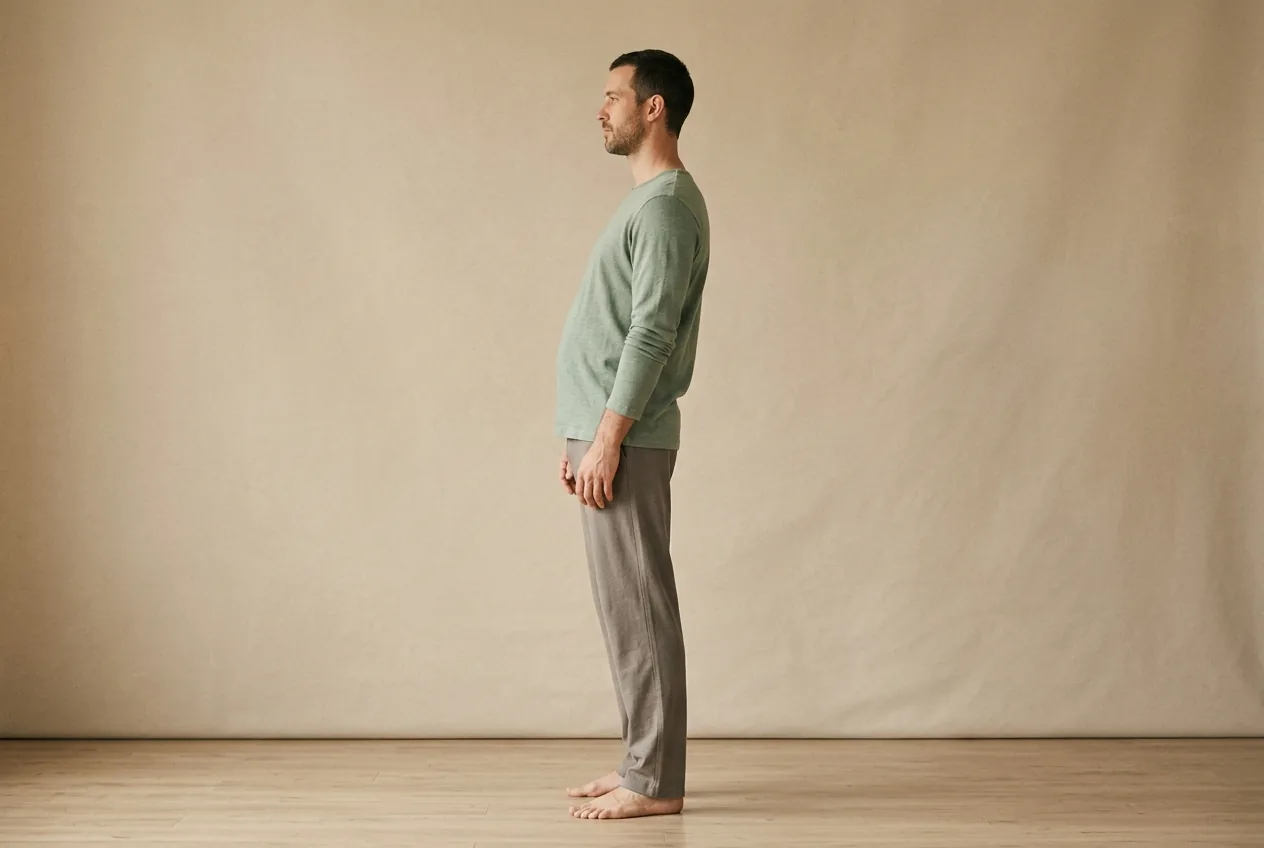

You notice it in a photo taken from behind, or you feel it when you run a hand up the back of your neck — a rounded bump where your neck meets your shoulders, sitting at the base of the neck. It can make you look permanently hunched, and once you've spotted it you can't unsee it. The good news on how to get rid of a neck hump: a lot of what makes that area bulge is posture, and posture you can change.
A dowager's hump used to be thought of as an older woman's problem. It's now common in anyone who spends years looking down at screens, including men in their thirties. Here's what's actually under the bump and what shifts it.
What a neck hump is made of
The bump at the base of your neck is usually a combination of three things, in varying mixes.
The biggest part for most people is posture. When your head rides forward and your upper back rounds, the vertebrae at the base of the neck push backward, and the muscles and tissue over them get bunched and prominent. Layer in a little soft tissue that tends to gather in that spot, and you get a visible hump. This is the part that responds to posture work, because it's driven by the forward head posture and rounded-upper-back pattern that you can retrain.
The second part is soft tissue — a fatty pad that can collect at the base of the neck. The third, in some people, is a structural change in the bone from a more advanced upper-back curve. That last one is stiffer and needs a clinician's read. But for the typical desk-driven hump, posture is the lever you have.
Most "humps" in people who sit all day are a forward head and a rounded upper back made visible. Change the posture and the bump softens.
How it builds
It's the same chain behind so many desk postures. Head drifts forward over a screen. Upper back rounds to follow. Shoulders roll in. The base of the neck juts back, and over months and years the tissue there thickens and the bump sets in. It travels with rounded shoulders and, further down the spine, with kyphosis or hunchback posture. That's why flattening the hump means working the whole upper chain, not just rubbing the spot.
How to get rid of a neck hump: the routine
You're undoing the forward-and-rounded pattern: pull the head back over the shoulders, lift the rounded upper back, and strengthen the muscles that hold you tall. Short, frequent sessions beat the occasional long one.
Chin tucks — the key move
Glide your head straight back over your shoulders without tilting it down, like making a gentle double chin. You'll feel the front of your neck working and a stretch at the base of your skull. Hold five seconds, release, do 8 to 10 reps, several times a day. This directly counters the forward head that pushes the base of your neck back. The chin tucks exercise covers the details.
Thoracic extension over a roller
Lie back over a rolled towel or foam roller placed across your upper back, knees bent, hands supporting your head. Let the upper back ease into extension. Move the roller up and down a few inches. This restores the upper-back mobility that lets you stand taller and stops the area bunching.
Wall angels for the upper back
Back to the wall, arms in a goalpost, slide them up and down keeping hands and elbows on the wall. Ten slow reps. This strengthens the muscles between the shoulder blades that hold you upright. See wall angels exercise for form.
Scapular squeezes
Draw your shoulder blades down and back, hold five seconds, release. 10 to 12 reps. No shrugging toward the ears — the move is back and down.
How long it takes, and setting expectations
It helps to be realistic about which part of the bump moves and how fast. The postural part — the forward head and rounded upper back that make the area jut out — responds first. Within a few weeks of daily chin tucks and extension work, people often notice the area looks less prominent in photos and feels less bunched to the touch, because the head has come back over the shoulders and the upper back sits taller. That's the change you have the most control over.
The soft-tissue pad shifts more slowly and is tied to broader factors, not to any single exercise. And if part of the bump is structural, in the bone, posture work won't flatten that part, though it can stop the surrounding pattern making it worse. So the fair expectation is meaningful softening of the posture-driven portion over a couple of months of consistent daily work, rather than a dramatic overnight change. Frequency carries it: short sessions most days beat the occasional long one.
What to stop doing
- Stop only massaging or foam-rolling the bump itself. It feels nice and changes little if the posture driving it stays.
- Stop sleeping with your head propped high on a stack of pillows, which pushes the head further forward all night.
- Stop looking down at your phone in your lap for hours. Lift it toward your face.
- Stop expecting a brace to fix it — it holds the position so your muscles don't have to and keeps them switched off.
When to see a doctor
This is posture education, not medical advice. See a clinician if the hump appeared or grew quickly, feels hard and bony rather than soft, or comes with pain, numbness, tingling, or weakness in the arms. Get prompt care for pain after a fall, fever with back pain, unexplained weight loss, or any back or neck pain that's severe or steadily worsening. If you have known bone-thinning, get guidance before doing extension work.
Why your hump deserves a specific plan
The routine above helps most people whose hump is posture-driven, because the forward-head-and-round pattern is so common. But how much of your bump is posture versus soft tissue versus structure, and how far forward your head sits, are specific to you — and that mix decides how much will change with exercise.
A proper posture assessment measures your actual deviations so the routine targets the part you can move. To get a first sense, you can check your posture at home with a side and back photo.
A desk-driven neck hump is mostly forward head and a rounded back made visible. Reverse the posture daily and the bump follows.
Common questions
What causes a hump at the base of the neck?
It's usually a mix of three things: a forward head and rounded upper back that push the vertebrae back and bunch the tissue, a soft fatty pad that gathers there, and sometimes a structural change in the bone. For most desk workers, the posture part is the biggest and the most changeable.
Can a dowager's hump be reversed?
The posture-driven portion often softens with daily chin tucks and upper-back work, since you're bringing the head back over the shoulders. The fatty pad shifts more slowly, and any structural part won't flatten with exercise, though posture work can keep it from getting worse.
Is a neck hump only an older woman's problem?
Not anymore. It used to be associated with older women, but it's now common in anyone who spends years looking down at screens, including men in their thirties.
Does massaging the hump help?
Massaging or foam-rolling the spot feels good but changes little on its own, because it doesn't address the forward-head-and-round pattern driving the bulge. Retraining the posture is what shifts it.