You've probably been told to "fix your posture" more times than you can count, usually with no explanation of what your posture actually is. If you've ever wondered whether your back rounds, your head pokes forward, or your hips tip — and which of those is the real problem — this is the map you were missing.
Here's why it's worth knowing the categories. Most chronic, non-traumatic back and neck pain comes from the body compensating around a postural imbalance. The pattern you've drifted into decides which muscles switched off and which are overworking — and that, in turn, decides what helps and what makes things worse. With posture types explained clearly, you can stop applying random advice and start matching the fix to your actual shape.
A note before the list: real bodies rarely fit one box cleanly. Most people carry a couple of these patterns stacked together, which is exactly why correction takes more than copying a single stretch.
The head-and-neck patterns
These start at the top and are driven mostly by screens.
Forward head posture. The head drifts in front of the shoulders instead of sitting balanced over them. Because the head is heavy, every inch forward makes the neck muscles work harder, which is why this one shows up as the classic mid-afternoon neck ache. The full picture is in forward head posture, and its screen-driven cousin in text neck.
Military neck. The neck loses its natural forward curve and stands too straight and rigid. It usually travels with forward head and comes from years of looking down. More in military neck.
The upper-back and shoulder patterns
Rounded shoulders. The shoulders roll forward and the chest muscles tighten while the upper back goes slack. Often paired with a forward head. Covered in rounded shoulders.
Kyphosis (the rounded upper back). An exaggerated outward curve in the upper spine — the hunched look. A gentle amount of upper-back curve is normal; too much, held all day, becomes a pattern.
Winged scapula. One or both shoulder blades stick out from the rib cage instead of lying flat, usually because the muscle that should pin them down has gone quiet. See winged scapula.
The lower-back and pelvis patterns
This is where a lot of back pain lives, because the pelvis is the foundation everything above sits on. Tilt the pelvis and the whole spine adjusts.
Anterior pelvic tilt. The pelvis tips forward and the lower back arches more than it should, often with tight hip flexors from sitting. Details in anterior pelvic tilt.
Posterior pelvic tilt. The opposite — the pelvis tucks under and the lower back flattens. See posterior pelvic tilt.
Lordosis (swayback). An exaggerated inward curve in the lower back, the pronounced arch. Covered in lordosis and swayback.
Flat back. The lower back loses its normal inward curve and goes too straight, which makes standing tiring. More in flat back posture.
The side-to-side patterns
The patterns above are front-to-back. Some imbalances are left-to-right.
Uneven shoulders. One shoulder sits higher than the other, often from one-sided carrying or a foundation tilt below. See uneven shoulders.
Uneven hips. One hip rides higher than the other, usually a tilted pelvis that the spine and shoulders then compensate around. Covered in uneven hips.
Bodies don't pick one pattern. They stack a few — and the stack is the reason a single stretch rarely holds.
How the patterns connect
The reason these rarely show up alone is that the spine is a chain. Tilt one link and the others adjust to keep you upright and your eyes level. A classic example runs top to bottom: hours at a screen pull the head forward, the upper back rounds to follow, the shoulders roll in, and the chest tightens. One habit, four visible deviations.
The same thing happens from the ground up. A pelvis that tips forward into an anterior tilt drags the lower back into a deeper arch; a pelvis that tucks under flattens it. Either way the change doesn't stay local — the spine compensates above it, which is how a pelvis problem ends up showing as a neck ache.
That chain is also why two people with the "same" complaint need different work. Two readers might both have a sore mid-afternoon neck. One has a forward head riding on a rounded upper back; the other has a forward head sitting on a pelvis that's tilted the spine off-balance from below. Same symptom, different stack, different fix. Treating the neck alone helps neither for long.
Why the type decides the fix
This is the part most posture advice skips. The same move can help one type and harm another. Arching exercises that ease a flat back can worsen a swayback. Tucking the pelvis to calm an anterior tilt can deepen a flat back. Stretching the chest helps rounded shoulders but does nothing for uneven hips.
That's why generic posture routines so often fizzle. They aren't matched to anything. They treat "bad posture" as one problem when it's really a handful of different, sometimes opposing, patterns. Relief comes from a correction matched to your specific deviations, repeated daily.
There's also an order to it. When patterns stack, fixing them in the wrong sequence wastes effort — correcting the head while ignoring the rounded upper back beneath it, for instance, rarely sticks. Knowing your types is half the answer. Knowing which one to address first is what separates real progress from spinning your wheels.
When to see a doctor
This is posture education, not medical advice, and these patterns describe everyday aches, not disease. See a clinician promptly if you have numbness, tingling, or weakness spreading into a limb, any loss of bladder or bowel control, pain after a fall or accident, fever with back or neck pain, unexplained weight loss, or pain that's severe or steadily worsening. In children and teens, a visibly uneven back when bending forward should be evaluated for a spinal curve.
Finding your own type
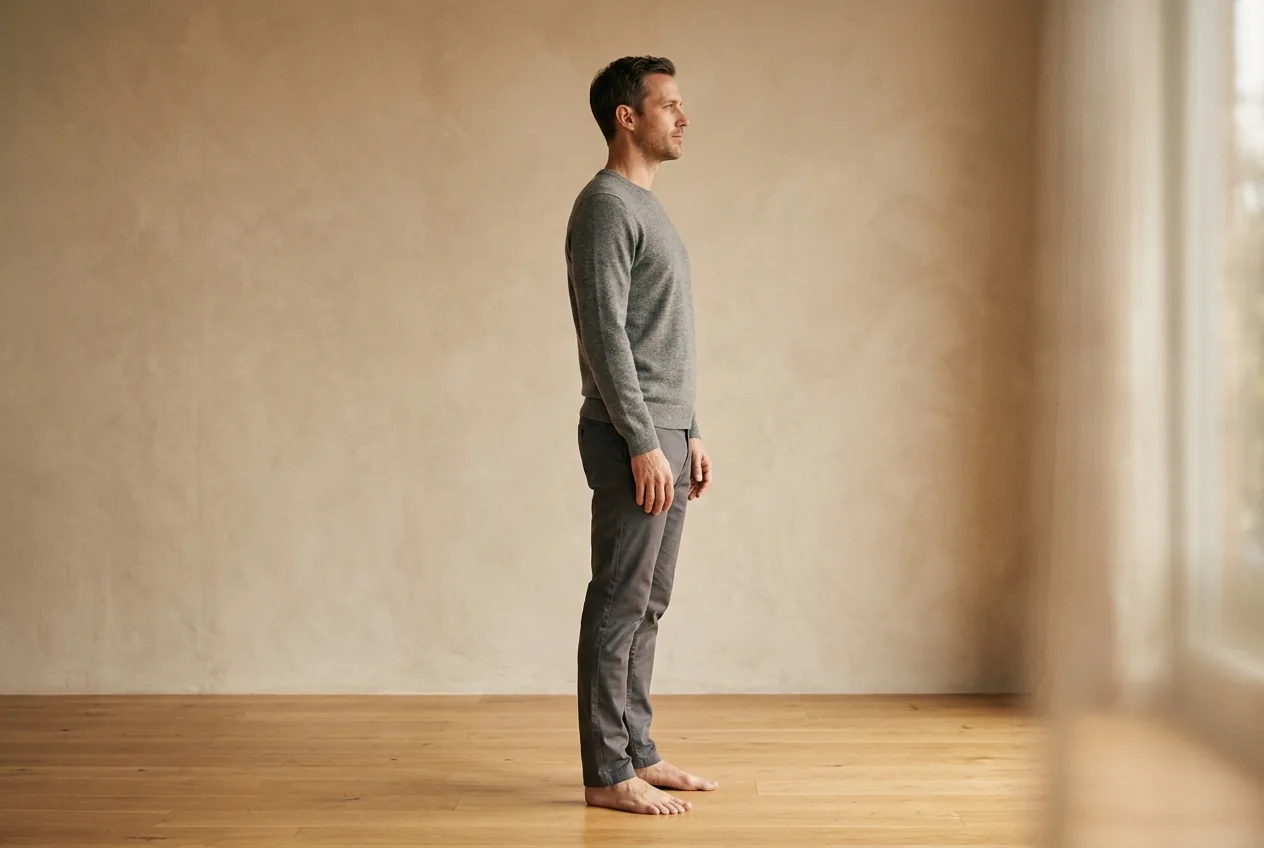
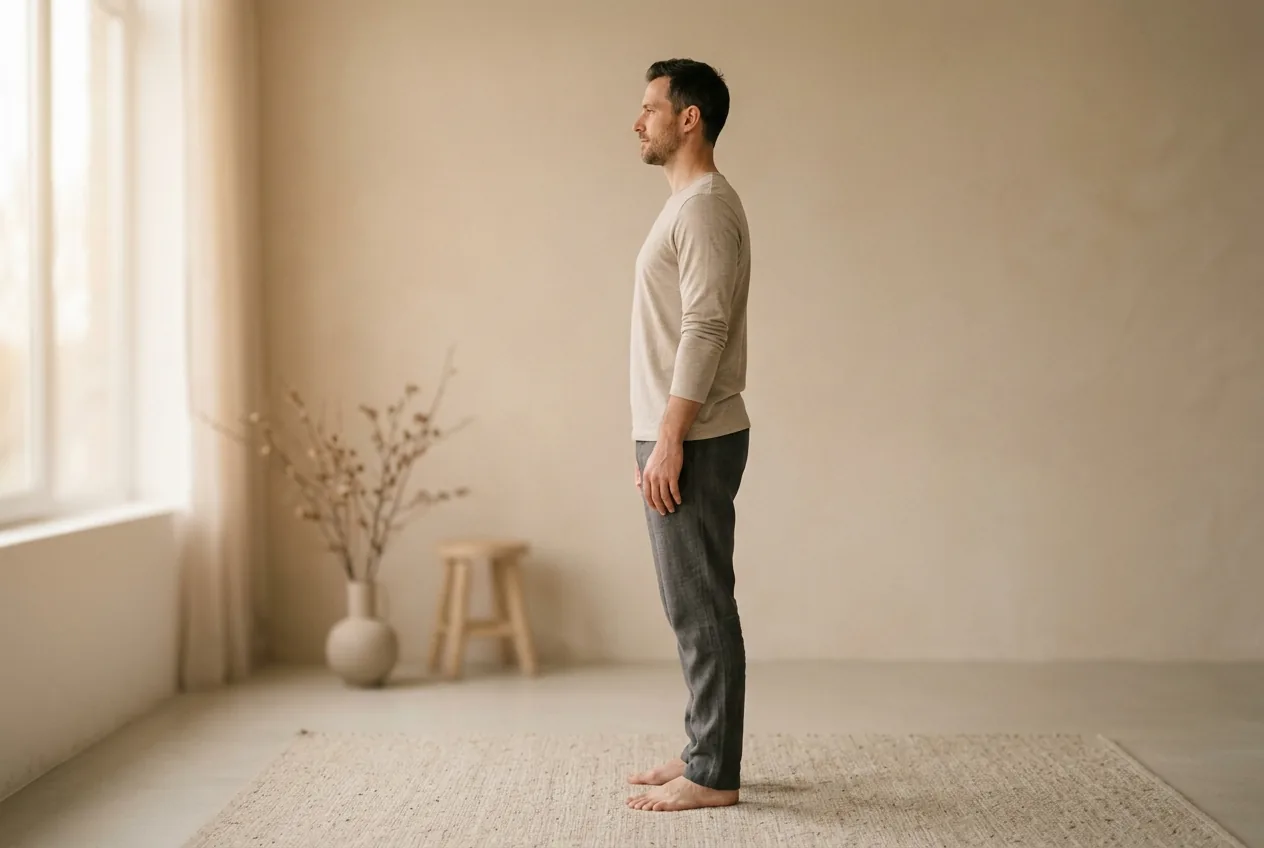
You can get a rough read yourself. The at-home posture check — a wall test and a side-on photo — will usually show you the most obvious pattern you're carrying. Start there.
The limit is that eyeballing a photo tells you the loudest deviation, not the full stack or the one driving the others, and not by how much. That precision is the difference between a guess and a plan. A posture assessment measures your actual deviations from a few photos and builds a corrective sequence around your specific combination — the right moves, in the right order, for the types you actually have.
Knowing your posture type isn't trivia. It's the thing that finally makes the advice you follow the right advice for your body.
Common questions
How many posture types are there?
There's no single fixed count, but most chronic, non-traumatic back and neck pain traces to a handful of common patterns: head-and-neck ones like forward head and military neck, upper-back ones like rounded shoulders and kyphosis, lower-back and pelvis ones like anterior and posterior tilt, and side-to-side ones like uneven shoulders or hips. Real bodies usually carry a couple stacked together.
Can you have more than one posture type at once?
Yes, and most people do. The spine is a chain, so tilting one link makes the others adjust — hours at a screen can pull the head forward, round the upper back, roll the shoulders in, and tighten the chest all at once. That stacking is why a single stretch rarely holds.
Why does the same stretch help one person and hurt another?
Because opposite patterns need opposite work. Arching moves that ease a flat back can worsen a swayback; tucking the pelvis to calm an anterior tilt can deepen a flat back. A move that suits your type can aggravate someone with the opposite deviation, which is why generic routines so often fizzle.
How do I figure out which posture type I have?
An at-home wall test and a side-on photo will usually reveal your most obvious pattern, which is a good place to start. The limit is that eyeballing a photo shows the loudest deviation, not the full stack or which one is driving the others — that precision is what a proper assessment adds.