You probably never think about your feet until they hurt. They're the part of your body that gets the least attention and does the most work — every step you take, every hour you stand, all of it lands on two small platforms you can't even see while you're using them. So when your knees ache or your lower back tightens, the feet are rarely the first suspect. They should be higher on the list.
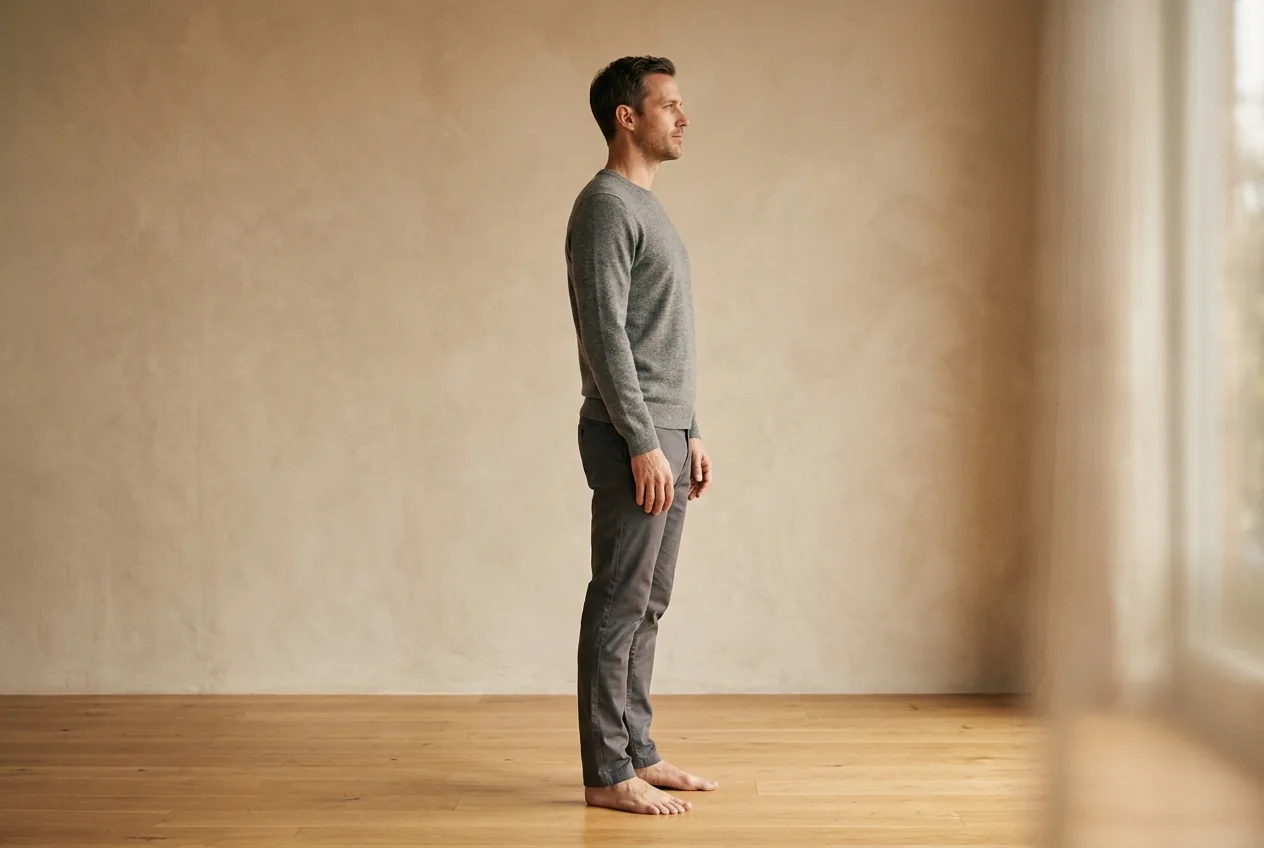
Learning how to fix foot posture matters because your feet are where your whole alignment starts. They're the foundation the rest of you is stacked on. If the base tilts or collapses, everything above it shifts to compensate — the ankles, the knees, the hips, the spine. A small problem at the ground gets amplified the further up the body it travels. Get the feet right and you give everything above them a level platform to work from.
Your feet set the angle for everything above
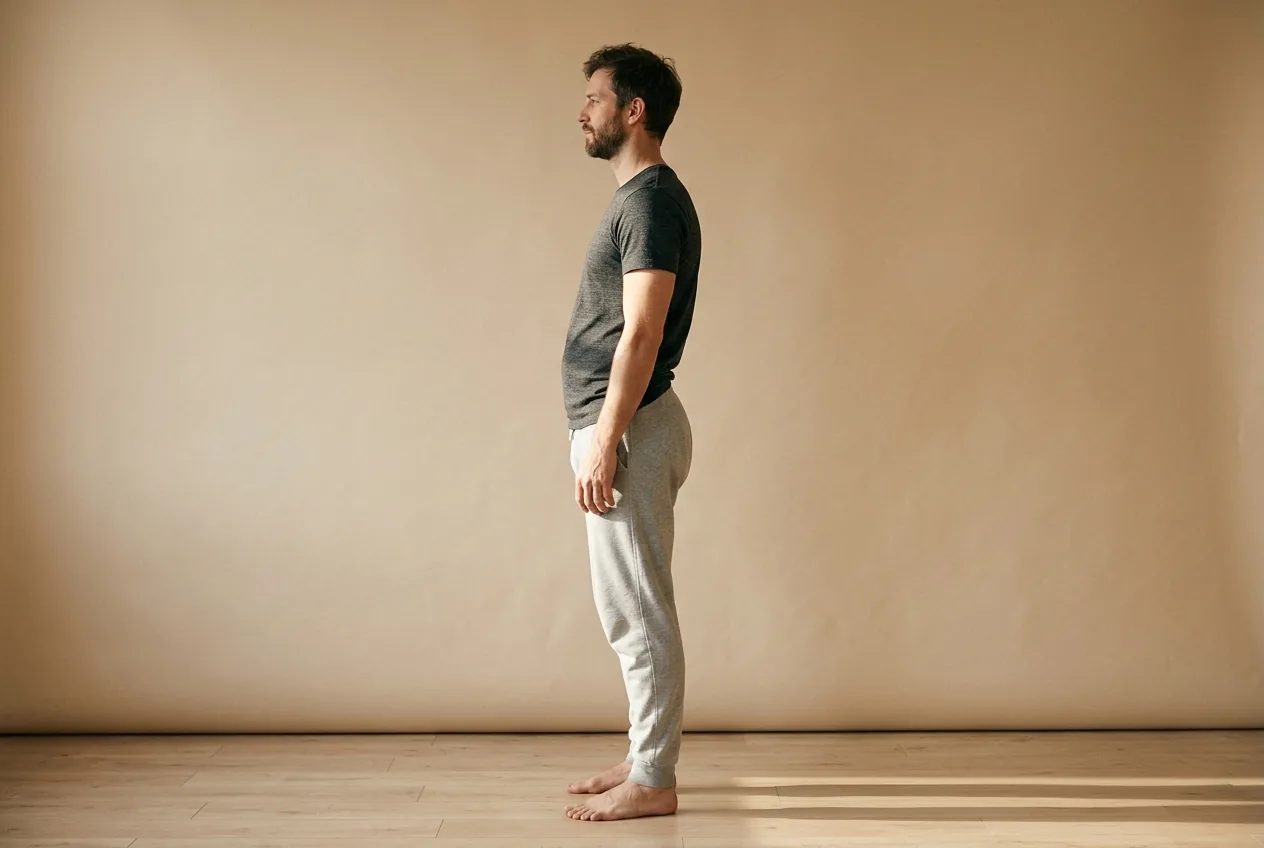
Think of your body as a stack. The feet are the bottom block. If that block tips inward, the whole stack leans, and every block above has to shift a little to keep you upright. That's not a metaphor — it's roughly how the lower body works.
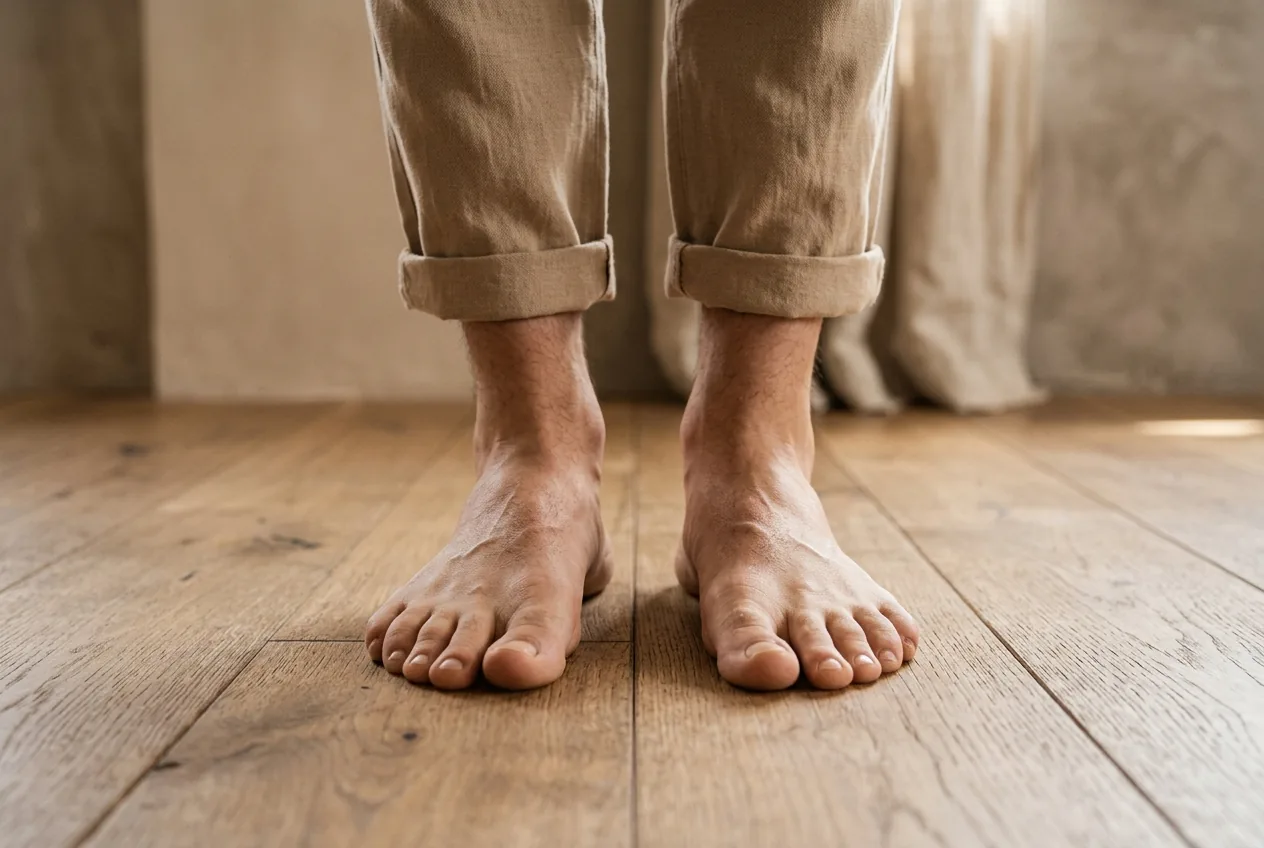
When a foot rolls inward and the arch flattens (often called overpronation), the shin bone rotates inward with it. That inward rotation travels up to the knee, pulling it toward the midline so it caves on every step. The thigh rotates in too, which tugs on the hip and tilts the pelvis. The lower back then adjusts to keep you balanced. One collapsed arch, and you've changed the loading all the way up the chain.
The reverse happens with a foot that's too rigid and high-arched: it can't absorb shock well, so the impact of each step travels up the leg with less cushioning. Either way, how your foot meets the ground decides a lot about how the joints above it are loaded.
The body is stacked from the ground up. A tilt at the foundation is a tilt everywhere.
What foot posture problems feed into
This is why foot posture isn't just a foot issue. The same collapsed-arch pattern shows up as complaints all the way up the body:
- The knee. A foot rolling in pulls the knee inward, so the kneecap tracks off-center and the joint gets irritated. It's a big part of the story in knee pain and posture.
- The heel. A collapsing arch overstretches the band of tissue along the sole, which is a common driver behind the heel pain in plantar fasciitis and the hip connection.
- The hip and back. The inward rotation tilts the pelvis and shifts how the spine sits, feeding into the same patterns as weak glutes and back pain.
So when you fix foot posture, you're not just helping your feet. You're giving the knees, hips, and back a more honest starting point.
How to retrain foot posture
The aim is to wake up the muscles that hold the arch, build the strength and control that keep the foot from collapsing, and tie the foot to the hip so the whole leg lands well. Go gently and build up.
Wake up the arch
- Short-foot drill. Standing or sitting, gently draw the ball of your foot toward your heel to lift the arch slightly — without curling your toes under. Hold a few seconds, release, repeat ten times each foot. This trains the small muscles that support the arch from within.
- Toe spread and lift. Try to lift just your big toe while keeping the others down, then reverse it. It feels clumsy at first. It rebuilds the control most feet have lost from years in stiff shoes.
Build strength and balance
- Calf raises, slow and controlled. Rise onto the balls of your feet, pause, and lower slowly. Ten to fifteen reps. Keep your weight even across the foot, not rolling to the inside edge. This strengthens the foot and calf that drive each step.
- Single-leg balance. Stand on one foot for 20–30 seconds, arch lifted, knee pointing forward rather than caving in. Build to a minute. This is the drill that ties the foot to the hip under real load — it trains the whole chain to work together.
Connect the foot to the hip
- Glute bridges. Lie on your back, knees bent, push through your heels, and lift your hips. Strong glutes steer the leg from above so the foot isn't left to collapse on its own.
Change the daily input
- Spend some time barefoot at home so your feet have to work, rather than always being propped up by stiff, cushioned shoes.
- Choose shoes that let your toes spread and don't force the foot into a narrow point.
- Check your shoe soles — heavy wear on the inner edge is a clear sign the foot is rolling inward.
When to see a doctor
Most foot posture work is safe and gentle, but some foot problems need a clinician. See one for foot pain after an injury, numbness or tingling in the foot, a foot or ankle that's swollen, hot, or red, an arch that has suddenly collapsed, or pain that's getting steadily worse. Numbness in particular can point to a nerve issue rather than a posture problem and is worth checking. If you have diabetes or reduced sensation in your feet, get any new foot pain or sore assessed promptly. Posture work is for ordinary, mechanical aches in an otherwise healthy foot.
Why it's worth the effort
If you've chased knee pain, heel pain, or back pain for years without lasting relief, it's worth asking whether the foundation under all of it has ever been addressed. The feet rarely get the credit or the blame, but they set the angle for the joints above them on every single step.
Lasting relief usually comes from looking at the whole chain, not one sore joint, and that depends on your own pattern — how your feet load the ground, how your pelvis sits, which muscles are switched off. The right work for one alignment can be wrong for another. A posture assessment measures your real deviations from the ground up and builds the routine around them. If you want to see where you stand — literally — start by learning to check your posture at home, or see how a posture-based method addresses chronic pain head to foot.
Fix the foundation, and everything stacked on top of it gets an easier job.
Common questions
Can foot posture really affect my back and knees?
Yes. Your feet are the base your whole body is stacked on. When an arch collapses and the foot rolls inward, the shin, knee, thigh, and pelvis all rotate to compensate, which changes how the knees, hips, and back are loaded. A problem at the foundation shows up as aches further up the chain.
How do I know if I have flat feet or poor foot posture?
Common signs are arches that collapse when you stand, shoes worn down hard on the inner edge, knees that cave inward as you squat or climb stairs, and trouble balancing on one foot. A wet-footprint test or a look from someone behind you can show whether your foot rolls inward under load.
What exercises fix foot posture?
Short-foot drills, toe lifts, slow calf raises, and single-leg balance wake up the muscles that support the arch and control how the foot loads. Pairing them with glute work ties the foot to the hip so the whole leg lands well, rather than leaving the foot to hold the arch alone.
When should foot pain be checked by a doctor?
See a clinician for foot pain after an injury, numbness or tingling, a foot that's swollen, hot, or red, a suddenly collapsed arch, or pain that keeps worsening. If you have diabetes or reduced sensation in your feet, get any new pain or sore checked promptly.